
AI Deepfake Controversy: Italy’s Meloni Warns Against Fake Images – What You Need to Know
Daniel Kim Views
Translation result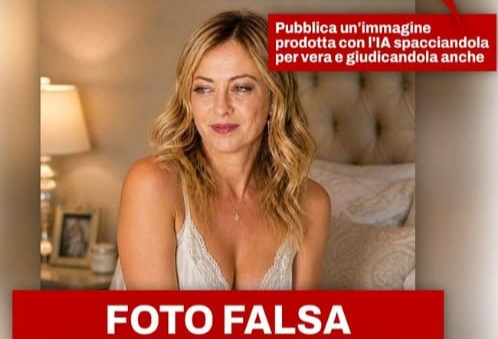 Italian Prime Minister Giorgia Meloni posted an AI-generated deepfake of herself and used it to warn about the spread of false images online.
On May 5, Meloni wrote on social media that fake, AI-generated photos of her have been circulating and that some persistent opponents are passing them off as real. She urged people to “think twice before sharing.”
The AI-generated deepfake she posted shows her sitting on a bed in her underwear, laughing.
Earlier, a user shared the image and attacked her, saying, “It’s shameful for the prime minister to appear like this; she’s unfit for public office.” Meloni said the episode underscores how some people accept manipulated images as genuine.
Meloni conceded, “Whoever made it did enhance my appearance significantly,” but added that the incident shows people will use any means to attack and spread false information. She warned, “This is not just my problem. Deepfakes are a dangerous tool that can deceive, manipulate, and be used to target anyone. I can defend myself, but many cannot.”
She urged that the rule to “verify before you believe, and check credibility before you share” must always apply, warning, “What happened to me today could happen to anyone tomorrow.”
Meanwhile, last September Italy became the first EU member state to pass comprehensive AI legislation. The law restricts high-risk AI uses, penalizes the creation and distribution of deepfake photos, and limits AI access for those under 14. The measure followed a scandal in which an adult website altered and posted photos of a prominent Italian female politician, provoking public outrage.












Most Commented