
Translation result.
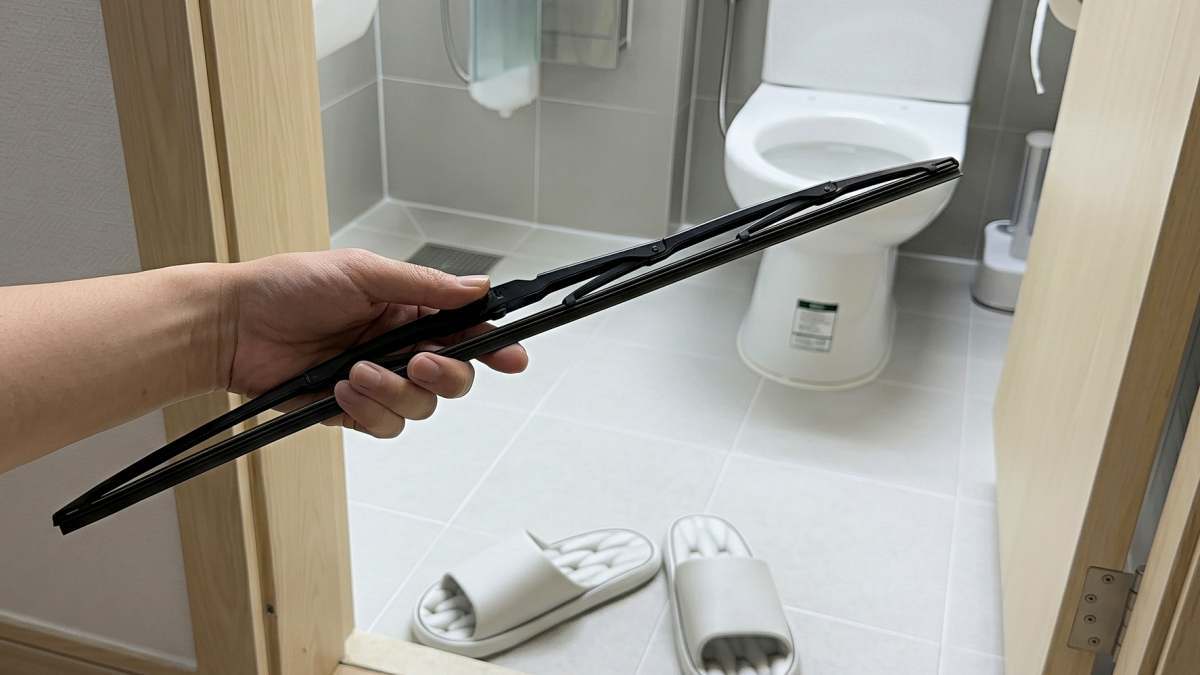
When drivers replace a windshield wiper, it usually ends up in the trash or forgotten in the trunk. What many don’t realize is that those discarded wipers often outperform store-bought bathroom squeegees for clearing glass. Fewer still appreciate how much a worn wiper can degrade visibility on wet roads. Wipers aren’t mere consumables; they’re safety devices that protect your sightlines.
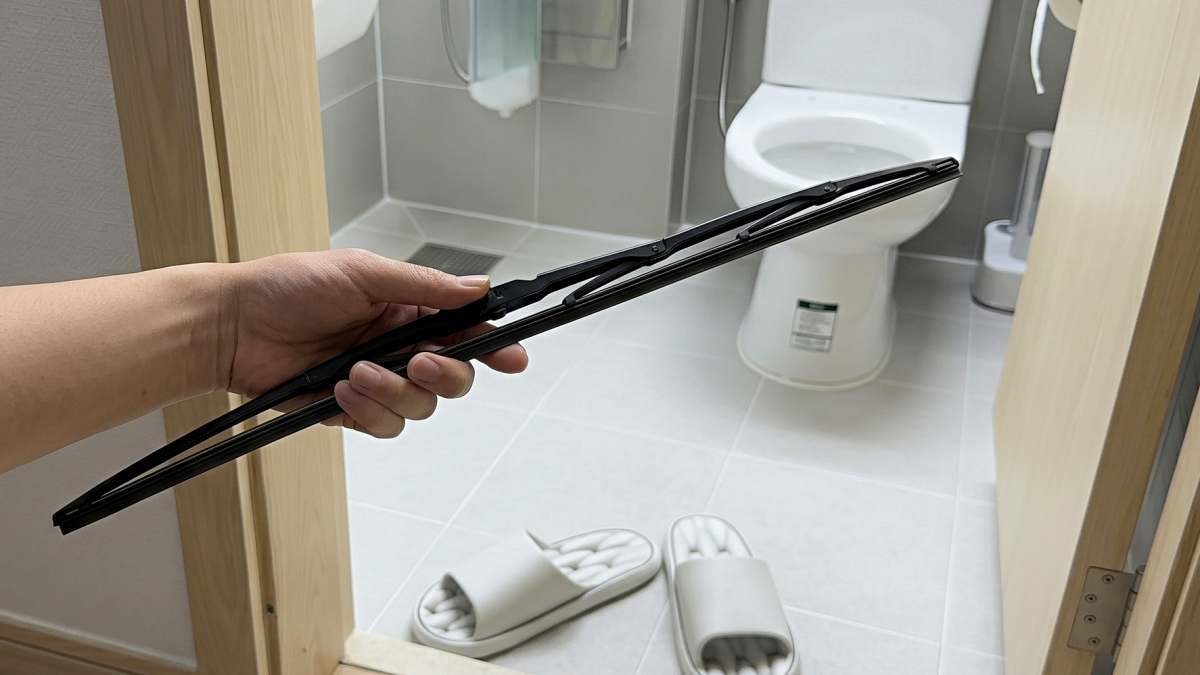
How often should you replace wipers?
Before sharing the tip, let’s cover the basics. Automakers and parts specialists typically recommend replacing wipers every six months to a year. By mileage, the common guidance is roughly every 10,000–15,000 km (about 6,200–9,300 miles). That’s an average; actual timing depends on conditions. In climates with four distinct seasons—where summer rains and repeated winter frost attack the blades—rubber deteriorates faster. Scraping frost with the wiper or leaving wipers pressed against the glass while parked can shorten blade life substantially. Many service shops advise inspecting wipers twice a year: in May–June, before the heavy rains, and again in October–November, before winter.
Five signs you need to replace them
You can judge blade condition by the sound they make and how they wipe. Replace wipers immediately if any of the following apply.
First, streaks appear. If the glass isn’t clearing and vertical streaks remain, the rubber isn’t contacting the glass evenly. Second, the blade skips or bounces. A hopping feeling means the rubber has hardened or warped. Third, it squeaks. A persistent squeal during operation indicates significant wear. Fourth, droplets remain. If wiping leaves a foggy smear or scattered droplets, the water-repellent performance has degraded. Fifth, visible cracks. Gently bend the rubber—if you see fine cracks, it’s past time to replace the blade.
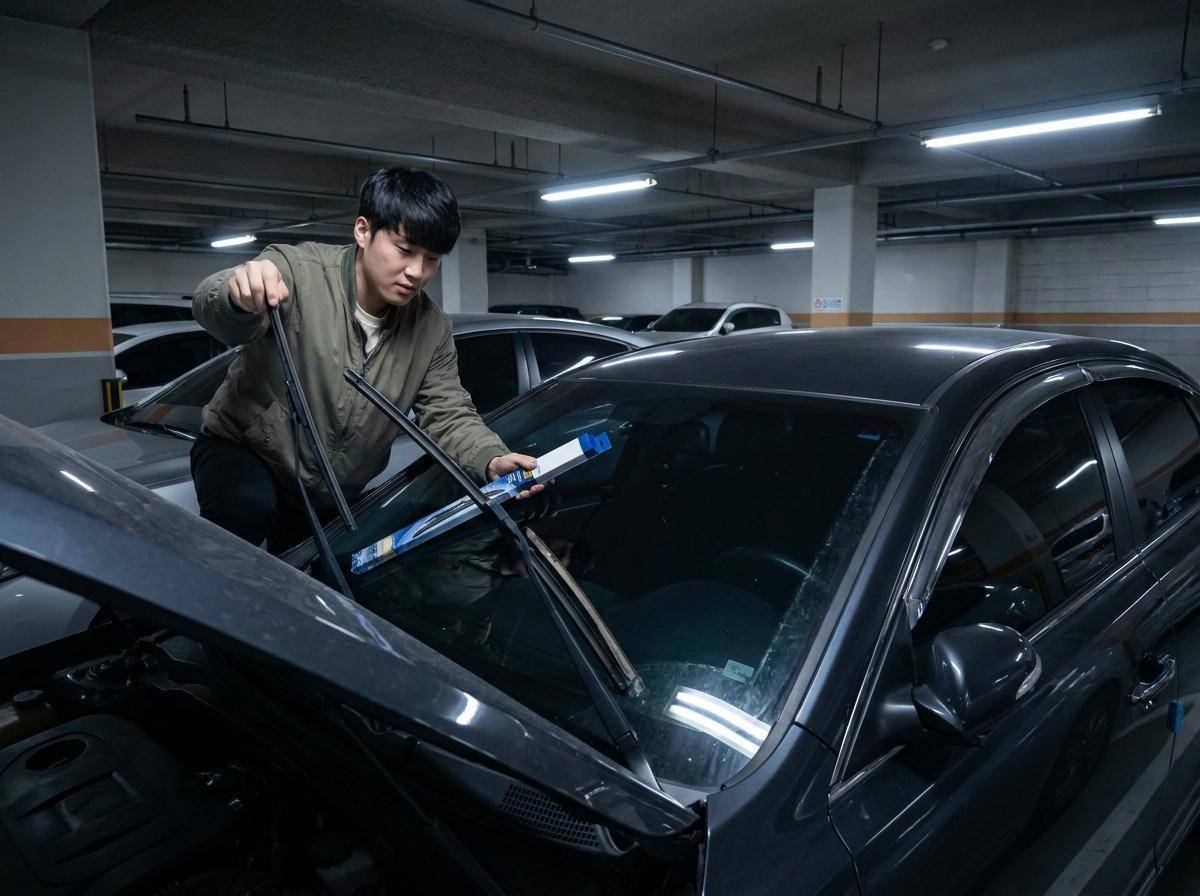
Differences by wiper type
There are three main wiper designs on the market. Traditional (standard) wipers mount a rubber blade on a metal frame. They’re inexpensive and easy to replace, but snow or ice that packs into the frame can reduce contact. Flat (aero) wipers form their structure without an exposed metal frame, offering more uniform contact and better wiping performance; they’re less likely to lift at high speeds, so many new cars come with them as standard. Hybrid wipers combine a traditional frame with a flat-style cover, balancing price and performance.
Blade rubber is typically natural rubber or silicone. Silicone resists heat and cold better, so it lasts longer and can leave a hydrophobic coating on the glass over time. Silicone costs about 30–50% more than natural rubber, but its longer service life narrows the long-term cost difference.
Don’t forget the rear wiper
People often replace only the front blades and neglect the rear wiper. Rear visibility is crucial for lane changes and reversing, so the rear blade deserves the same attention. Rear wipers usually see less use and may last longer, but rubber hardening progresses with time regardless of how often the blade is used.

Replace them yourself or have a shop do it?
Changing wipers is a tool-free task you can usually do by hand. Attachment methods vary, but most systems use simple hook or pinch-tab connectors; with the owner’s manual you can often finish the job in under 10 minutes. If it’s your first time, let a shop or auto-parts store pick the correct parts and confirm the fit. Some large retailers even offer free installation when you buy the blades.
Why check before the rainy season
The rainy season in some regions runs from late June through late July, and heavy downpours can exceed 50 mm (about 2.0 inches) per hour. Using degraded wipers in those conditions can reduce forward visibility by more than half. Losing sightlines on highways can quickly lead to chain-reaction collisions. Traffic statistics show higher fatality rates in rain than on clear days. While crashes explicitly blamed on wiper failure are rare, maintenance experts agree that wiper condition is a key factor when poor visibility contributes to accidents.

Discarded wipers find a second life in the bathroom
Wipers are engineered to clear heavy rain at highway speeds. Made from high-performance synthetic or silicone rubber, they’re durable and designed to remove water in a single pass. The priorities—full contact and one-stroke clearing—translate well to household glass.
Most inexpensive bathroom squeegees have blades about 200 mm (roughly 8 inches) long. Typical car wipers range from 400–650 mm (about 16–26 inches). That difference means a discarded wiper can clear two to three times the area in one stroke. On a shower door, a cheap squeegee might need four or five back-and-forth motions; a car wiper can often finish the job in one or two, cutting arm movement and reducing re-drip while you clean.
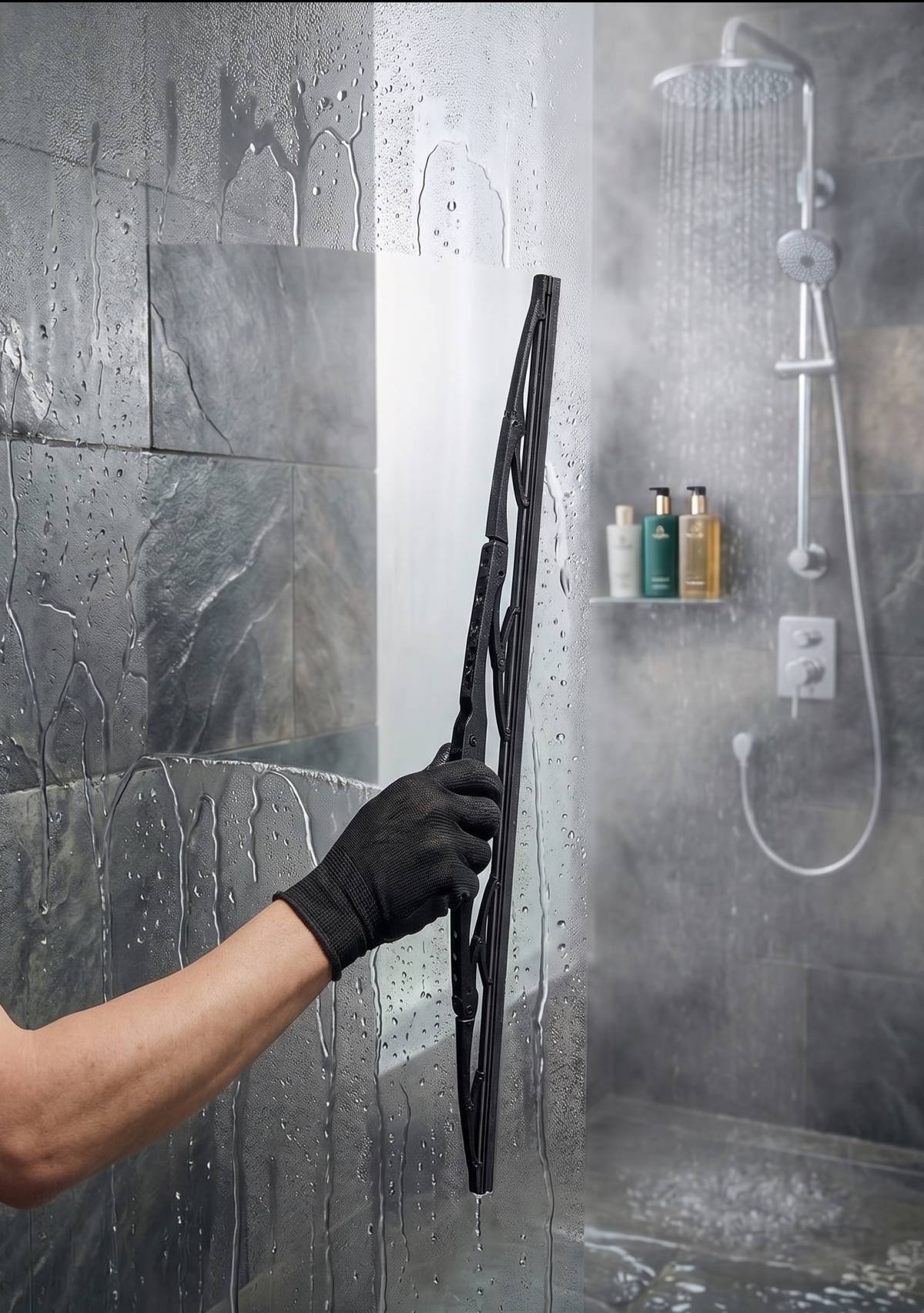
The contact is noticeably better. Wiper frames distribute pressure so the blade follows curved glass surfaces, not just flat panes—useful on shower corners and basin slopes where cheap squeegees often leave streaks because their blades don’t sit evenly.
The extra reach is practical, too. You can clear the top of a shower door or the upper edge of a mirror without stretching. Adults shorter than about 170 cm (roughly 5 ft 7 in) can lift a wiper and swipe downward to clean the upper areas without a step stool.
One small prep step makes a wiper bathroom-ready: cover any sharp metal edges on the frame where you’ll grip it. Wrap the handle area with a cloth, electrical tape, or a rubber band for better grip and to avoid cuts. Use the hole in the frame for storage—hang it from a towel bar or shower rod with an S-hook; no additional holder is needed.

Using one takes about 10 seconds after a shower. Start at the top of the shower door and pull straight down once; repeat 2–3 times to clear the glass. The same goes for mirrors—wipe away steam and droplets after hot water for an instant clear surface.
This habit matters because of how mold develops. Bathroom mold concentrates in grout lines, silicone seals, and at the bottoms of glass panels—places where moisture lingers. Physically removing moisture reduces the environment mold needs to grow. Bleach and mold cleaners remove existing mold; using a wiper after showers prevents mold from taking hold. It costs nothing and takes about 10 seconds each time.
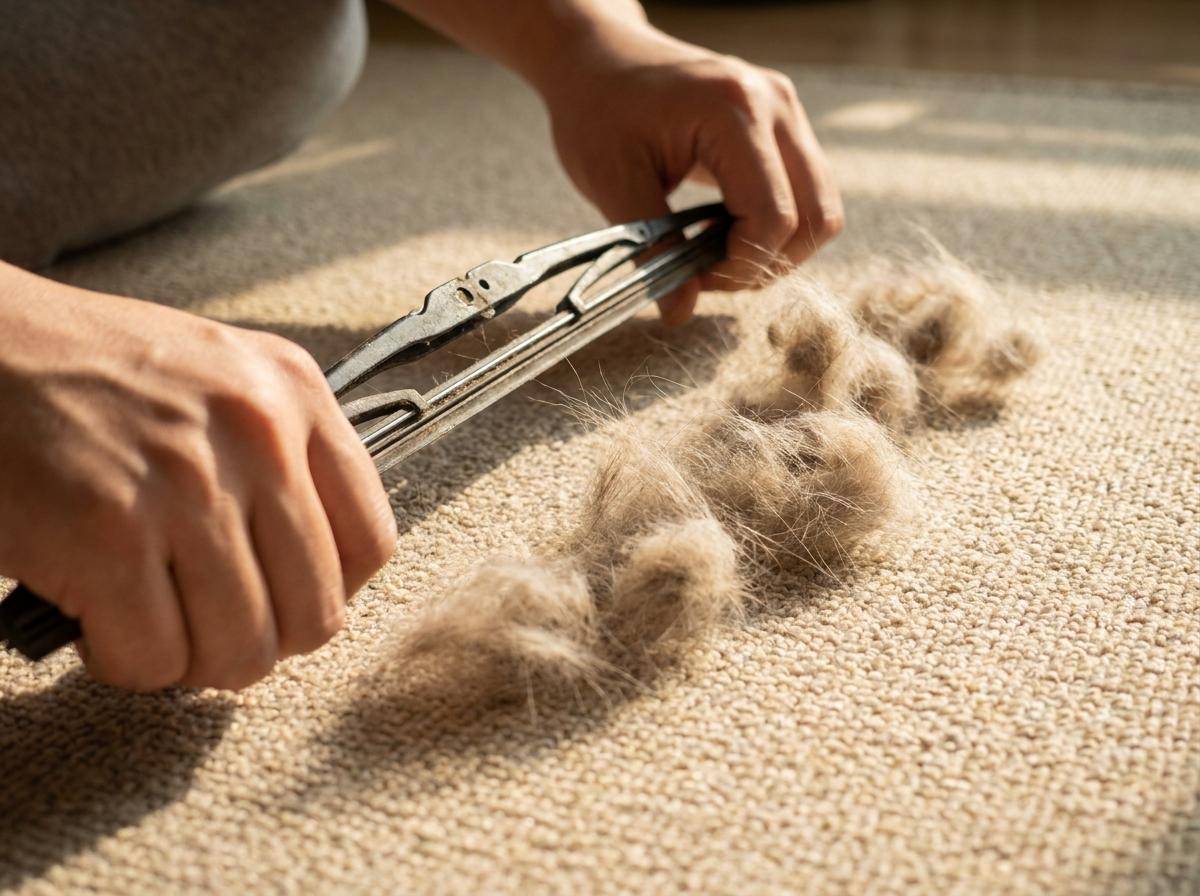
You can also use discarded wipers to remove pet hair from carpets and clean window tracks
The rubber edge of a used wiper creates strong friction. In homes with pets, drag a dry wiper across carpet against the nap to generate static that gathers fine hairs in one direction—especially effective on hairs a vacuum can’t pull up.
Wipers also help clean window tracks. Their thin blade can get into narrow gaps; wrap a cloth around the blade and push it into the track to scrape dust from corners your fingers can’t reach.














Most Commented