Quick access to main page (top) Direct access to main contents Quick access to main page (bottom)

How Can South Korea Solve Its Power Grid Conflicts? Insights on Community Participation and Profit Sharing

Daniel Kim Views  

image
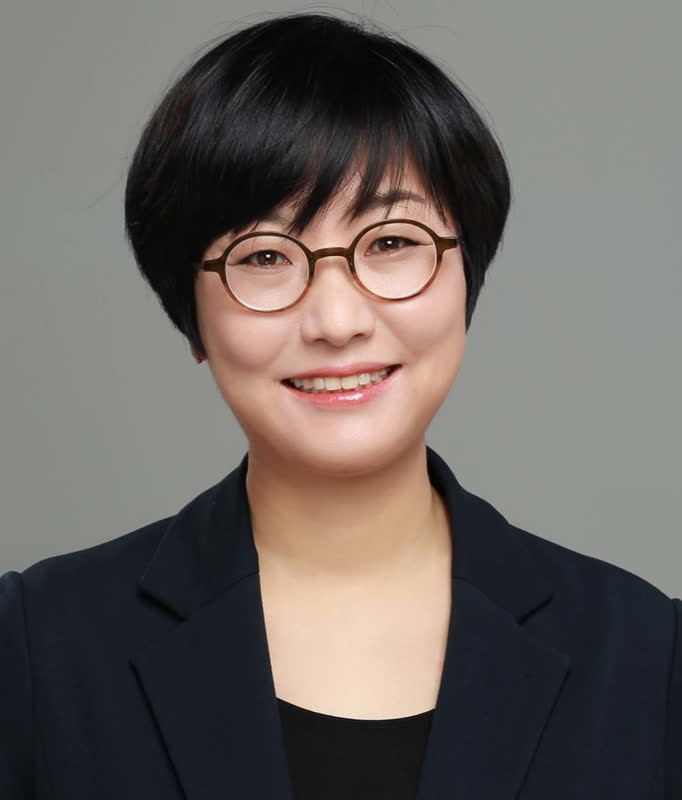
Ahn Kyung-mo, professor emeritus at Kyung Hee University’s Graduate School of Tourism and former presidential secretary for tourism promotion

Rising tensions in the Middle East are a clear warning. For South Korea, which depends heavily on imported energy, a stable power supply is no longer merely an industrial concern—it is a matter of national security. With energy-intensive sectors such as semiconductors and artificial intelligence (AI) data centers driving national competitiveness, building a reliable power grid is an urgent, nonnegotiable priority.

In the National Assembly, lawmakers broadly agree on the need for roughly 73 trillion KRW in power-grid investment and financing through 2028 (approximately 54.8 billion USD). Yet on the ground, projects are meeting another barrier: local opposition and siting disputes over transmission towers and lines are delaying major work. That even key projects, such as the Donghae–Singapyeong transmission line, are stalled shows grid expansion is not only a technical or budgetary issue.

The core problem is clear. Although the grid is public infrastructure serving the entire country, its burdens fall disproportionately on certain regions and residents. Villages and landowners where transmission towers are sited face property restrictions, altered living conditions, and psychological stress. Compensation is often one-off and of limited effect. If we cannot answer the question, “Why must our community or our land shoulder this?” conflicts will keep recurring. We need to change our approach—from compensating sacrifice to sharing benefits. Rather than suppressing conflict, policy should build understanding through meaningful participation.

As one alternative, I propose a “special participation framework for power projects.” Current rules grant exemptions only to transmission lines of 345 kV and above. In practice, however, land under lower-voltage lines and the sites used for towers bear the same burdens on property rights. These landowners should receive comparable exceptions—such as priority grid-connection rights—when they participate in power projects. If affected landowners or nearby residents take part in distributed-generation projects like solar and energy storage systems (ESS), permitting should be eased and grid connections prioritized. Treating landowners as energy producers rather than mere compensation recipients would reduce conflict and increase acceptance.

We should also consider a resident-participation profit-sharing model, where local residents hold equity stakes in grid projects or receive a share of revenues. International experience shows this approach can lower conflict and accelerate project delivery. Given the delays and social costs caused by disputes, proactive incentives are a more efficient choice. The longer projects are delayed, the more fragile the power supply becomes and the more national industrial competitiveness erodes—losses that ultimately translate into higher costs.

The power grid is the circulatory system of the national economy. But people live where those arteries run. Policies that ignore their lives cannot endure. Grid disputes are not mere complaints; they are policy failures.

We must change direction: from sacrifice to participation, from exclusion to sharing. When landowners and local residents are stakeholders, solutions become visible. The Lee Jae-myung administration’s energy policy should meet this test. Framing grid expansion as coexistence rather than sacrifice is the necessary choice now.

Daniel Kim
content@tenbizt.com

Comments0

300

Comments0

[Social] Latest Stories

  • Starbucks Korea CEO Fired Over Controversial ‘Tank Day’ Promotion
    Starbucks Korea CEO Fired Over Controversial 'Tank Day' Promotion
  • 25,000 Robots vs. Human Workers: The High-Stakes Battle at Hyundai
    25,000 Robots vs. Human Workers: The High-Stakes Battle at Hyundai
  • Hotel Hygiene Scandal: Cleaner Caught Using Guest Towels to Wipe Toilets
    Hotel Hygiene Scandal: Cleaner Caught Using Guest Towels to Wipe Toilets
  • South Korea’s Tech Giant Kakao Faces First Major Strike in 20 Years
    South Korea's Tech Giant Kakao Faces First Major Strike in 20 Years
  • South Korea’s Aging Crisis: How One Leader Is Redefining ‘Well-Dying’
    South Korea’s Aging Crisis: How One Leader Is Redefining 'Well-Dying'
  • Stop Calling Them ‘Hey You’: South Korea’s New Push for Worker Respect
    Stop Calling Them 'Hey You': South Korea's New Push for Worker Respect

Weekly Best Articles

  • Choi Dong-seok’s Family Bond: How a Simple Engraving Reveals Deep Love for His Children
  • Kwak Sun-hee’s Stunning Wedding Photos: A Celebration of Love and Courage
  • Is ‘I Am a Natural Person’ Just a Big Lie? Comedian Yoon-taek Reveals Shocking Secrets!
  • Health Scare: Why Fans Are Worried About Go Ji Yong’s Dramatic Weight Loss
  • Discover the Winter Gongju Chestnut Festival: A Taste of Korea at H-Mart in the USA!
  • 2026 Spring Wildfire Prevention: How Gyeryong City is Cutting Response Time to 30 Minutes!

You May Also Like

  • 1
    Ukraine’s EU Bid Surges as Hungary Drops Opposition Amid Russian Attacks

    Politics 

    Ukraine’s EU Bid Surges as Hungary Drops Opposition Amid Russian Attacks
  • 2
    Trump Backs Colombia's 'El Tigre' — What It Means for U.S. Relations

    Politics 

    Trump Backs Colombia’s ‘El Tigre’ — What It Means for U.S. Relations
  • 3
    Trump Backs Colombia's Far-Right Outsider—What's at Stake?

    Politics 

    Trump Backs Colombia’s Far-Right Outsider—What’s at Stake?
  • 4
    12.5% Tariff Hit: South Korea Faces New U.S. Trade Penalties

    Politics 

    12.5% Tariff Hit: South Korea Faces New U.S. Trade Penalties
  • 5
    12.5% Tariff Alert: Why the U.S. Is Targeting South Korean Imports

    Politics 

    12.5% Tariff Alert: Why the U.S. Is Targeting South Korean Imports

Popular Now

  • 1
    Marta Kostyuk Makes History at French Open Amid Ukraine Crisis

    Politics 

  • 2
    37 Years in Exile: The Tiananmen Leader Who Just Wants to Go Home

    Politics 

  • 3
    South Korea's Cheongju Airport Faces Crisis as Passenger Numbers Explode

    Politics 

  • 4
    Nuclear Submarine Race: South Korea's High-Stakes Bid for U.S. Fuel

    Politics 

  • 5
    France Finally Admits Complicity in the 1994 Rwandan Genocide

    Politics 

Weekly Best Articles

  • Choi Dong-seok’s Family Bond: How a Simple Engraving Reveals Deep Love for His Children
  • Kwak Sun-hee’s Stunning Wedding Photos: A Celebration of Love and Courage
  • Is ‘I Am a Natural Person’ Just a Big Lie? Comedian Yoon-taek Reveals Shocking Secrets!
  • Health Scare: Why Fans Are Worried About Go Ji Yong’s Dramatic Weight Loss
  • Discover the Winter Gongju Chestnut Festival: A Taste of Korea at H-Mart in the USA!
  • 2026 Spring Wildfire Prevention: How Gyeryong City is Cutting Response Time to 30 Minutes!

Must-Reads

  • 1
    Ukraine’s EU Bid Surges as Hungary Drops Opposition Amid Russian Attacks

    Politics 

    Ukraine’s EU Bid Surges as Hungary Drops Opposition Amid Russian Attacks
  • 2
    Trump Backs Colombia's 'El Tigre' — What It Means for U.S. Relations

    Politics 

    Trump Backs Colombia’s ‘El Tigre’ — What It Means for U.S. Relations
  • 3
    Trump Backs Colombia's Far-Right Outsider—What's at Stake?

    Politics 

    Trump Backs Colombia’s Far-Right Outsider—What’s at Stake?
  • 4
    12.5% Tariff Hit: South Korea Faces New U.S. Trade Penalties

    Politics 

    12.5% Tariff Hit: South Korea Faces New U.S. Trade Penalties
  • 5
    12.5% Tariff Alert: Why the U.S. Is Targeting South Korean Imports

    Politics 

    12.5% Tariff Alert: Why the U.S. Is Targeting South Korean Imports

Popular Now

  • 1
    Marta Kostyuk Makes History at French Open Amid Ukraine Crisis

    Politics 

  • 2
    37 Years in Exile: The Tiananmen Leader Who Just Wants to Go Home

    Politics 

  • 3
    South Korea's Cheongju Airport Faces Crisis as Passenger Numbers Explode

    Politics 

  • 4
    Nuclear Submarine Race: South Korea's High-Stakes Bid for U.S. Fuel

    Politics 

  • 5
    France Finally Admits Complicity in the 1994 Rwandan Genocide

    Politics 

Share it on...