
Translation result
It’s time to see the sponge that’s been waiting in a kitchen corner to be tossed in a new light. A sponge worn thin after about a month of dishwashing isn’t simply trash — it can become an all-purpose household helper that solves everyday annoyances around the home.
A drop of vinegar and a blast of microwave heat can revive a sponge, letting it earn a place beyond the kitchen — in the living room, on the balcony, even inside the shoe cabinet. The coarse scrubbing side that once tackled baked-on grime becomes ideal for clearing window tracks, while the sponge’s soft, absorbent core can protect potted plants by preserving moisture and improving airflow.
This clever repurposing — turning near-trash into household convenience — is just the beginning. Consider rediscovering the overlooked talents of the sponges you once tossed without thinking.
Before you reuse a sponge around the house, disinfect it thoroughly. Widely shared YouTube tips recommend wetting the used sponge and placing it in a plastic bag. Add two tablespoons of vinegar and a little dish soap, seal the bag, and microwave it. Heating for about three minutes can kill bacteria.
Drying is essential to prevent a recycled sponge from becoming a breeding ground for microbes. If you attach a damp sponge to furniture or tuck it into the refrigerator while it’s still moist, mold can develop.
After disinfecting and washing, dry the sponge in direct sunlight. UV rays suppress lingering microbes and stiffen the sponge fibers, making the material easier to handle and repurpose.
To confirm the sponge is fully dry, squeeze it tightly — you should feel no moisture. If, even after vinegar disinfection and baking-soda cleaning, the sponge smells musty or shows heavy discoloration, its internal structure has likely begun to rot and it should be discarded immediately.
Using the leftover vinegar solution after disinfecting the sponge
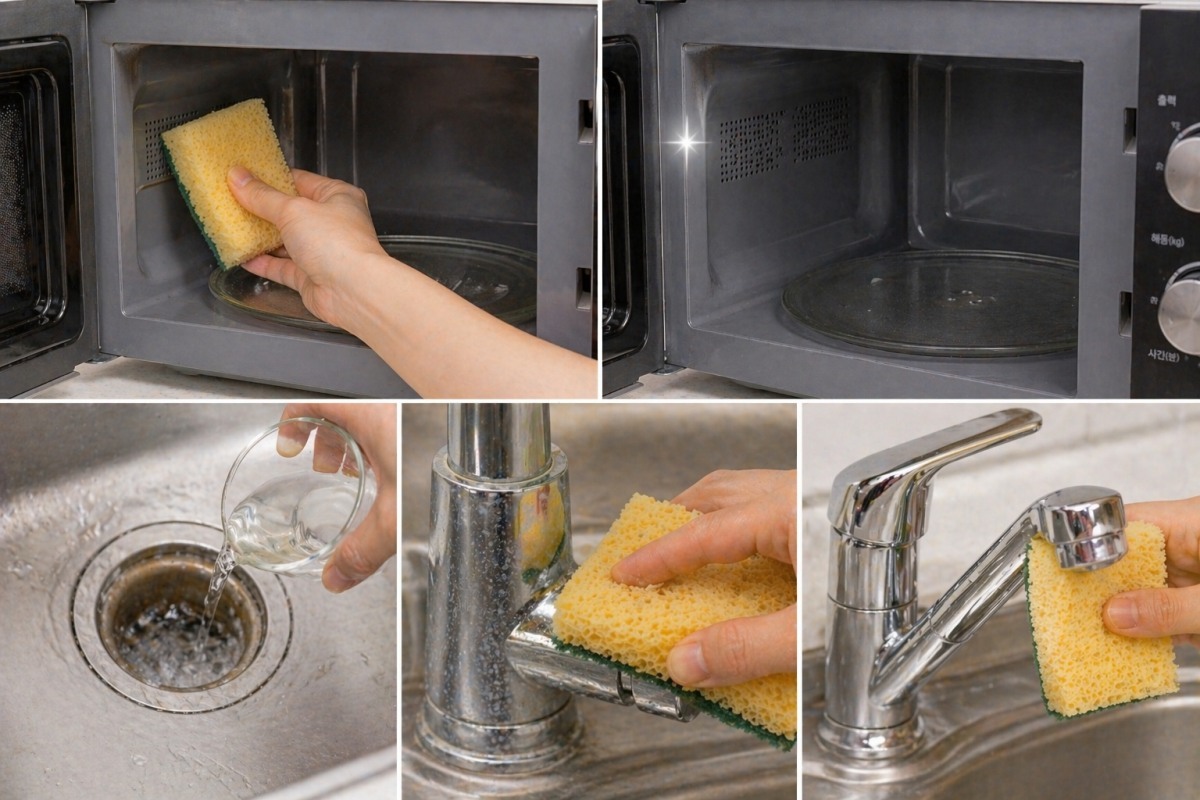
The warm vinegar-and-detergent liquid that seeps from the sponge after microwaving is an effective natural degreaser. Right after microwaving, that warm solution helps dissolve grease.
You can clean the inside of the microwave by wiping the vinegar condensation from the walls with a kitchen towel or dishcloth; this removes food odors and baked-on grease with little effort.
You can also treat sink drains. Pouring warm vinegar solution down the drain helps suppress microbial growth, prevents fruit flies in summer, and reduces unpleasant odors.
Vinegar also removes mineral buildup. Rub a vinegar-dampened sponge over white limescale around faucets and the sink; the acid neutralizes alkaline deposits and restores shine.
Ideas for using leftover sponges around the house
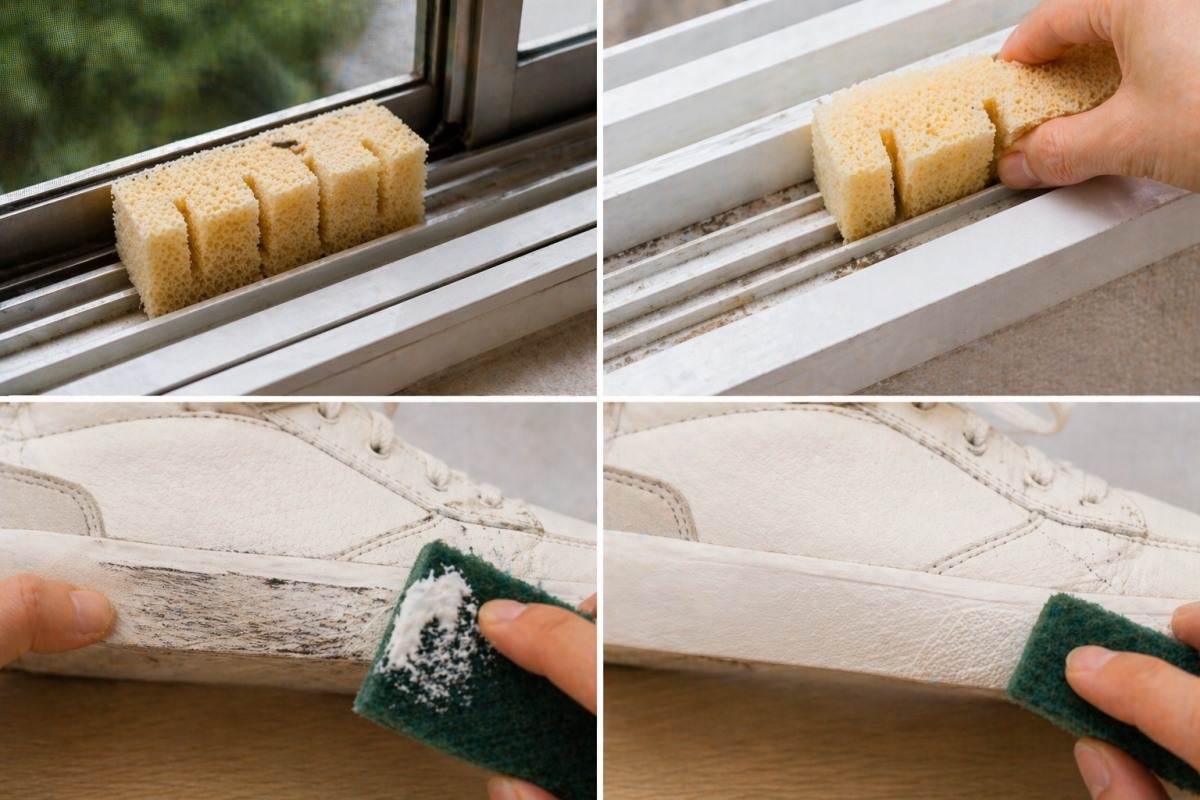
First, a sponge can be adapted to clean window tracks. Make deep cuts along the sponge’s side to match the number and spacing of the track rails, slide it into the rail, and push it through.
Spray the tracks with the vinegar solution used for disinfecting, then wipe with the sponge. The vinegar loosens old dust and reduces static, slowing the rate at which dust resettles.
Old sponges are also handy for removing scuffs from sneaker midsoles. Black marks on rubber midsoles often resist washing. Rub the sponge’s rough side with a bit of toothpaste or a baking-soda paste and scrub — the abrasive fibers lift grime from tiny grooves and help shoes look nearly new.
Try one in the shoe cabinet?
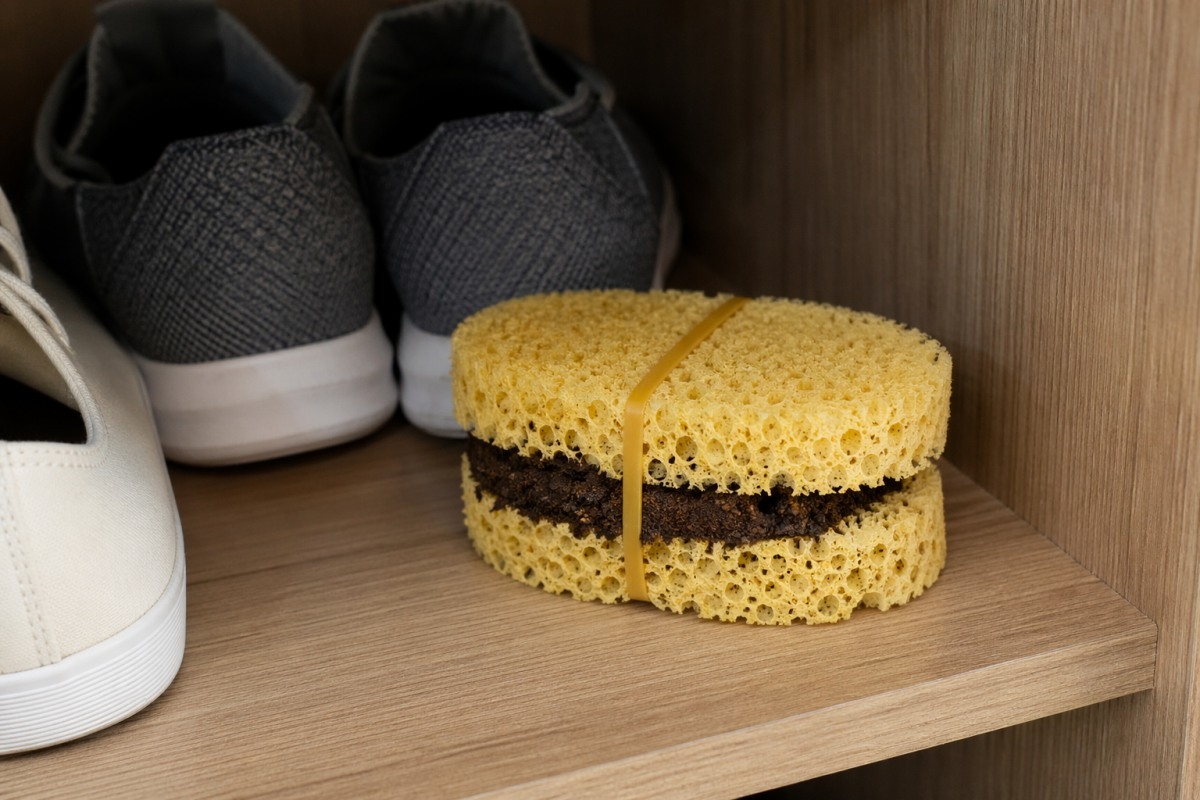
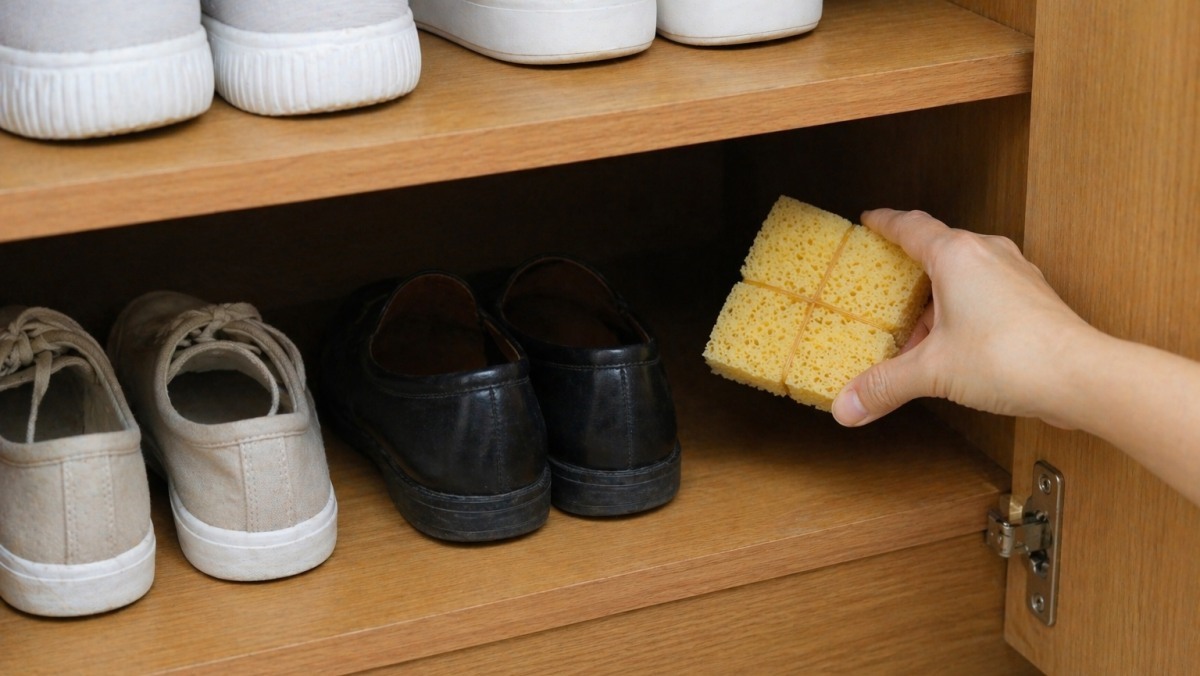
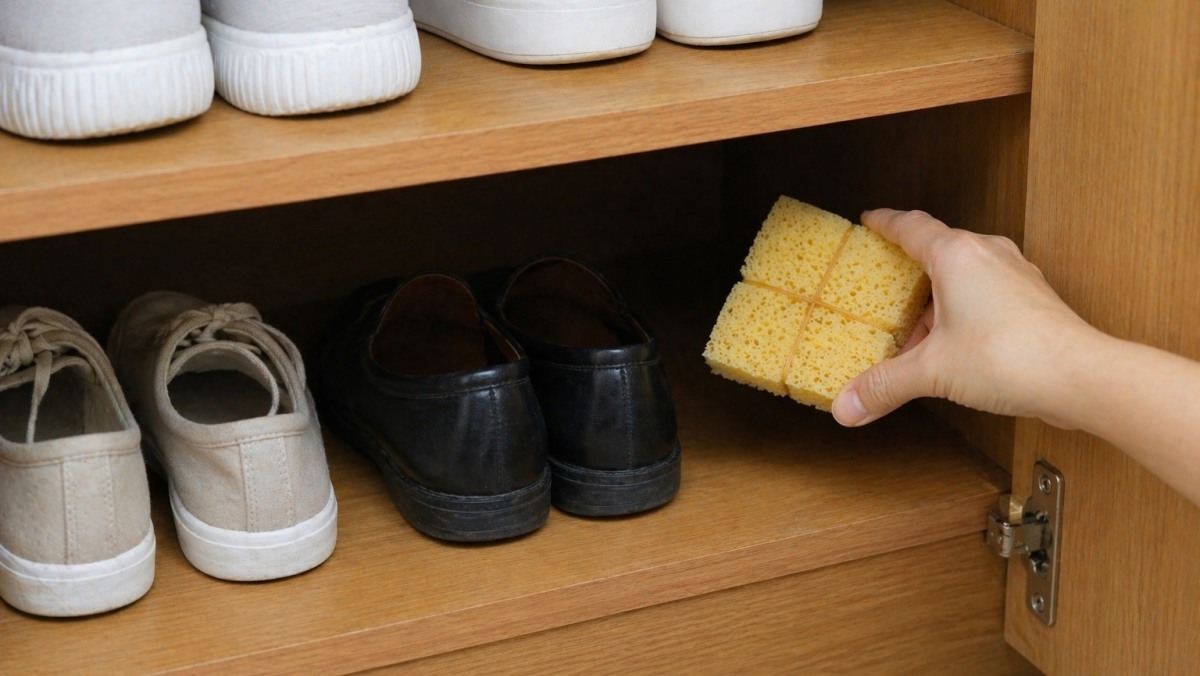
Sponge-style scrubbers absorb moisture well and allow air to circulate. Cut a sponge in half, stuff the cavity with baking soda or dried coffee grounds, secure with a rubber band, and place it in a shoe cabinet corner to create a natural deodorizer. The sponge’s porous structure helps air move and rapidly soaks up musty odors in confined spaces.
Use it in plant pots!
If you have sponges, you don’t need to buy mesh to stop soil from washing out of pot drainage holes when repotting.
The method is simple. After disinfecting and fully drying the sponge, flip the pot and note the drainage-hole size. Cut the sponge about 1–2 cm larger on each side than the hole and press the piece flat against the inside bottom of the pot. If the sponge has a bonded foam layer, place the rough, nonwoven side down toward the hole — this helps drainage.
The sponge’s grid filters soil while allowing water to pass and creates air pockets that improve airflow and help prevent root rot.
Fine fibers act as a filter, minimizing soil dust that would otherwise wash out when you water right after repotting. That keeps balconies or indoor floors cleaner during potting.
When building a drainage layer, place a thin layer of coarse gravel or pumice over the sponge before adding potting mix to maximize drainage. If the sponge is too thick, it can restrict root growth, so slice it to a suitable thickness for the pot size.
Use as a soap dish and furniture slider!
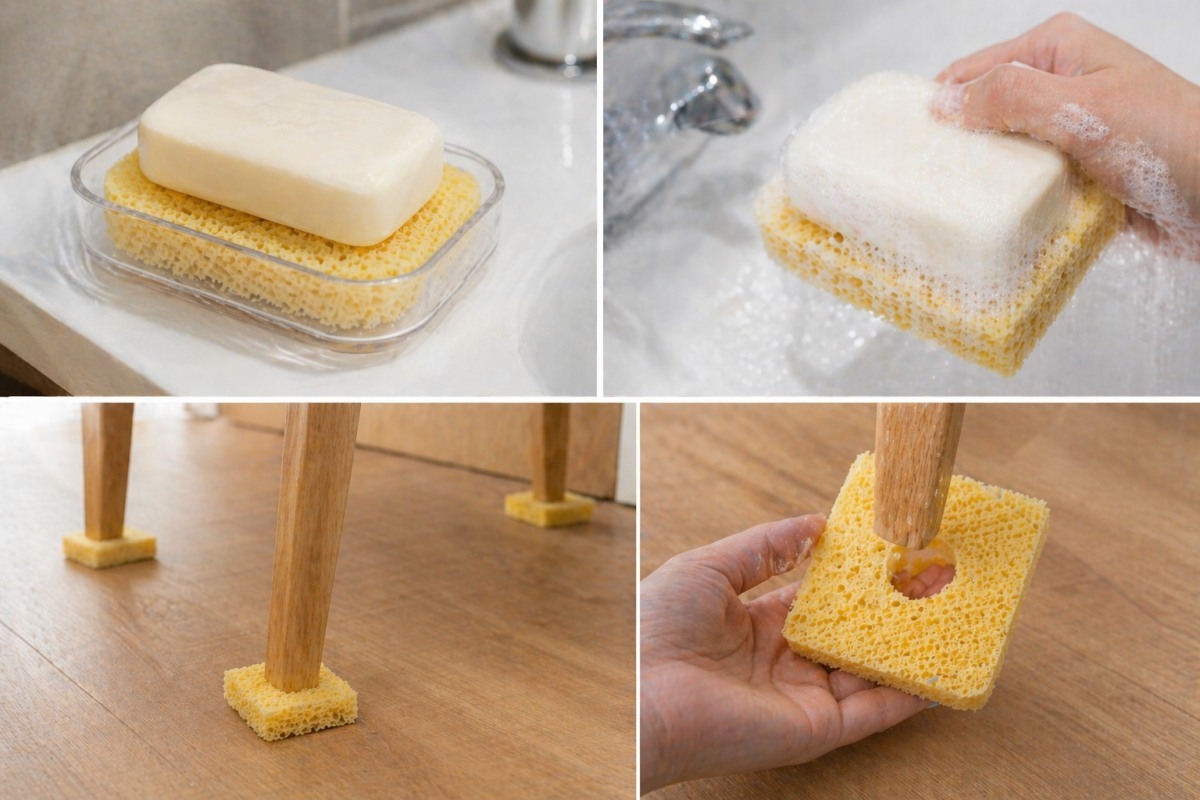
Water pooling in soap dishes makes soap sticky and messy in kitchens and bathrooms. Set a sponge under the soap to let water drain away quickly and keep the soap dry.
Over time the sponge will absorb soap suds, so you can use it to wipe sinks or counters without extra detergent — a convenient two-for-one solution.
If you’re worried about scratching the floor when moving heavy furniture, try sponge pads. Cut sponge pieces to fit under chair or table legs; they reduce friction, make furniture easier to move, dampen noise between floors, and protect flooring.
Sponge: use it everywhere!
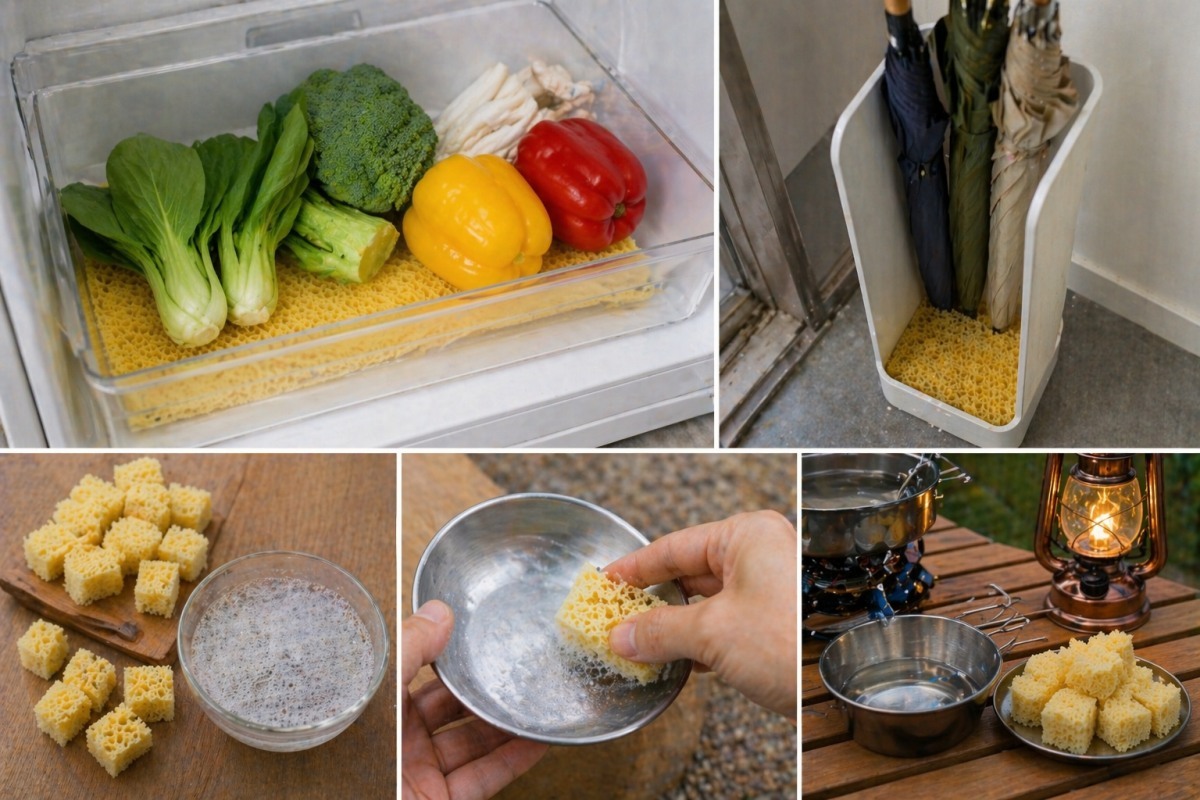
The uses don’t stop there. Lining the bottom of the refrigerator’s vegetable drawer with a sponge helps keep produce fresh longer. The sponge absorbs excess moisture and prevents vegetables from turning mushy; when it gets wet, simply squeeze it out and return it to extend storage life.
On rainy days, water that collects in an umbrella stand can cause mold and bad odors. Laying several old sponges cut to fit the stand’s base soaks up drips quickly; after the rain, remove and dry them in the sun to keep the stand clean.
Sponges are also handy for camping or travel. Cut old sponges into small pieces, soak them with dish soap, and dry them thoroughly. When you need to wash dishes outdoors, moistening a piece produces suds instantly, so you don’t have to carry heavy soap bottles. After use you can discard them on-site to lighten your load.














Most Commented