
Discover the Hidden Gem: Why the MZ Generation is Flocking to Dapsimni Antique Street
Daniel Kim Views
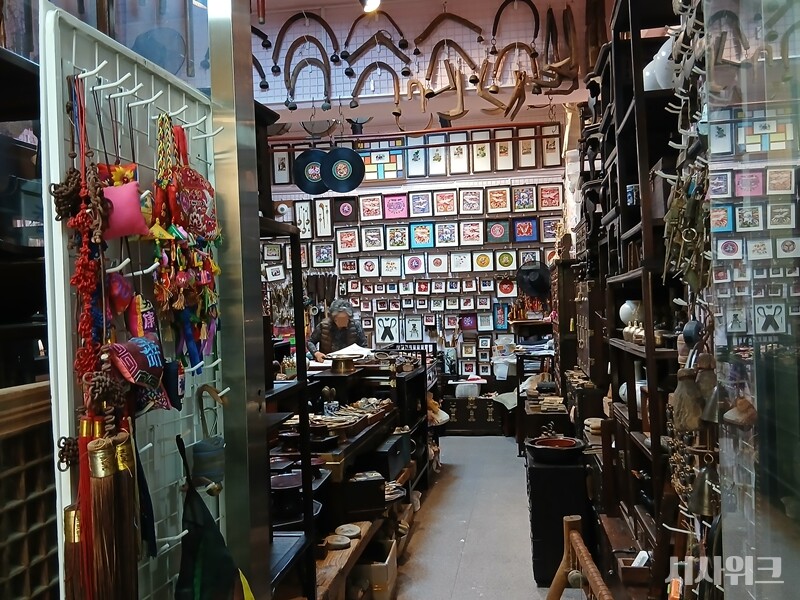
SisaWeek | Dapsimni — Reporter Kim Ji-young Slip down the side street behind the main road by Exit 1 at Dapsimni Station and you’re met with a scene that feels out of place in the middle of a concrete jungle: standing Buddha statues, brass spoons, teacups painted with delicate scenes, and colorful jewelry arranged like tiny treasures.
Part folk museum, part oversized TV prop room, this corner—called Dapsimni Antique Street—has quietly become a hot spot for the MZ generation. It’s surprising to see young people come here to hunt for antiques rather than to chase a Seongsu pop-up. Curious to see what the fuss was about, I visited at 2 p.m. on the 23rd.
◇ Antique street comes alive with twenty- and thirty-somethings
Dapsimni Antique Street grew out of a cluster of small antique shops that once dotted Cheonggyecheon, Ahyeon-dong, Chungmuro, and Hwanghak-dong in the 1980s. The arcade has three main buildings: Buildings 2 and 3 share one structure, while Buildings 5 and 6 sit a short walk away. Shop owners say Buildings 2 and 3 mainly showcase Korean antiques, while Building 5 carries more pieces made in China.
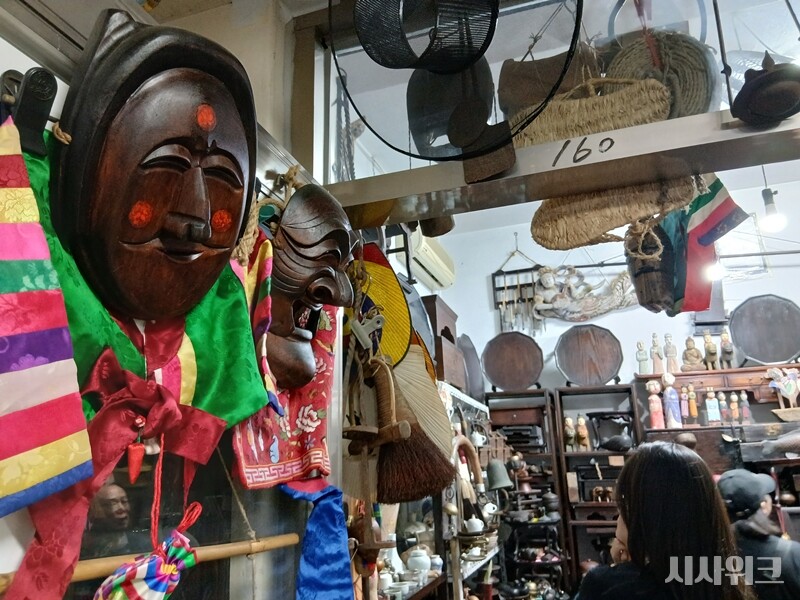
Merchants say these pieces were sourced from shops across Korea and even overseas. Step into the arcade and you’ll find storefronts—big and small—packed tightly along the corridor. One longtime dealer, who sold along Cheonggyecheon for more than 40 years before the area took its current form, has a shop so stuffed with collectibles it looks like a single wrong move could topple a tower of history.
A man in his 20s who browsed several shops by himself bought a coaster embroidered on yellow cloth for 10,000 KRW (approximately $7.50).
Go Seung-hwan, 27, visited with his girlfriend and couldn’t stop photographing a decorative piece modeled on a japsang—a small figurine placed along the sloped eaves of palace roofs—snapping shots with a digital camera and expressing delight.
It wasn’t crowded—weekday afternoons rarely are—but most visitors were in their 20s and 30s. “Since social media and YouTube started featuring this place, visits from younger people have gone up over the past two or three months,” one merchant said.
◇ Why antiques are trending—newer shops lead the way
Three second-generation stores that opened last year—Gobokhee, Hobak Folk Art Gallery, and Ob—played a big role in putting Dapsimni on the map. These shops reframed antiques as practical interior accents and leaned on Instagram to show how pieces can live in modern homes. The buzz grew further when celebrities and YouTubers like Geum Sae-rok, Kim Na-young, and Lee Hye-ri filmed there.
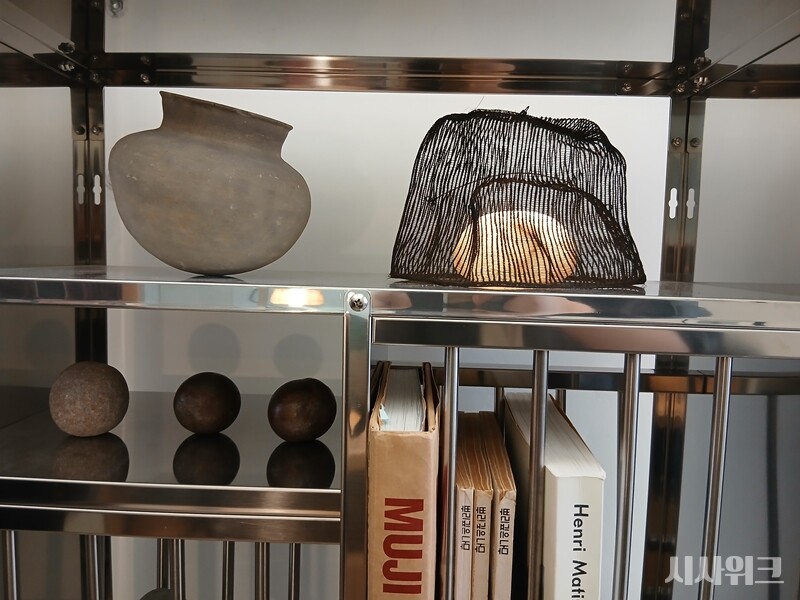
At Hobak Folk Art Gallery, the pieces felt designed for styling—not just collecting. The point hit home when I spotted an AirPods case sitting in a traditional ritual bowl. Kim Jae-yoon, the gallery’s 27-year-old manager, said they intentionally showed how ritual bowls can double as accessory holders rather than only serving as ceremonial dishes.
Elsewhere in the store, a round bamboo lunchbox held tape and pens, and a ceremonial headpiece was placed on a round lamp so it looked like a single, curated object—simple staging that sparks imagination.
“I think the future of antiques depends on whether they fit into modern living spaces,” Kim said. “For many buyers, price and whether the piece looks good at home often matter more than when it was made.”
◇ Koreans should be the first to know their culture
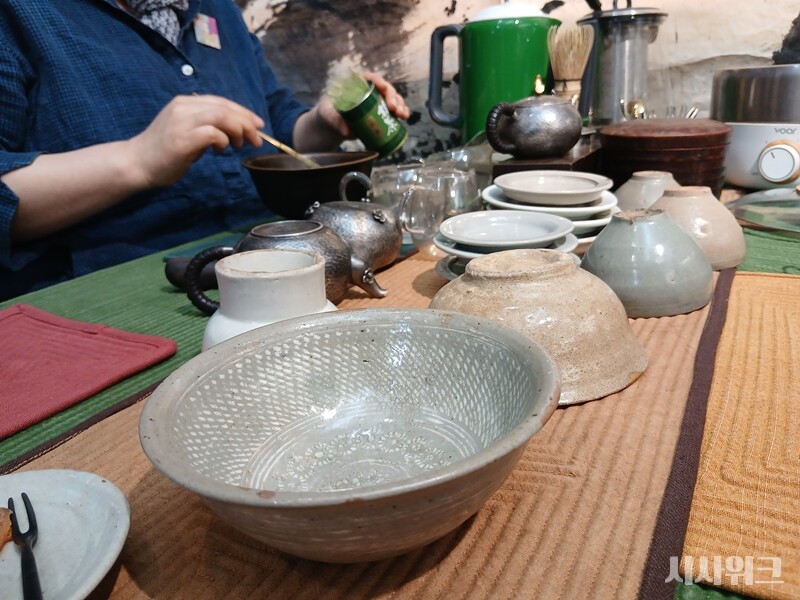
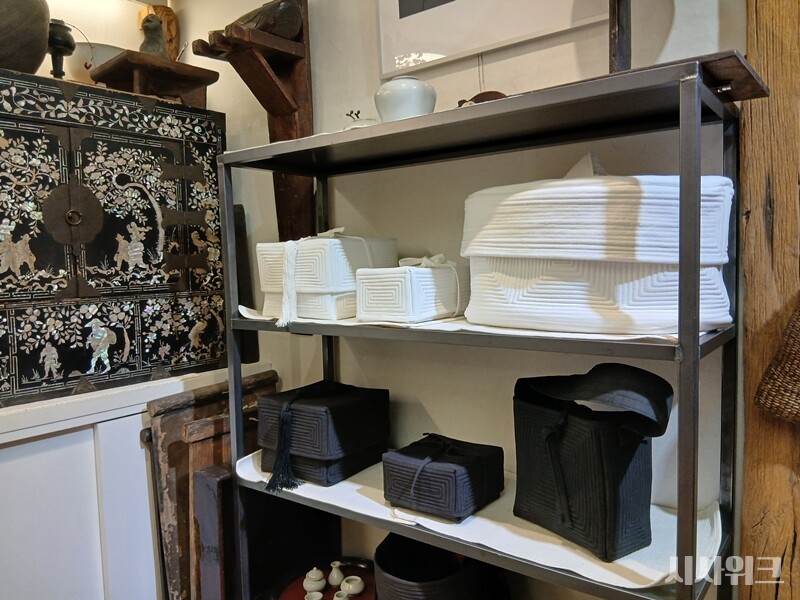
Shop owners are also finding creative ways to welcome younger crowds. Jeong Young-seop, 66, and his wife, who run the antique shop Yemyungdang, serve visitors free matcha and snacks—served in a cup they say was made about 600 years ago.
The couple also made accessible goods, like nubim boxes and tablecloths, so people could buy something useful and affordable. Last winter, new mothers reportedly picked up nubim boxes to store diapers or umbilical cord keepsakes. Nubim is a traditional textile technique from the late Goryeo era that sandwiches cotton between layers of fabric and secures it with dense stitching.
“I’m so happy when young people come by,” Jeong said. “Before we try to teach foreigners about Korean culture, Koreans should appreciate it themselves. I hope people buy antiques and support this scene so these objects can be learned about and shared more widely.”









Most Commented