
Is the Restructuring of South Korea’s Climate and Energy Ministry a Recipe for Inefficiency?
Daniel Kim Views
Translation result.![[연합]](https://cdn-union.tenbizt.com/contents/crawler-dev/image/2026/04/CP-2023-0083/image-0d897b09-e61c-4f1d-92df-652fd197ee05.jpeg) [Herald Economy = Reporter Bae Moon-suk] Under the Lee Jae-myung administration’s reorganization, the Ministry of Climate, Energy and Environment (formerly the Ministry of Environment) assumed the energy portfolio from the Ministry of Trade, Industry and Energy in October last year. Officials now expect the two offices to be fully consolidated under a single roof around September, roughly one year after the new ministry launched.
[Herald Economy = Reporter Bae Moon-suk] Under the Lee Jae-myung administration’s reorganization, the Ministry of Climate, Energy and Environment (formerly the Ministry of Environment) assumed the energy portfolio from the Ministry of Trade, Industry and Energy in October last year. Officials now expect the two offices to be fully consolidated under a single roof around September, roughly one year after the new ministry launched.
Some officials warn the arrangement resembles a divorced couple still sharing a house and could sap momentum from government operations. When the Ministry of Oceans and Fisheries relocated to Busan, it freed up space, but the Finance Ministry’s reallocation of funds earmarked for interior work delayed budget execution.
As part of the administration’s broader restructuring, the Finance Ministry transferred responsibilities — including mid- to long-term national strategy and fiscal policy planning; budget and fund formulation, execution and performance management; private investment; and national debt oversight — to the Planning and Budget Office in January. Even four months after the split, some space remains in shared use.
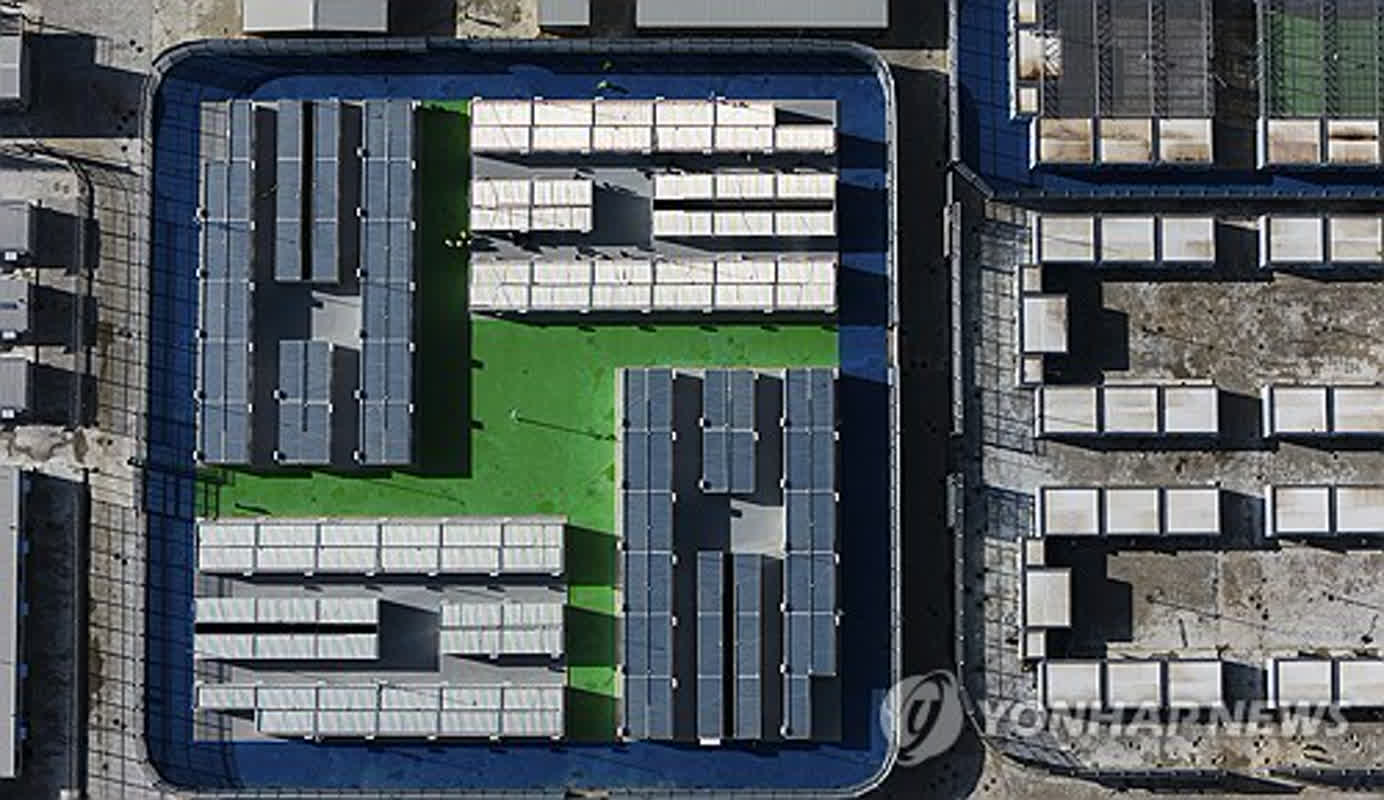
On the 22nd, Sejong officials said the Planning and Budget Office moved from its previous offices in the Sejong Government Complex and is using part of the KT&G Sejong Tower in Eojin-dong as a temporary office.
The office plans to occupy Building 5 of the Sejong complex vacated by the Ministry of Oceans and Fisheries when it moved to Busan in December. Officials originally expected a move-in around April–May after completing IT and other preparations, but uncertainty over repurposed budgets delayed decisions and execution, making a third-quarter (July–September) move more likely.
Officials say the Finance Ministry’s delay in accepting responsibility for roughly 890 million KRW가량 (about $667,500) in repurposed interior funds pushed the construction-contract schedule from the first week of February to the second week of April — about a two-month delay. That budget was finally allocated on the 12th.
The climate ministry faces similar delays. The Administrative City Construction Office (ADCC), which shared Building 6 with the climate ministry, moved into the Industry Ministry’s Building 13, and the climate ministry planned to relocate its subordinate bureaus into the vacated space. Budget execution lagged by about two months. The ADCC’s moving contingency, roughly 4.5 billion KRW 규모 (about $3,375,000), had been scheduled for a design contract in the first week of February but was delayed to the second week of this month; that budget was allocated on April 9.
As a result, roughly 150 climate ministry staff — nearly a year after the ministry formed — still must walk about 10 minutes to attend a single meeting, creating clear inefficiencies. Observers warn the physical separation could slow efforts to reconcile the ministry’s sometimes conflicting mandates of environmental regulation and energy promotion.
The facilities management office says it will press the ministries to accelerate moves despite the late budget allocations.
A Sejong official said, “Because the Finance Ministry delayed its decision to repurpose the 890 million KRW 예산 전용 (about $667,500), the Planning and Budget Office, ADCC, Industry Ministry and Climate Ministry — four agencies — suffered inconveniences from delayed office moves. This could create gaps in government operations.”
Another Sejong official added, “It’s like the former Ministry of Strategy and Finance and the Industry Ministry divorced under the Lee administration but still uncomfortably live under the same roof. That inevitably fuels criticism of a ‘hasty reorganization.’”
![[세종백블]](https://cdn-union.tenbizt.com/contents/crawler-dev/image/2026/04/CP-2023-0083/image-6b35580e-46ac-4287-b1e8-f1610738c9f2.jpeg) {vi24}
{vi24}













Most Commented