
Unlocking Potential: How Happy Tree is Transforming the Employment Landscape for Disabled Workers in 2026
Daniel Kim Views
Translation result
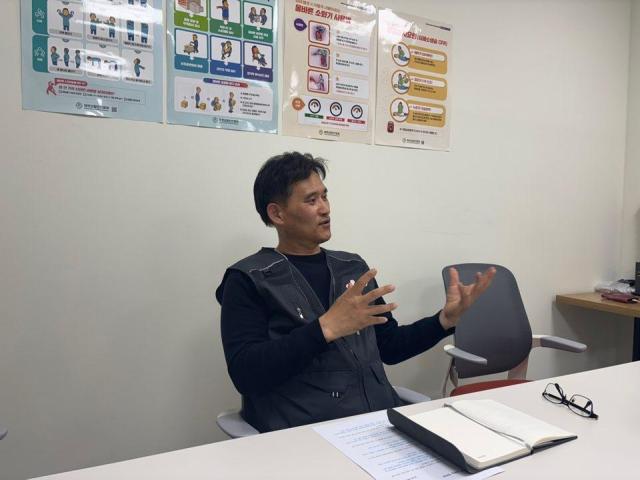
Workers with disabilities may take a bit longer to master tasks, but on the production line they are among the most reliable employees, consistently delivering precise, high-quality results.
When I met with Noh Gyun-young, CEO of Happiness Tree, ahead of Disability Day on the 20th, she underscored that point. She believes hiring people with disabilities can do more than distribute jobs—they can form the foundation for vital production roles.
Happiness Tree, which opened in December, is a standardized workplace for people with disabilities operated as a subsidiary of SK Intellix. During the interview, Noh emphasized \”independence\” and \”potential\” far more than the word \”disability.\” Having observed these employees at close range, she has seen that disability need not be an obstacle to performing work. I spoke with her about the progress Happiness Tree has made over the past six months.
– You must have had significant concerns about hiring people with disabilities when you first started Happiness Tree.
To be honest, I did worry at the start. But after nearly six months working alongside them, those concerns proved unfounded. Often, non-disabled staff will relax standards when interpreting work guidelines; these employees, by contrast, take procedures and on-site instructions very seriously. Because they adhere strictly to principles, the quality of their output often surpasses expectations.
– What tasks do the workers with disabilities primarily perform?
They handle the assembly and packaging of key consumables—such as storage components and screws—for SK Magic’s ice water purifiers. This is not auxiliary work; an actual segment of the manufacturing process has been transferred to the subsidiary and is run here. There’s a strong sense of pride because the quality of the purifiers delivered to households nationwide begins with these workers’ hands.
– How do you help them adapt to the workplace?
Clear, visual guidance is far more effective than abstract instructions. We installed screens at each station to guide tasks and broke processes into small, easy-to-follow steps. Non-disabled supervisors have shifted away from one-way directives; they communicate patiently, make eye contact, and give workers the time they need. While the environment can be intimidating at first, tailored training lets employees internalize each task through practice.
– Contrary to the stereotype that these would be short-term contract jobs, you say employment stability is high.
The water purifier business has distinct peak and off-peak seasons. From a pure efficiency standpoint, using temporary contractors might seem easier. But we view direct employment as part of the company’s social responsibility—providing a steady safety net even during slow seasons. As a result, turnover has been nearly zero, and organizational cohesion is stronger than in comparable non-disabled teams.
– Your pay and benefits exceed legal standards. That’s notable.
Creating positions just to meet quotas has little meaning. Our priority is that employees achieve genuine economic independence. That’s why hourly wages are set roughly 20–30% above the legal minimum. When their work is fairly compensated, they can stand confidently as full members of society.
– How do they interact with non-disabled colleagues inside the organization?
Early on, both groups were cautious about how to engage one another. But ongoing awareness training and communication programs have built authentic camaraderie. Non-disabled managers find themselves inspired by the disabled employees’ dedication and enthusiasm, while those employees respond with a heightened sense of responsibility under their colleagues’ trust.
– What is Happiness Tree’s ultimate goal?
We want to demonstrate the synergy that emerges when government policies to promote disability employment meet the execution capacity of private companies. My hope is that employees who develop at Happiness Tree build the skills and independence to move into broader opportunities. Ultimately, we aim to chip away at societal biases about hiring people with disabilities.













Most Commented