
Translation result
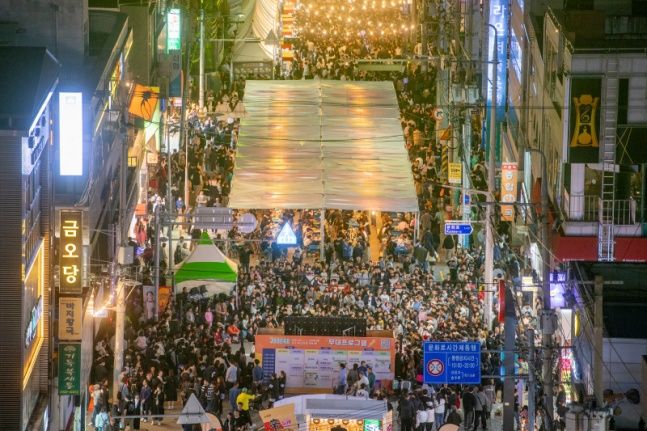
Gumi City (North Gyeongsang Province) has been selected for the Ministry of Culture, Sports and Tourism’s 2026 Local Government Cooperation: K-Culture Expansion Support Project, giving the city a decisive boost to position itself as a K-food tourism mecca.
On the 17th, Gumi City said the selection reflects its success turning industrial assets into unique tourism content. The city secured project funding totaling 166 million KRW, including 83 million KRW in national funds (83,000,000 KRW ≈ $62,250; total 166,000,000 KRW ≈ $124,500).
Judges awarded Gumi high marks thanks to its unique identity as the birthplace of K-ramen. The city is home to Nongshim Co.’s Gumi plant, the country’s largest ramen production facility.
Connecting the Nongshim Gumi plant—the nation’s biggest ramen hub—Gumi has developed an industrial-tourism route where visitors can taste freshly fried ramen. The plan is to use that route as the backbone of K-culture fam tours that link local hotspots like Geumo Mountain and Geumridan-gil, maximizing visits from independent international travelers.
A city official said, “We will successfully establish the Global Ramen Challenge and develop Gumi into an essential stop on K-food gourmet tours that resonate worldwide.”
To that end, the city is launching the 2026 Gumi Global Ramen Challenge, an interactive international project centered on ramen—one of K-food’s flagship items.
The event is designed as a virtuous cycle that connects online preliminaries with offline finals rather than a one-off spectator show. From June through August, organizers will run a social-media video contest called “My K-Ramen Recipe,” targeting major ramen export markets including the U.S., China, Japan and Southeast Asia.
Foreign contestants who advance through the preliminaries will be invited to Gumi during the 2026 Gumi Ramen Festival. They’ll compete in live cooking battles on the festival’s main stage, broadcast globally and streamed in real time across social platforms.
As of April, Gumi’s population slightly exceeds 400,000. Last year’s Gumi Ramen Festival drew about 350,000 visitors, including roughly 10,000 foreigners. City officials expect this project to institutionalize foreign tourist visits and inject fresh energy into local businesses.
On the 2nd, Gumi was also chosen for the Ministry of Agriculture, Food and Rural Affairs and Korean Food Promotion Institute’s 2026 K-Gourmet Belt (Chicken Belt) Development Project.
The K-Chicken Belt links nationwide chicken dishes—jjimdak, dak-galbi and dakgangjeong—around a chicken-centered theme to create a global gourmet tourism hub. Gumi will collaborate with Kyochon F&B and tour operator Yellow Balloon to run hands-on visitor experiences anchored at Kyochon’s first store.
Gumi is where Kyochon Chicken opened its first location in 1991, giving the city symbolic status as the birthplace of Korea’s chicken franchise industry. The city plans to recast the brand’s growth—from a small fried-chicken shop to a global name—as a tourism asset, developing it into a “brand shrine” similar to the first McDonald’s in Chicago or the first Starbucks in Seattle.
The tourism hub plan centered on Kyochon Chicken is being rolled out in phases.
In June 2024, the 500m stretch from the Gumi Intercity Bus Terminal to Dong-A Department Store was designated the honorary road “Kyochon 1991-ro” (500 meters ≈ 1,640 feet / 0.31 miles). The following June, the city invested 1.8 billion KRW to create a space along the same stretch where tourists can enjoy chicken and beer (1,800,000,000 KRW ≈ $1,350,000). The city also established Kyochon 1991 Cultural Street, featuring monuments and a promenade that trace the brand’s history.
Since that street project, sales at Kyochon’s original store reportedly rose by more than 40%, and visitor numbers doubled. Gumi plans to connect existing gourmet assets—like the Gumi Ramen Festival—to expand into longer-stay tourism.
Alongside major national projects and corporate attraction efforts, Gumi is working to shed its industrial-park image and rebrand as a hip gourmet destination tailored to Millennials and Gen Z.
New public design elements and locally distinctive content that give Gumi its own romantic flair have already won public support. If the city succeeds in becoming a K-gourmet tourism mecca, longer stays and repeat visits are likely to grow steadily.
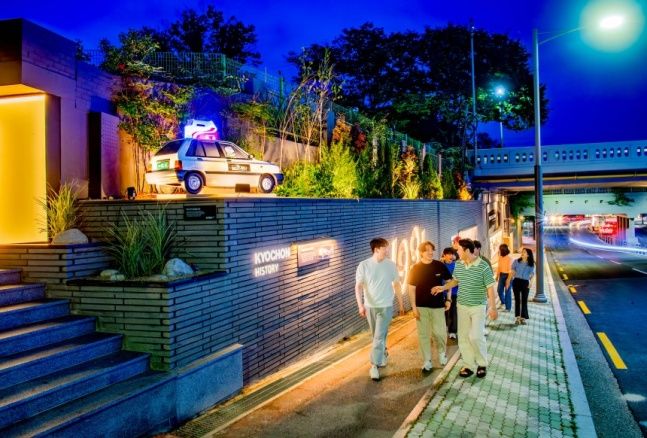
© Dailian Co., Ltd. Unauthorized reproduction and redistribution prohibited
- Controversial ad accused of being indecent — how explicit was it?
- President Lee and Hong Joon-pyo hold private makgeolli luncheon…rumors of Hong as prime minister reignite
- Oh Se-hoon confirmed as People Power’s Seoul mayoral candidate, aiming for a third straight term and a fifth overall
- Hyundai aims to crack China’s long-elusive EV market with a head-on push by the Ioniq
- Kim Jang-ho, Gumi mayoral candidate, calls to “protect the conservative heart” at his Passion Citizens campaign HQ opening; North Gyeongsang gubernatorial candidate Lee Cheol-woo attended










Most Commented