
Translation result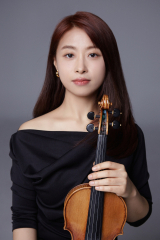
We often assume beauty resides in the object. We call good music beautiful and expect a great performance to move us. So we search for better works and push for ever more perfect renditions, as if the emotion were already fully contained in the music.
But as performances accumulate, that belief begins to wobble. Even when musicians play the same piece, some nights the audience sinks in deeply and other nights they don’t. The performance hasn’t changed much, yet the room’s atmosphere and the audience’s response feel unmistakably different.
I find myself constantly asking how I can get closer to the essence of the music I feel and how to convey that to listeners. I grow more cautious when I offer commentary. I worry that my words might limit someone’s experience. Music needs to come alive differently for each listener, and I don’t want my interpretation to narrow that possibility. Increasingly, I focus less on what to say and more on how to leave space.
After a concert, one thing becomes clear from hearing audience reactions: people tell different stories about the same music. Some say they better understood the performer’s intent; others say the music pushed them to look inward. For some, a single moment lingers. The music was one thing; the experiences were never the same.
Where does that difference come from? Maybe the feeling doesn’t live in the music at all but arises inside each listener. Music exists as sound, but its meaning is remade in each person’s memories and state of mind.
That realization changed my approach. I began caring less about what to deliver and more about what kind of state to create. Rather than transmitting a single, precise emotion, I try to leave room for people to feel in their own ways. Performance, I’ve learned, is less about defining emotion than about creating the conditions in which emotion can arise.
Sometimes the concert hall produces an uncanny moment. No one looks at anyone else, yet you sense everyone has slipped into the same flow. Each person feels something different, but those feelings come alive at the same time. In those moments, the boundaries between performers and audience—and among individuals—blur.
Those moments usually begin very quietly. Small movements stop, and the whole space feels like a single breath. No one seems conscious of anyone else, yet there’s a clear sense that everyone is oriented the same way. I believe that is where art reveals itself most clearly.
No one can feel exactly the same thing, but moments occur when different emotions enter a shared current. We think we’re listening to music, yet in those times we also confront ourselves. In that instant, we sense different people occupying the same space together.
Beauty does not live in the music. It finally arises within the listeners and in the shared state they create together.











Most Commented