
Translation result
On the 16th, YouTube channel ‘Kang Reo Gyang Reo’ posted a video revealing a trick for coaxing a deep, aged-kimchi flavor from underripened, fresh kimchi.
Chef Kang walks viewers through the technique and ingredient choices that let you mimic the rich flavor of well-fermented kimchi even when your jar hasn’t fully matured.
According to the video, most store-bought kimchi is under-fermented, which makes it hard to get a truly deep flavor when you simmer a stew. Instead of relying on sugar or artificial seasonings, Chef Kang recommends using natural ingredients and a few targeted sauces to build complexity.
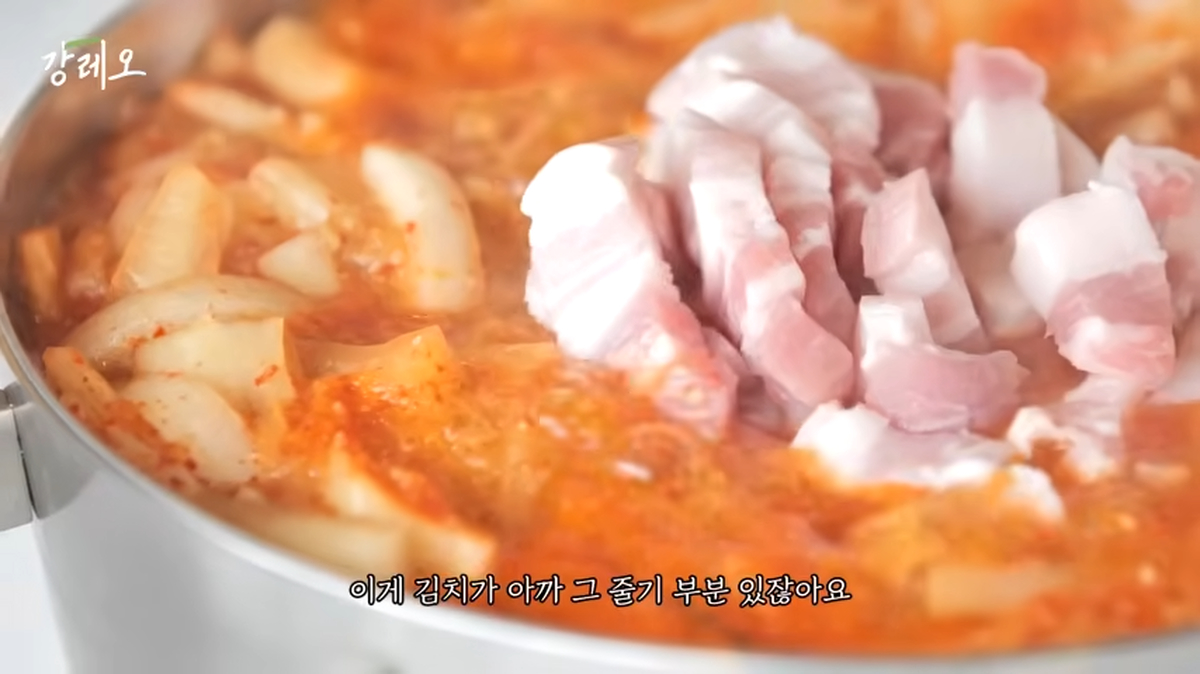
For the stew’s backbone, he picks Nonghyup kimchi and skin-on pork belly. He says the rind-on pork belly preserves a satisfying mouthfeel, and he starts the pot by simmering the meat with the kimchi instead of pan-frying the pork first.
If your kimchi isn’t ripe, his top tip is to add more onions than you normally would. The onions’ natural sweetness compensates for the kimchi’s missing umami and tames the sharpness, giving the stew a rounder, smoother finish. He also notes that clean tap water works fine if you don’t have filtered water on hand.
During cooking, Chef Kang advises simmering long enough for the kimchi stems to turn translucent.
That change signals the kimchi has tightened under heat and then loosened again, releasing its savory depth. He says the stew truly peaks when the pork fat starts bubbling and melting at the edges.
Salt choice matters, he adds. Using sea salt—with its mineral content—boosts the dish’s umami more than refined salt does, and picking the right salt can also support health goals like managing blood pressure.
The most eye-catching tricks in the video are Tabasco sauce and natto. Chef Kang says Tabasco helps recreate the funky, fermented tang of aged kimchi.
Because Tabasco contains only salt, vinegar, and peppers, it brings fermented acidity without adding sugar. Stirring in a pack of natto at the end builds a savory, cheonggukjang-like layer that deepens the flavor. Natto’s aroma is modest, so it won’t leave your house smelling while it quietly elevates the stew’s umami.
Finally, he recommends dicing tofu into cubes. Cubes scoop neatly onto a spoon and let you get broth, meat, and kimchi in one perfect bite—more satisfying than flat slices.
He emphasizes that kimchi stew often tastes best after a short resting step: let it cool, then reheat. That lingering time relaxes the flavors and makes the stew more delicious than eating it immediately. The production team even said this version tasted deeper than traditional aged kimchi.
Trending Now
- No. 1 Could I get it too?… ‘Up to 600,000 KRW (approximately $450)’ high fuel support — who qualifies and how to apply, complete guide
- No. 2 The diver who found the missing captain at Sokcho Daepohang turned out to be the husband of a famous actress
- No. 3 A parent reacted after watching Lee Su-ji’s ‘kindergarten teacher’ parody video, writing, \”Reality is even worse,\” sparking shock











Most Commented