
Turns out you only need to add yogurt to turn a plain cucumber salad into something unexpectedly delicious — and people online are loving it. Here’s the recipe to try at home.
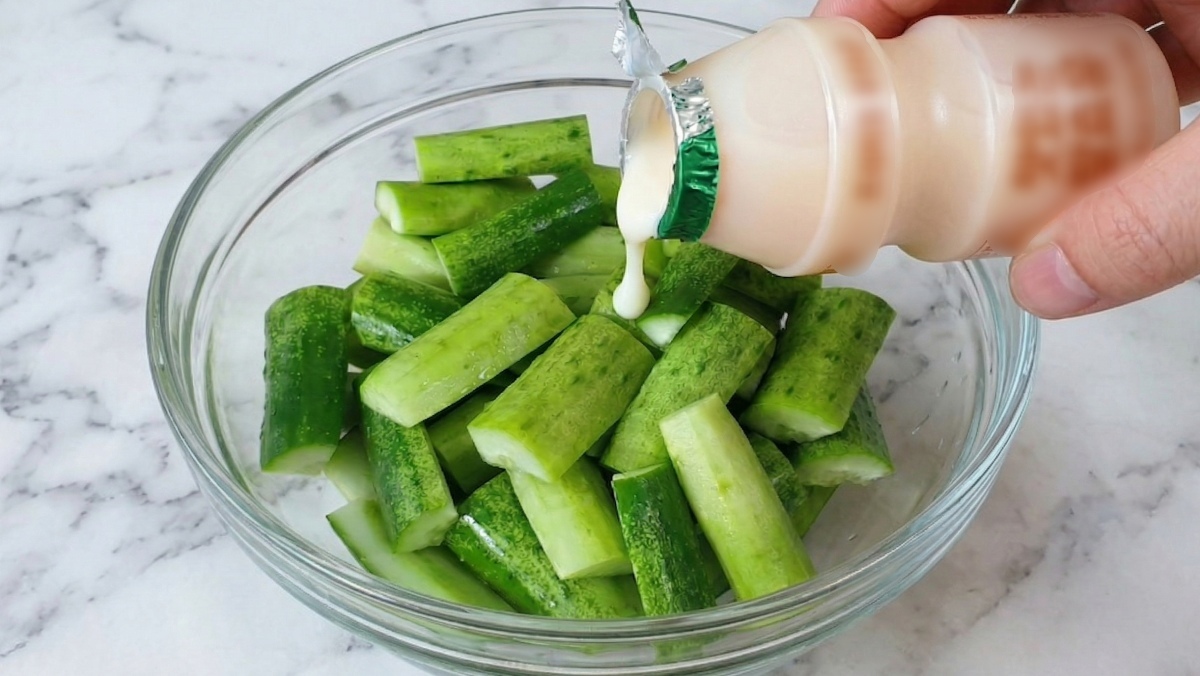
Start by washing the cucumber thoroughly and trimming both ends. Cut it lengthwise into quarters and scoop out the watery seed core — that’s the key step to prevent the finished salad from getting soggy and to keep each bite satisfyingly crisp. Cut the prepared cucumber into bite-sized pieces and set aside.
Sprinkle the sliced cucumber with 1 tablespoon of coarse salt and let it sit for about 15 minutes. This draws out excess moisture while keeping the crunch. Rinse the cucumbers under running water, then drain well in a colander. If you don’t remove the water properly, the dressing can become too thin.
Now for the dressing. Start with 4 tablespoons of gochugaru (Korean red pepper flakes), 1 tablespoon minced garlic, and 2 tablespoons of fish sauce — such as kanari aekjeot (anchovy fish sauce) — then stir in a small single-serve container of yogurt. Add thinly sliced scallions and, if you like, chopped green or red chilies for a pop of color. Toss the drained cucumbers in the dressing until they’re evenly coated. The yogurt lends a subtle sweetness and bright tang that turns the classic cucumber salad into a refreshing sweet-and-sour side.
![[Infographic] AI-generated infographic image based on the article.](https://contents-cdn.viewus.co.kr/image/2026/04/CP-2022-0028/image-210b19f1-227c-4538-b8e0-8efa01524184.jpeg)
Cucumbers are mostly water, so they’re excellent for quenching thirst during hot weather. They’re low in calories and a good source of fiber, making them a light, satisfying choice. You’ll also get vitamin C and potassium. Because they hold so much moisture, it’s important to minimize water when storing them.
When picking cucumbers, choose ones that are a bright, even green, firm to the touch, and consistently thick. To store, wrap them in a paper towel to absorb moisture, then refrigerate — this helps keep them fresh longer.
Using yogurt this way isn’t just a trendy idea — it’s already practiced in some kitchens. For example, a few gukbap spots reportedly add yogurt to their kkakdugi (cubed radish kimchi) to deepen umami and add fermentation-like flavor. The probiotics and natural sugars in yogurt blend with seasonings to enrich the overall taste.
![[Cartoon] AI-generated cooking comic based on the article. It shows how you can make kkakdugi using yogurt.](https://contents-cdn.viewus.co.kr/image/2026/04/CP-2022-0028/image-907e2a88-ea8b-44a8-9dfc-fd3e600abc6c.jpeg)
The same method works for radish kkakdugi. Cut the radish into bite-sized pieces, leaving a bit of the skin on for extra texture and flavor. Sprinkle with 1 tablespoon coarse salt, add a little water, and let sit for 15–20 minutes. Drain and discard the liquid that’s released.
Make the seasoning by combining 4 tablespoons gochugaru, 2 tablespoons anchovy fish sauce, 1 tablespoon salted shrimp (saeujeot), and 1 tablespoon minced garlic, adding a splash of water to loosen the mixture. Stir in a small single-serve container of yogurt, mix thoroughly, and toss with the drained radish. You’ll end up with a slightly saucy kkakdugi that pairs wonderfully with gukbap, offering a gentle sweetness and savory depth.
If you usually make cucumber or radish kimchi the same way every time, consider adding yogurt next round. That small tweak can create a surprisingly fresh and delicious twist.
Your daily personal horoscope report—how will your day go?











Most Commented