
Emergency Support Plans: What Will Be the First Action of Jeonnam Gwangju’s New Mayor?
Daniel Kim Views
Translation result
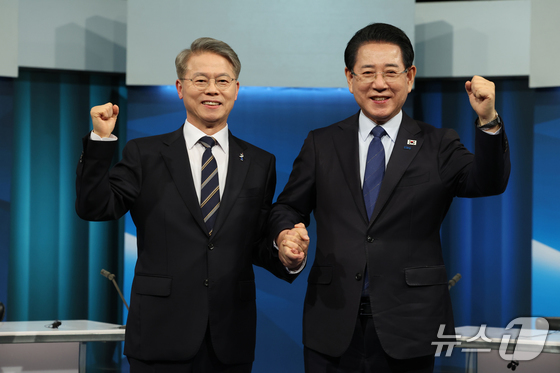
What would be the first approval document for Kim Young-rok and Min Hyung-bae — the Democratic Party candidates in the primary for mayor of the integrated Jeonnam–Gwangju special municipality — as they prepare for the June 3 local elections?
The Democratic Party’s April 9 final candidate debate proceeded in this order: common questions, a lead-off debate, a “my usual self” segment, a second lead-off debate, and closing remarks.
During the common-question segment, moderators asked each candidate which document they would sign first if elected mayor.
Speaking first, Kim said his top priority would be issuing emergency relief payments to households.
Kim argued that the Middle East situation has strained the economy: fuel prices have risen, shortages of pay-as-you-throw trash bags have emerged amid a broader plastic-bag crunch, and fertilizer price increases are deepening farmers’ distress.
He said, “If I assume office on July 1, I will allocate 300 billion KRW (225 million USD) to provide emergency relief payments. I will also issue local gift certificates for small and medium-sized enterprises and small merchants to revive neighborhood economies. I will support the petrochemical industry, the travel sector, taxi services, and arts and culture to restore the economy and protect livelihoods.”
Min said his first approval would be a 100-day emergency action plan for the integration.
“There is a lot to do once integration is underway,” he said, warning that a successful merger must leave no room for error.
Min added that the initial phase is decisive for success. He said the 100-day emergency action plan would include an emergency economic crisis response system, a citizen nomination process for deputy mayors, mechanisms to mediate interregional disputes, and administrative reorganization.










Most Commented