
Translation result.
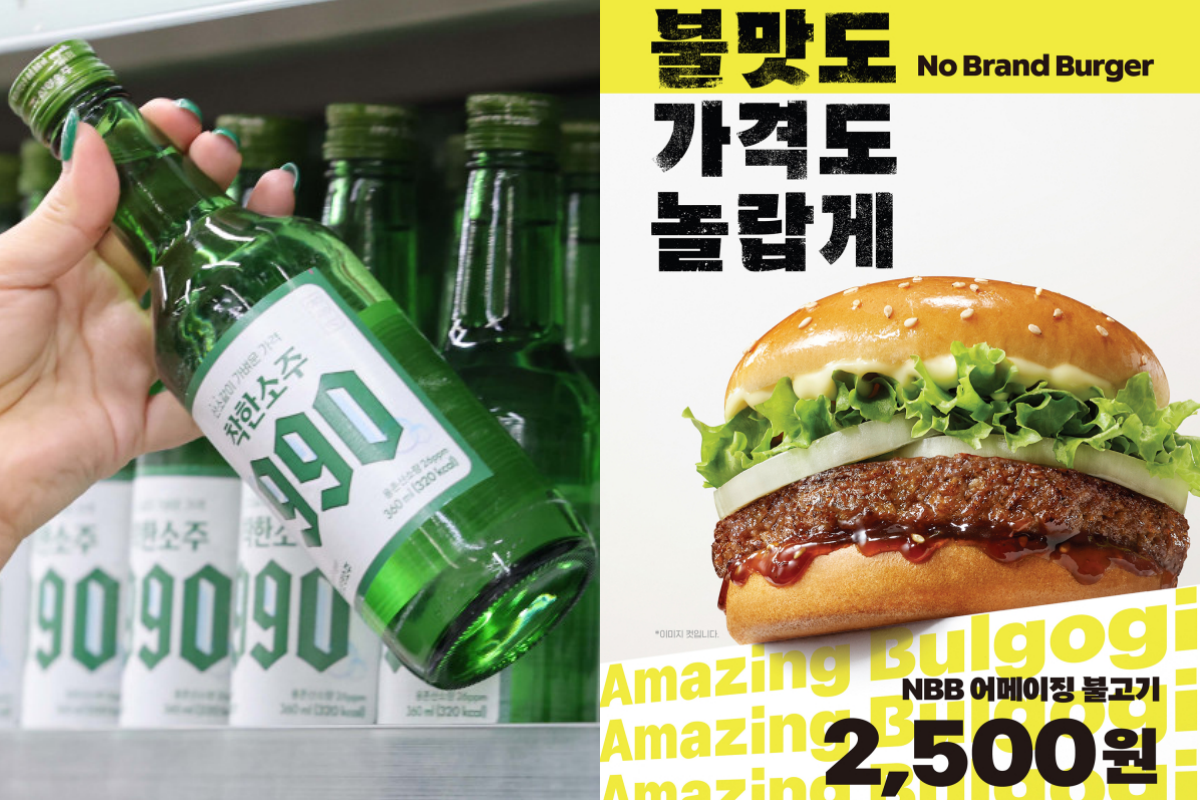
A bottle of soju for 990 KRW (approximately $0.74)?
With dining-out prices climbing and lunch now often topping 10,000 KRW (approximately $7.50), products that go beyond being just affordable—what retailers call “ultra-value”—are grabbing attention.
Recently, a 990-KRW soju hit the market, and services that list restaurants where you can eat for under 10,000 KRW (approximately $7.50) have been trending. But here’s the twist: people aren’t simply penny-pinching across the board. They’re strategic—saving where it makes sense and splurging where it counts. The same person hunting for the cheapest convenience-store meal might happily book a hotel afternoon tea on the weekend.
Consumers today aren’t forced to pick “value” or “premium.” Between polarized price tiers, shoppers are getting smarter about when to cut costs and when to indulge.
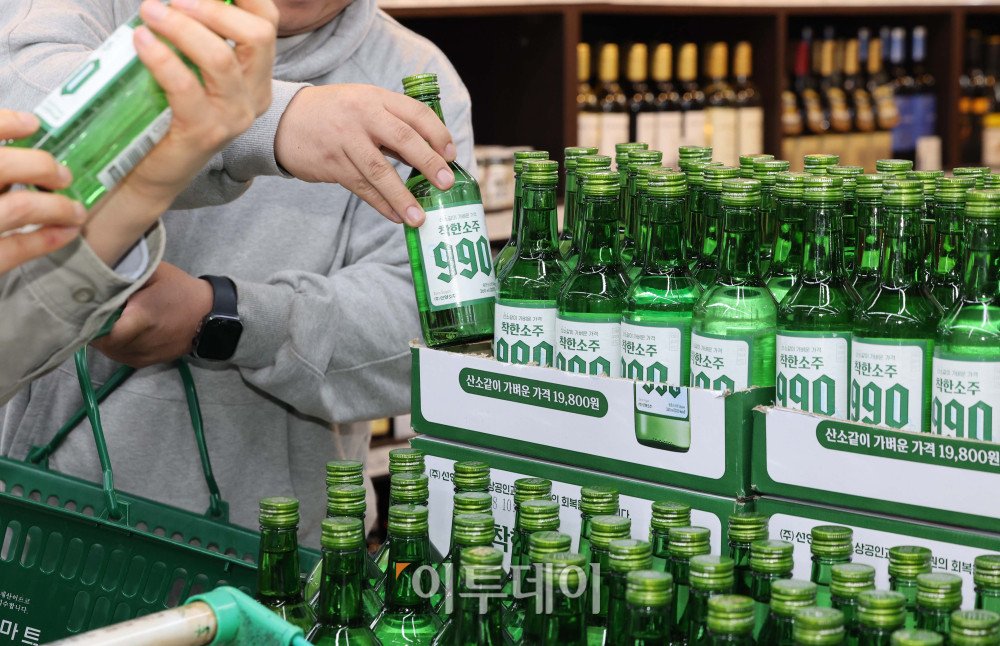
Shock of a 990-KRW soju—why it’s sold only at small local stores
Soju and pork belly used to be the iconic working-class combo—and that vibe is changing. Dining out now hits wallets hard; a bottle of soju can easily cost 5,000 KRW (approximately $3.75), and in neighborhoods like Gangnam some places charge 7,000–8,000 KRW (approximately $5.25–$6.00).
So when an ultra-value soju appeared, it turned heads. Sunyang Soju, a Chungcheong-based liquor maker, launched Good Soju 990 nationwide, including the Seoul metro area, on the 6th.
Priced at 990 KRW (approximately $0.74) per bottle—or 19,800 KRW (approximately $14.85) for a 20-bottle case—it undercuts the national average soju retail price, which is in the 1,500 KRW range (approximately $1.13) according to the Korea Consumer Agency price portal.
Instead of hiring celebrity endorsers, Sunyang’s chairman, Woong-rae Cho, appears as the face of the brand to trim marketing costs—savings the company passed on to shoppers.
The distribution approach is unique: the product is being supplied mainly to around 10,000 small neighborhood grocers nationwide, not to big supermarkets or convenience-store chains, keeping distribution margins low.
The launch is limited to 9,900,000 bottles and was pitched as a way to support local businesses. By focusing on neighborhood stores, the company hopes to boost local commerce. Chairman Cho said the collaboration is meaningful because companies, public institutions and distribution groups joined forces to stabilize everyday prices and back small-business owners. He added that he hopes Good Soju 990 eases daily burdens for ordinary people and helps energize neighborhood economies centered on local shops.
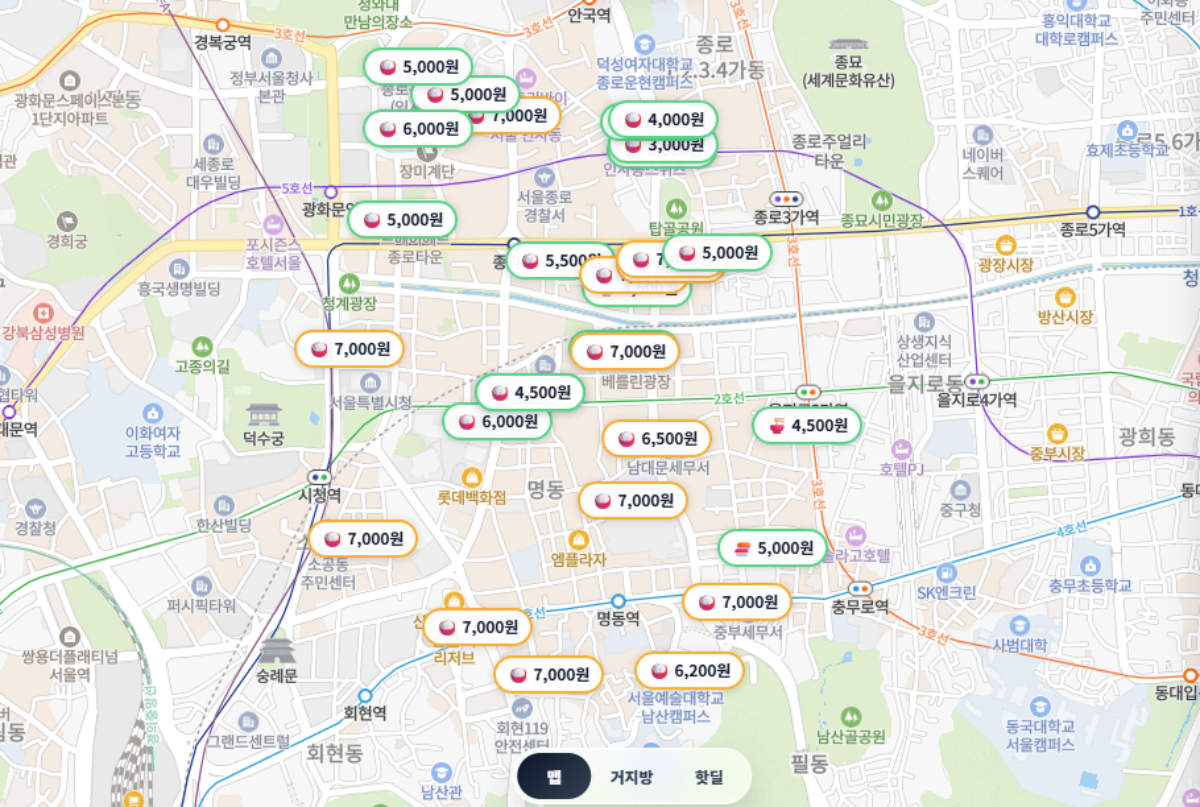
Geoji Map pops up—new budget offerings keep arriving
Earlier, a service called ‘Geoji Map’ made waves.
‘Geoji Map’ is a map-based service that collects restaurants where a meal costs under 10,000 KRW (approximately $7.50). You can find spots serving meals for 1,000–8,000 KRW (approximately $0.75–$6.00). Some listings exceed 8,000 KRW (approximately $6.00) but justify the price with generous portions or pricier meat sides. Users can submit restaurant names, categories, menu items and prices to add entries.
Price is the hook, but the site also features star ratings based on taste reviews. Users can search restaurants, read and write reviews, and swap tips in the community section.
‘Geoji Map’ was inspired by the thrifty culture of a once-popular KakaoTalk open chat room called Geojibang, where people shared money-saving hacks and showed off frugal purchases—sometimes earnestly, sometimes with a wink. The service took off quickly, drawing 570,000 users within two weeks of launch.
The ultra-value trend is spreading. Paris Baguette expanded bite-size bread options so customers can try several without breaking the bank. Last month, E-Mart rolled out “Surprise Price 3,980 Two-Line Gimbap”—two rolls for 3,980 KRW (approximately $2.99), roughly half the typical price of gimbap. Shinsegae Food’s No Brand Burger dropped the single-item price of its Amazing Bulgogi to the mid-2,000 KRW range (approximately $1.88). GS25, operated by GS Retail, sold more than 1 million units in about a month of its Generous Dessert Series, launched at a flat 1,500 KRW (approximately $1.13).
It’s not just food. Daiso’s beauty items priced at 1,000–5,000 KRW (approximately $0.75–$3.75) now share shelf space with popular fashion pieces. Daiso’s clothing accessory sales jumped 180% year over year in January and 140% in February—two months of triple-digit growth. Major card issuers like Shinhan, Samsung and BC have rolled out credit cards tailored to cut everyday costs—gas, dining and delivery, utilities—catering to thrifty consumers.
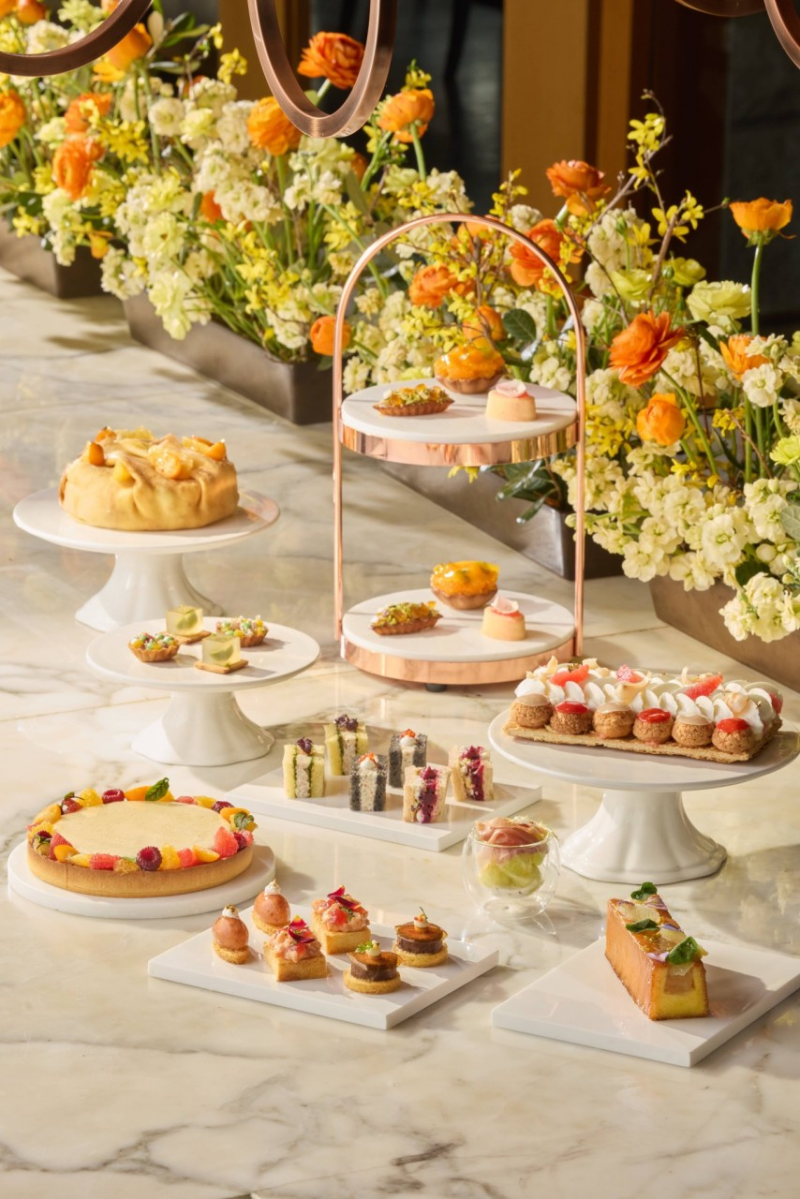
Are only bargains winning?—polarized spending stands out
What’s striking is that while ultra-value items are booming, premium products are still in demand. This isn’t just belt-tightening—it’s a reallocation of spending. At certain times, people prioritize satisfaction over price, even as they hunt for bargains elsewhere.
Hotel afternoon teas and premium desserts are prime examples. Spring afternoon-tea offerings at major hotels see heavy weekend demand and, in some cases, booking frenzies. Even with prices in the tens of thousands of won per person (tens of dollars), consumers seeking a “small but certain luxury” keep showing up. The rise of social media-driven “share the experience” culture has made experiential spending even more pronounced.
This split in spending is closely tied to rising dining-out costs. The Statistics Korea consumer price index shows dining-out prices at 127.28 last month, up 2.8% year over year.
New terms have emerged to describe the behavior. In December, the Ministry of Agriculture, Food and Rural Affairs and aT Korea Agro-Fisheries & Food Trade Corporation dubbed the trend “Survival Dining” in their 2025–2026 Domestic and Overseas Dining Trends report—meaning consumers intensely calculate satisfaction per price and time efficiency, even for a single meal.
The report forecasts that amid economic slowdown and high inflation, strategic consumption—saving on everyday meals while fiercely prioritizing satisfaction when it matters—will persist. In practice, that looks like hotel mango bingsoo going viral while sub-5,000 KRW (≤$3.75) franchise cup bingsoo is also trending.
These days, people minimize everyday costs and splurge for meaningful moments. The market reflects that shift: both ultra-low-price and premium products are growing, and companies are sharpening strategies to target both ends of the price spectrum. The competition has moved beyond simply “sell cheap” to precisely hitting the moments when consumers decide to save or splurge.









Most Commented