
Translation result
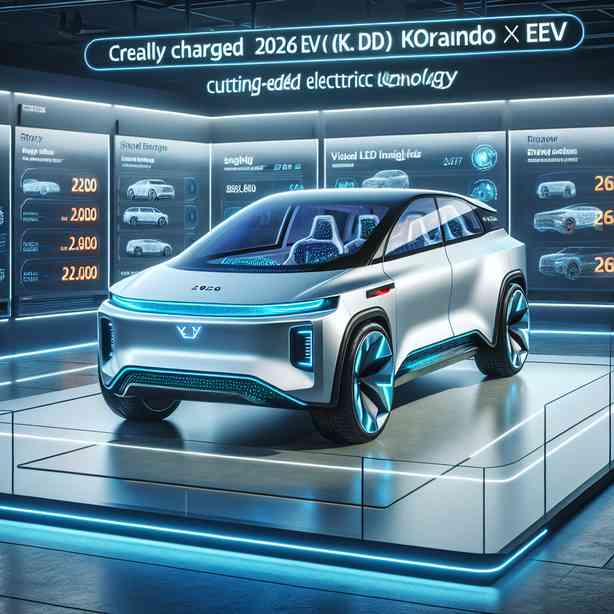
2026 KGeneral Motors Korando EV electric SUV: Complete Price and Specs Breakdown
The 2026 Korando EV from KGeneral Motors has attracted strong interest in South Korea’s compact electric SUV market. As EV adoption accelerates, we look at what differentiates the Korando EV, and we break down its pricing and technical specifications for American readers.
Key features of the KGeneral Motors Korando EV
Originally derived from the internal-combustion Korando, the Korando EV has been fully re-engineered for electrification. It rides on a dedicated EV platform that improves crash safety and cabin packaging. The design retains the practical styling of an SUV while emphasizing efficiency and affordability.
The Korando EV pairs clean exterior lines with modern driver-assistance technology and strong energy efficiency. Its battery and motor package offer class-competitive performance versus direct rivals.
Pricing structure for the Korando EV
KGeneral Motors prices the Korando EV depending on government EV subsidies and optional equipment. The base model starts at about 45 million KRW (approximately $33,750), while higher trims with added packages can exceed 50 million KRW (approximately $37,500).
Those prices include advanced safety tech, current infotainment features, and a wide set of convenience options, putting the Korando EV in a competitive position against other compact electric SUVs.
After available subsidies, the effective out-the-door price can fall into the high-30 million KRW range (roughly $28,500), which improves mainstream accessibility.
Details behind the price competitiveness
The Korando EV’s value proposition rests on standard equipment, optional configurations, and subsidy-adjusted final pricing. Even the base trim includes ADAS, a large display, and upgraded interior materials, delivering strong perceived value. Lower operating costs typical of EVs further enhance long-term ownership economics.
Detailed specs of the Korando EV
Built on an EV-specific platform, the Korando EV balances interior space efficiency with crash protection. The headline specs include the powertrain layout, battery capacity, single-charge range, and charging performance.
Powertrain and battery
The Korando EV uses an electric motor rated around 204 hp (150 kW) with peak torque near 36.7 kg·m (≈ 266 lb‑ft). That output provides confident acceleration for urban traffic and highway merges.
The battery is roughly 68 kWh, offering competitive energy density for the segment. Mounting the pack low in the chassis helps offset the battery’s mass and improves handling stability.
Single-charge driving range
The Korando EV’s certified single-charge range is about 420 km (≈ 261 miles) under local test protocols. That range is sufficient for daily commuting and most regional trips. In mixed city/highway driving, expect real-world range between roughly 380 and 420 km (≈ 236–261 miles).
Those numbers keep the Korando EV in line with rivals such as the Hyundai Kona Electric and Kia Niro EV.
Charging performance and infrastructure compatibility
The Korando EV can charge to about 80% in roughly 30 minutes on DC fast chargers. On a Level 2 charger (7 kW), a full charge takes about nine hours. It uses the DC Combo (CCS) standard, ensuring compatibility with Korea’s main public charging networks.
When you combine charging speed, efficiency, and network access, the Korando EV should satisfy typical owner needs.
Exterior dimensions and interior space
The Korando EV measures 4,450 mm long, 1,870 mm wide, and 1,620 mm tall. Its 2,675 mm wheelbase delivers generous rear legroom and a roomy cargo area.
The flat-floor layout increases usable space in the second row, while EV-specific NVH advantages—reduced noise and vibration—improve passenger comfort. Cargo volume starts at about 500 liters (≈ 17.7 cu ft) and expands to roughly 1,400 liters (≈ 49.4 cu ft) with the rear seats folded, covering a wide range of lifestyle needs.
Driving dynamics and driver-assist systems
The Korando EV comes standard with front-wheel drive and benefits from updated electric power steering and suspension tuning to enhance stability and cornering. ADAS features are standard across trims, including lane-keeping assist, forward-collision mitigation, and adaptive cruise control.
Those systems reduce driver fatigue and provide reliable performance for both city and highway driving.
Competitive analysis
KGeneral Motors positions the Korando EV as a practical and economical alternative to comparable internal-combustion SUVs by highlighting lower operating costs and environmental benefits.
Main competitors include the Hyundai Kona Electric, Kia Niro EV, and Chevrolet Bolt EUV. Against these rivals, the Korando EV stands out for a roomier cabin, competitive range, and attractive effective pricing after subsidies.
KGeneral Motors’ battery warranty—8 years or 160,000 km (≈ 99,400 miles)—helps alleviate buyer concerns. Quiet operation, reduced vibration, and upgraded interior materials further strengthen the package.
Operating costs and economics
The Korando EV delivers the common EV advantages of lower energy and maintenance costs. Charging expenses are typically about 30–40% of comparable gasoline costs, and EVs eliminate routine items such as engine oil and transmission fluid, simplifying maintenance.
Owners may also qualify for tax incentives, public-parking discounts, and toll reductions, which improve long-term ownership economics.
Environmental performance and sustainability
As a zero‑emission vehicle at the tailpipe, the Korando EV produces no CO2 or exhaust pollutants, making it suitable for corporate and municipal green fleets and for cities targeting improved air quality and lower emissions.
KGeneral Motors emphasizes ongoing improvements in battery and motor efficiency and increased use of renewable energy as part of a broader sustainability strategy.
Options and convenience features
KGeneral Motors offers a broad options list for the Korando EV, including a 12.3‑inch infotainment screen, integrated digital cluster, wireless smartphone charging, premium audio, heated and ventilated seats, and a panoramic sunroof.
The vehicle also supports EV-specific navigation with charger locators and OTA (over‑the‑air) software updates, reflecting modern connected-vehicle expectations.
Safety
The Korando EV meets crash‑safety, battery‑protection, and pedestrian‑safety standards. The use of high‑strength steel is increased, and the battery pack is mounted under the chassis to better absorb impact energy and reduce secondary damage.
EV‑specific safety systems include high‑voltage disconnects, battery thermal management, automatic emergency alerts, and emergency braking features—measures that enhance occupant and first‑responder safety.
After-sales support and service
KGeneral Motors provides nationwide service coverage and fast after‑sales support. Service centers are equipped with EV diagnostics and trained technicians to address battery and electric‑system issues promptly.
Owner programs include an 8‑year/160,000 km battery warranty, complimentary inspections, and emergency roadside assistance—programs designed to build confidence among buyers.
Outlook
With the EV market expanding, KGeneral Motors expects the Korando EV to establish a strong position in the compact EV‑SUV segment. Continued government incentives, charging infrastructure rollout, and changing consumer preferences should support steady demand.
KGeneral Motors plans ongoing improvements in battery efficiency, range, and advanced driver assistance to keep the Korando EV competitive both domestically and internationally.
Bottom line: 2026 KGeneral Motors Korando EV — price and specs
The KGeneral Motors Korando EV combines competitive pricing, solid class specs, advanced safety and convenience features, and low operating costs. Strong real‑world usability, subsidy‑adjusted pricing, and reliable after‑sales support make it a compelling choice for families, commuters, and fleet buyers.
Given its pricing and spec set, the Korando EV should broaden consumer choice and accelerate EV adoption. Continued technical updates and product refinement are likely to keep it competitive in both domestic and global EV markets.














Most Commented