
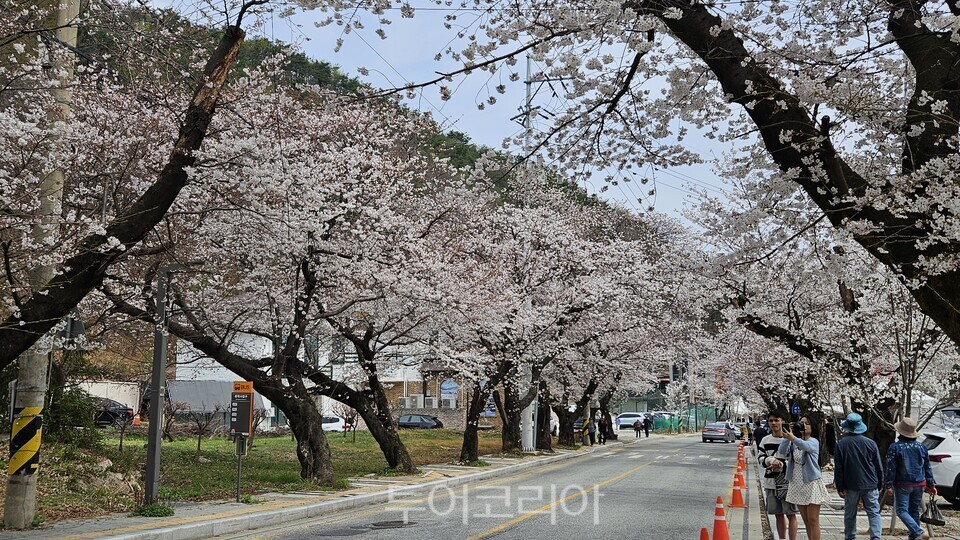
[Tour Korea = Reporter Yoo Kyung-hoon] The stretch leading to Donghaksa Temple (Hakbong 1-ri) in Gyeryongsan National Park, Gongju, Chungnam, is exploding with cherry blossoms right now, and visitors are loving every minute.
Now’s the perfect time to soak up blooms people wait a whole year for. Crowds have poured into the Donghaksa entrance at Hakbong 1-ri to see the trees at full bloom.
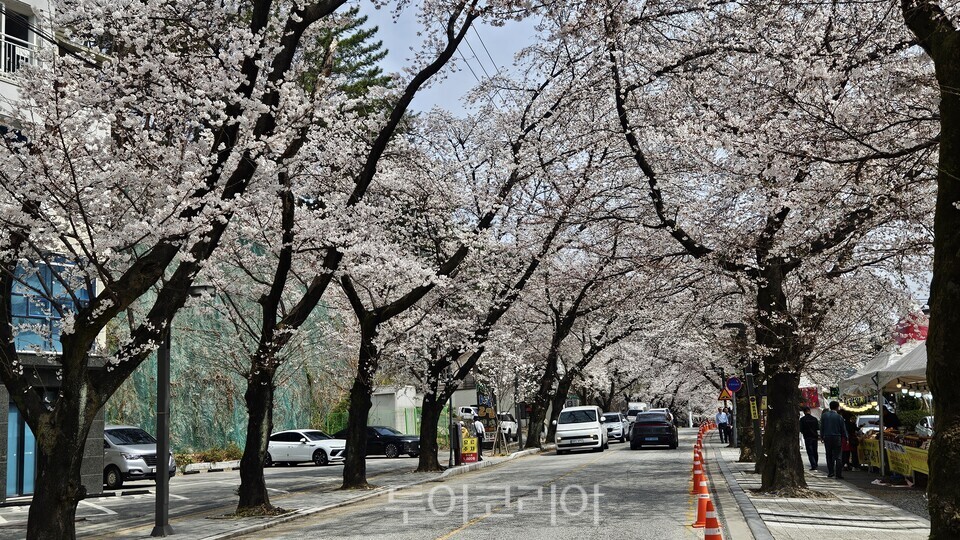
Couples walk hand in hand beneath the branches. Groups of students arrive in loud, laughing clusters. Middle-aged couples with streaks of gray in their hair take their time. Women dressed to the nines pose like models among the petals. Young parents push strollers, snap photos of their kids, and toss petals overhead, all smiles.
Visitors to the Donghaksa cherry blossom path are fully immersed in the season’s romance and savoring every bit of spring.
The cherry blossom road at Donghaksa runs along both sides of the road for about 4.5 km (roughly 2.8 miles) from Parkjeongja Samsgeori to the Donghaksa entrance. When the trees are at peak bloom, a gust of wind sends petals drifting like a soft floral shower. After sunset, the illuminated blossoms look like delicate snowflakes.
The cherry blossom indulgence at the Donghaksa entrance offers more than just pretty views.
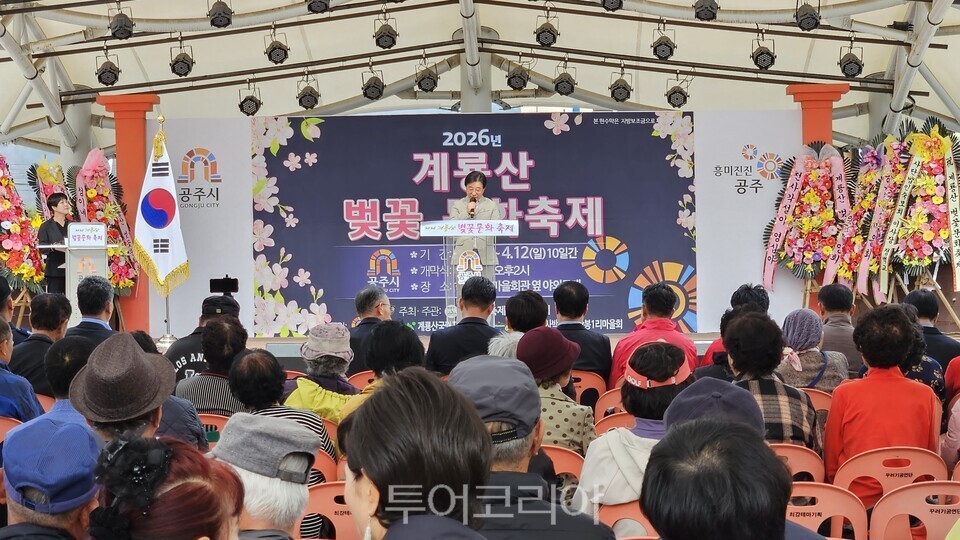
The 2026 Gyeryongsan Cherry Blossom Cultural Festival opened in a grand ceremony on April 3 on the outdoor stage in front of the Hakbong 1-ri community center. The festival runs through Sunday the 12th, featuring a lineup of performances and events that pair perfectly with the blossoms.
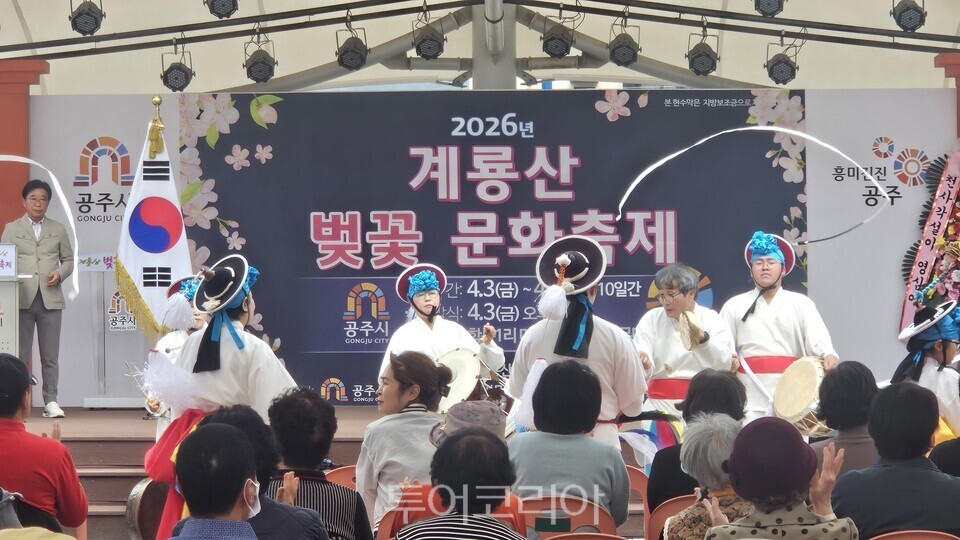
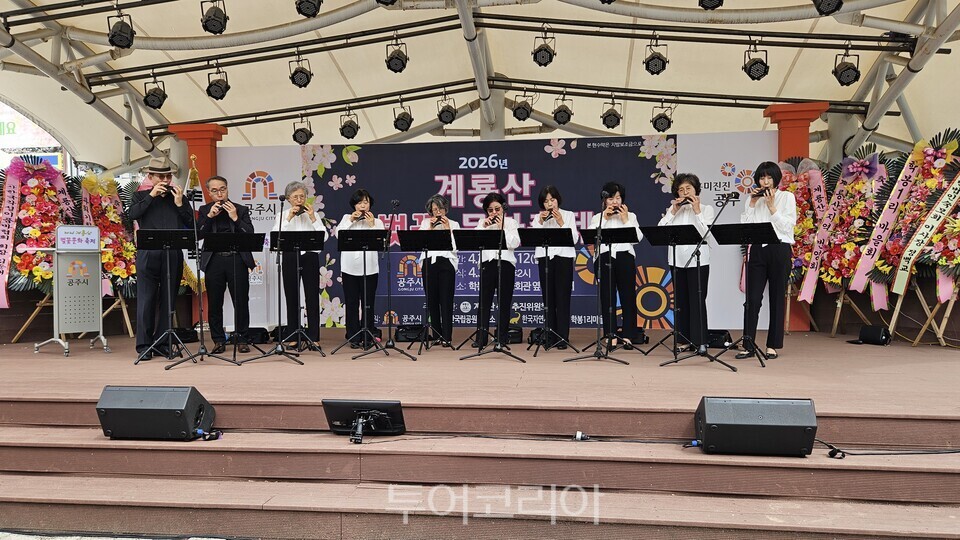
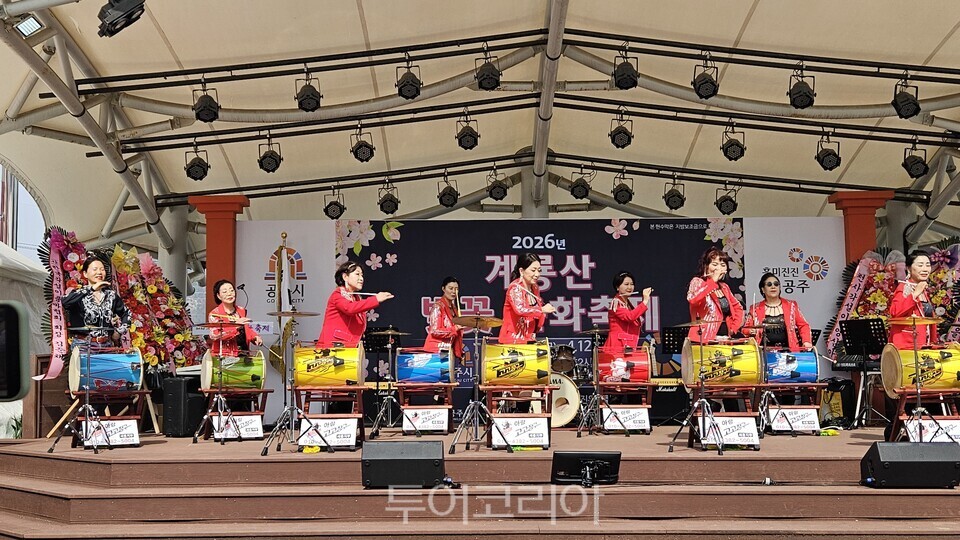
This year’s festival blasted off to the beat of gongs from the Gongju Utdari Nongak Preservation Society, led by Kim Dong-hee. The Hakbong-ri Women’s Association’s Healing Nanta and the Banpo Ocarina Ensemble kept the crowd entertained with lively, feel-good performances.
Won Seon-gyu, chair of the Gyeryongsan Cherry Blossom Festival organizing committee, said, “What began as a spring flower festival has grown thanks to Gongju City’s cooperation and the interest and participation of local residents. We will continue working to make this the region’s premier cherry blossom cultural festival.”
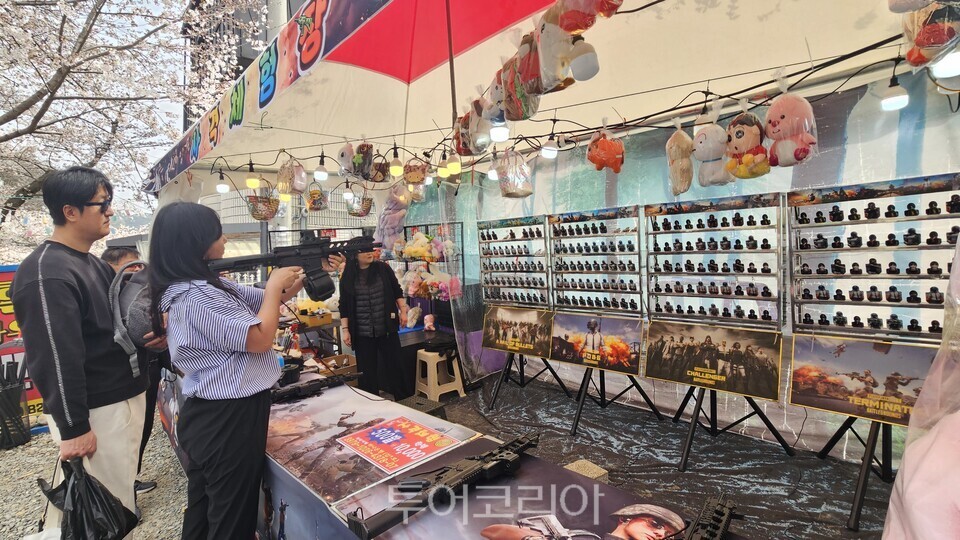
At the festival grounds you can catch buskers, browse craft exhibitions and sales, explore a flea market, and see exhibitions of Gyeryongsan iron-painted buncheong pottery with opportunities to buy and try hands-on activities. There are pottery wheel demos, a paid exhibit at the Korea Natural History Museum, and short cultural videos about Gyeryongsan—plenty to pick from.
Festivalgoers can also hike Gyeryongsan, often called the nation’s sacred mountain. Locals say the name Gyeryongsan comes from a ridge that runs from Cheonhwangbong (845 m / 2,772 ft) to Yeonhwabong (739 m / 2,425 ft) and Sambulbong (775 m / 2,543 ft), a formation said to resemble a dragon wearing a rooster’s comb.
Gyeryongsan is counted among Korea’s four great feng shui mountains—Hallasan, Jirisan, Gyeryongsan, and Bukhansan. It’s home to historic temples like Gapsa, Donghaksa, and Sineonsa, and its scenery draws many visitors. Important Buddhist cultural assets remain here, including an iron flagpole (cheoldanggan), stupas, large bells, various stone Buddhas, and woodblocks from the Worinseokbo.









Most Commented