
How Hyundai’s FCEV Buses Are Revolutionizing Public Transport: Key Features and Benefits Explained
Daniel Kim Views
Translation result.
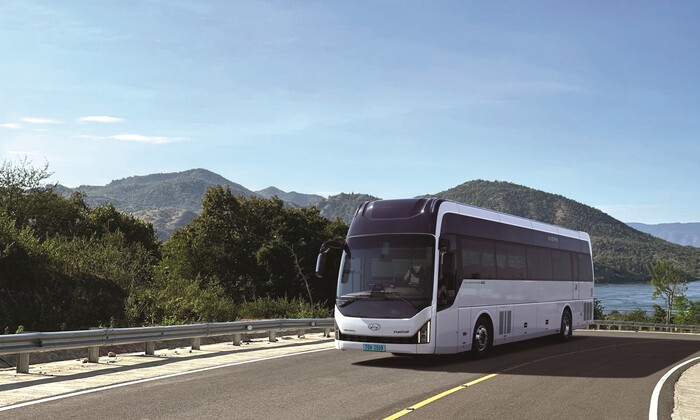
Hyundai Motor said on April 2 that cumulative domestic sales of its hydrogen fuel-cell buses reached 3,062 units through the end of March.
The total surpassed the 3,000 mark this year, after reaching 1,000 units in 2024 and 2,000 units last year.
The company attributed the gain to stronger demand for city and commuter buses and to supportive local government deployment policies.
Hyundai currently offers two models: the city-focused ‘Elec City FCEV’ and the highway-oriented ‘Universe FCEV’.
The Elec City FCEV is equipped with a 180 kW (≈241.4 hp) hydrogen fuel-cell system and a 78.4 kWh battery, giving it a maximum range of 751.2 km (≈466.7 miles) on a single refueling.
The Universe FCEV uses advanced control logic to enhance driving stability and delivers up to 960.4 km (≈596.9 miles) per refueling, based on official fuel-economy figures.
As part of its hydrogen mobility strategy, Hyundai Motor Group is expanding the use of hydrogen commuter buses across its corporate fleet.
The group plans to add 55 buses this year to the 74 already in operation and aims to convert all of its commuter buses to hydrogen by 2030.
It also intends to grow its commercial vehicle electrification service network to more than 40 locations.
National and local governments are building out supporting infrastructure in parallel.
This year’s national subsidies cover a total of 1,800 hydrogen fuel-cell buses, and 80 large-capacity hydrogen refueling stations are currently in operation, with 21 more scheduled to come online by year-end.
Hyundai said it will lead the eco-friendly commercial vehicle market by expanding domestic deployment of hydrogen fuel-cell buses and will continue efforts to grow the hydrogen mobility ecosystem.










Most Commented