
Translation result
The Organization for Economic Cooperation and Development (OECD) has sharply cut South Korea’s growth forecast for this year from 2.1% to 1.7%, intensifying concerns about the economic fallout from the Middle East war. Major news outlets widely covered the downgrade, but they diverged in their analysis—particularly over the 25 trillion KRW (about 18.75 billion USD) supplemental budget, the prosecutorial gap created by an expanded special prosecutor mandate, how to deal with past human-rights abuses and revoked honors, and the risk of populism ahead of local elections.
On Kim Bu-gyeom’s run: Hankook Ilbo says “Ruling party on the brink”; Seoul Shinmun says “People Power headed for collapse”
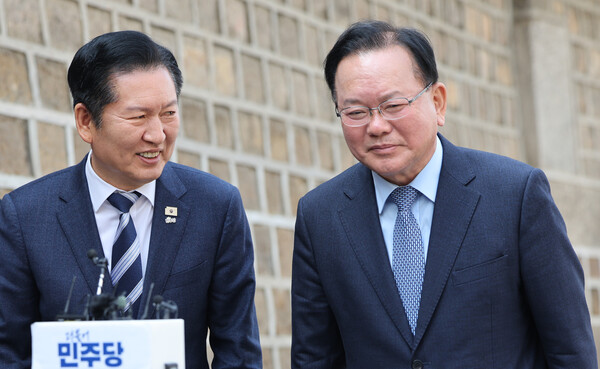
Hankook Ilbo, in an article titled “Kim Bu-gyeom’s Daegu bid shakes local elections, puts main opposition on the brink,” wrote that Daegu has become the key battleground in the June 3 local elections. The paper noted that Kim won Daegu Suseong-gap—often called Daegu’s Gangnam—in the 2016 general election, breaking down regionalist barriers. It highlighted his service as minister of the interior and safety and as a four-term lawmaker, calling him a heavyweight politician. The piece warned the party now risks shifting beyond a “TK (Daegu–North Gyeongsang) faction” to effectively becoming a “North Gyeongsang faction.”
Seoul Shinmun, in a column headlined “At last a ‘North Gyeongsang Party’… People Power headed for total collapse,” argued that the People Power Party leadership’s moves ahead of the June 3 vote defy common sense. The paper recalled earlier warnings that the party could turn into a regional “Yeongnam faction,” then fall into a “TK faction,” and now face the prospect of becoming a “Gyeongbuk (North Gyeongsang) faction.” It cited Gallup polling showing People Power’s support in Daegu and North Gyeongsang at just 27%, while the Democratic Party leads by wide margins nationally.
Revoking honors for figures like Lee Geun-an: Hankyeoreh says “Correct this abnormality”
The death of former police superintendent Lee Geun-an has renewed attention on canceling state honors awarded to torturers and fabricators of political cases. Kyunghyang and Hankyeoreh urged active redress of past injustices, while Chosun Ilbo counseled caution.
Kyunghyang, in “Many perpetrators of torture and fabricated cases still retain awards,” said that numerous individuals who tortured democracy activists and manufactured national-security cases under the authoritarian regime—figures like former superintendent Lee Geun-an, labeled a “torture technician”—still hold state decorations. The paper argued that allowing those who committed severe state violence against innocent citizens to retain honors is a stain on the democratic republic and an affront to history.
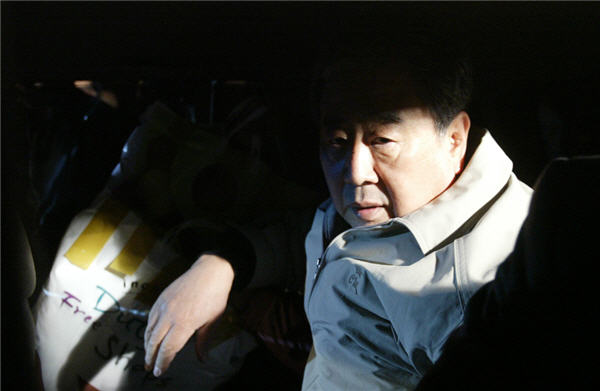
Hankyeoreh, in “Strip honors from perpetrators of state crimes like Lee Geun-an; let history teach a lesson,” argued that the abnormal situation in which state violence perpetrators flaunt awards must be corrected. The paper called it regrettable that officials plan to review only about 70,000 awards above the prime minister’s citation given to police officers. It urged reconsideration of excluding “agency head citations” from review—these can be revoked under regulations, and some awards Lee received, such as the interior minister’s citation tied to the fabricated “Seouldae Murim incident,” might otherwise escape cancellation.
Chosun Ilbo offered a different perspective in “We must check whether this isn’t partisan ‘rectifying history.’” The paper acknowledged that clear cases of torture, fabrication, and judicial killings from the authoritarian era should lead to revoked decorations, but warned that broad application risks misjudging complex historical tragedies. It cited the Jeju 4.3 and Yeosu–Suncheon incidents as examples of modern historical tragedies that remain difficult to fully clarify after many decades. Chosun cautioned that revocations based on contested or one-sided accounts—for example, as in the case of Colonel Park Jin-gyeong—could produce further controversy and division, and therefore recommended a careful, measured approach.
Growth outlook cut, mixed views on passing the supplemental budget
News outlets split sharply on causes and remedies after the OECD trimmed Korea’s growth forecast. Kyunghyang and Hankyeoreh urged rapid approval of the supplemental budget, while Chosun Ilbo and Dong-a Ilbo emphasized the need to manage potential side effects when deploying those funds.
Chosun Ilbo cited the OECD, noting that among G20 countries Korea’s downgrade was the second-largest after the U.K. (-0.5 percentage points). It said prior cuts by Citigroup and Barclays signaled that Korea is seen as vulnerable to the Middle East shock. The OECD, Chosun reported, recommends timely government action targeted at households and firms most in need and policies that encourage energy conservation. Chosun urged that the 25 trillion KRW (about 18.75 billion USD) supplemental budget be implemented with those priorities in mind.
Dong-a Ilbo, in “Middle East crisis clouds growth… focus on shock mitigation rather than stimulus,” argued that this “war supplemental budget” is large and includes cash support for households. Rather than pursue aggressive stimulus that could stoke inflation, the paper recommended focusing on minimizing the immediate shock and preparing for a protracted crisis. It advised prioritizing energy transition and public-transit support, diversifying energy sources, mitigating supply-chain disruptions, and targeting cash assistance to low-income households to maximize effectiveness.
Kyunghyang, in “Prolonged war drags down growth outlook; pass the supplemental budget quickly,” criticized the opposition for labeling the budget as pre-election “cash handouts” and seeking delays. The paper argued that with high oil prices, high exchange rates, and high inflation squeezing ordinary citizens and threatening small businesses, the opposition should recognize the situation as a wartime economic survival moment.
Other issues that drew media attention
JoongAng Ilbo, in “Demanding an apology for the Cheonan sinking is the state’s duty,” reported that President Lee Jae-myung’s response at the 11th West Sea Defense Day ceremony—“Would North Korea apologize if we demand it?”—sparked controversy when victims’ families asked him to press Pyongyang for an apology. The paper argued that demanding an apology from North Korea is not contingent on the state of inter-Korean relations; officials should keep insisting on an apology until North Korea responds.
Kyunghyang, in “Israel’s attacks on nuclear facilities raise fears of irreversible ‘radiation catastrophe,’” reported that Israel has stepped up strikes on nuclear and related facilities in Iran. After the third reported attack on the Bushehr nuclear plant in the south within ten days on the 27th (local time), strikes expanded to the Hombad heavy-water complex, an experimental heavy-water reactor in central Iran, and uranium-processing facilities in Ardakan. Bushehr sits on the Persian Gulf coast; a radiation leak there could contaminate the sea and severely harm neighboring countries and deliver a crippling blow to a global economy that depends on energy from the region.
Korea Economic Daily, in “Car insurance payouts leak from excessive traditional Korean medicine treatments… curb moral hazard,” reported that auto insurance payments for traditional Korean medicine treatments have nearly quintupled over the past decade. Costs rose from about 350 billion KRW (about 262.5 million USD) in 2015 to nearly 1.7 trillion KRW (about 1.275 billion USD) last year. Over the same period, conventional Western-medicine treatment costs fell slightly to around 1.11 trillion KRW (about 832.5 million USD). The paper said traditional clinics often bill acupuncture, cupping, and injections together regardless of patients’ symptoms; such bundled claims are a major source of insurance leakage.
Media Today brings you an ‘AI News Briefing.’ Knowledge-content startup Underscore uses generative AI to compare and reassemble major domestic news articles by issue. This piece went through Media Today’s newsroom review and editing and received support from the Korea Press Foundation. (Editor’s note)













Most Commented