
Translation result.
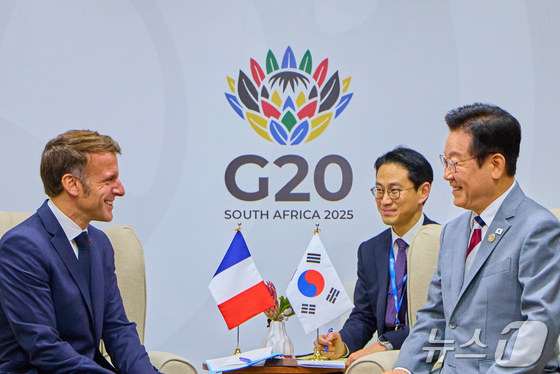
Indonesia, France presidents to visit back-to-back; President Lee to discuss Middle East developments and supply-chain cooperation
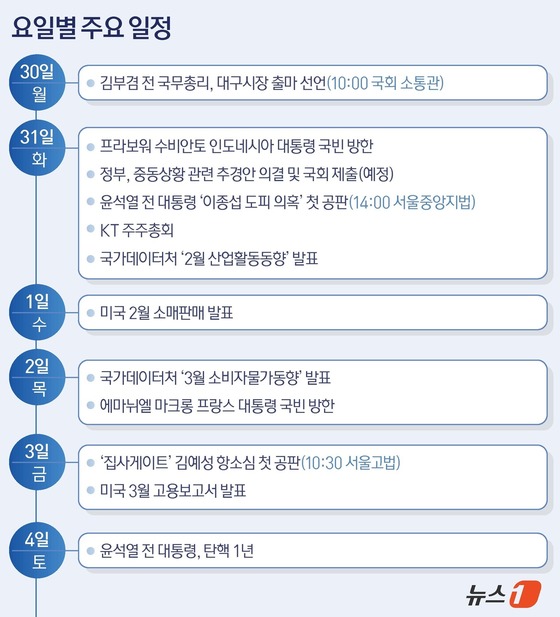
President Lee Jae-myung will host consecutive state visits this week by the presidents of Indonesia and France. While talks were expected to deepen cooperation on artificial intelligence, defense, infrastructure and supply chains, the outbreak of war in the Middle East after the visits were scheduled is likely to push regional and global security dynamics to the top of the agenda. According to the Blue House, Indonesian President Prabowo Subianto will undertake a three-day state visit beginning on the 31st, and French President Emmanuel Macron will visit for two days, April 2–3. With President Prabowo, Lee is expected to explore ways to advance the Korea–Indonesia special strategic partnership across multiple sectors. With President Macron, Lee will pursue a strategic upgrade of bilateral ties by strengthening cooperation on trade and investment, AI, quantum technologies, space, nuclear energy, advanced industries, science and technology, as well as education, culture and people-to-people exchanges. Macron’s visit will be his first to Korea since Lee took office and the first by a French president in 11 years.
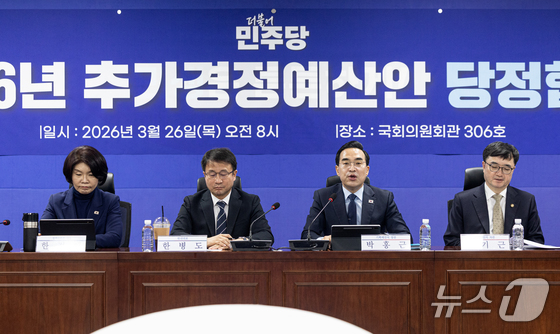
Cabinet likely to approve roughly 25 trillion KRW (approximately $18.75 billion) supplementary budget on the 31st; emphasis on high oil prices and supply-chain stability
The Blue House said the government’s supplementary budget bill is expected to be approved at the Cabinet meeting on the 31st. On March 26, the Democratic Party and the government indicated the package would total about 25 trillion KRW (approximately $18.75 billion). The package is aimed primarily at responding to elevated oil prices and stabilizing supply chains: it would expand petroleum reserves and include measures to compensate refiners for losses resulting from a cap on petroleum product prices. The supplementary budget also intends to secure stable naphtha supplies and shore up critical strategic inputs such as rare earths and urea. To ease pressures on vulnerable households and lower living costs, the package would expand discounts on agricultural, livestock and seafood products, extend energy vouchers, and provide support to offset higher mineral fertilizer prices. The chair of the National Assembly’s Special Committee on Budget and Accounts and party floor leaders are scheduled to meet around the 31st to coordinate the timeline for legislative consideration of the bill.
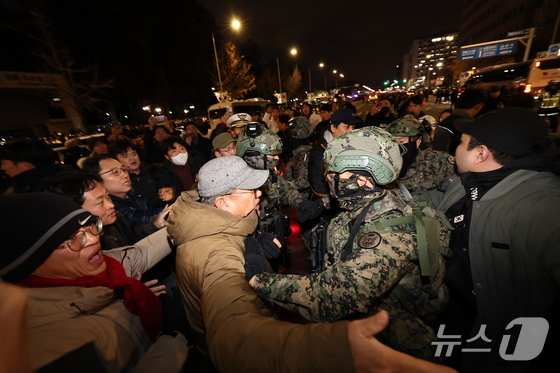
April 4 marks one year since former President Yoon Suk Yeol’s impeachment; emergency martial law and life sentence in first-instance ruling
April 4 will mark one year since the impeachment of former President Yoon Suk Yeol. On the night of Dec. 3, 2024, Yoon declared emergency martial law, saying his move aimed to eliminate pro‑North “anti‑state” forces and protect the Republic of Korea. The National Assembly passed a resolution calling for the lifting of martial law at about 1:01 a.m. on Dec. 4. The opposition filed articles of impeachment the same day; the first vote on Dec. 7 failed after the People Power Party walked out, leaving the Assembly without a quorum. The opposition refiled the motion, and the second vote on Dec. 14 passed, suspending Yoon from office. The Constitutional Court subsequently removed him from office on April 4 last year. On Feb. 19 of this year, the Seoul Central District Court’s Criminal Division 25 (Presiding Judge Ji Gui‑yeon) sentenced him to life imprisonment on charges of leading an insurrection.
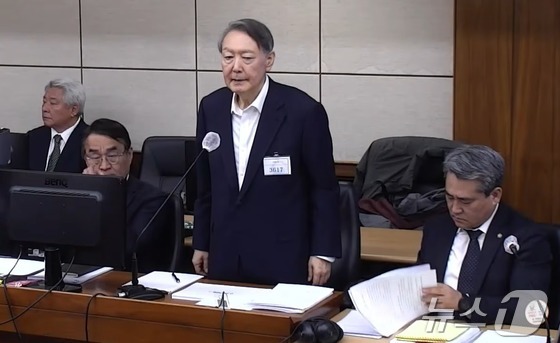
‘Allegations that Lee Jong‑seop was aided to flee’ — Yoon Suk Yeol’s trial begins on the 31st
The trial of former President Yoon Suk Yeol, accused of facilitating the escape of former Defense Minister Lee Jong‑seop to Australia, begins in earnest this week. Seoul Central District Court’s Criminal Division 22 (Presiding Judge Jo Hyung‑woo) will hold the first hearing at 2 p.m. on the 31st for Yoon and others charged with abuse of official authority, obstruction of rights and related offenses. Prosecutors allege that beginning around September 2023, Yoon conspired with officials at the Justice Ministry, Foreign Ministry, National Security Office and the presidential office to appoint Lee as ambassador to Australia with the intent of evading an investigation. Yoon faces three primary charges: abuse of power with obstruction of rights, aiding a suspect’s escape, and violating the State Public Officials Act. Co‑defendants include former National Intelligence Service Director Cho Tae‑yong (then National Security Office chief), former National Security Office chief Jang Ho‑jin, former presidential secretary for public service ethics Lee Si‑won, former Justice Minister Park Seong‑jae, and former Prosecutor General Shim Woo‑jung (then Justice Ministry deputy minister), who are accused on various charges including aiding a suspect’s escape.
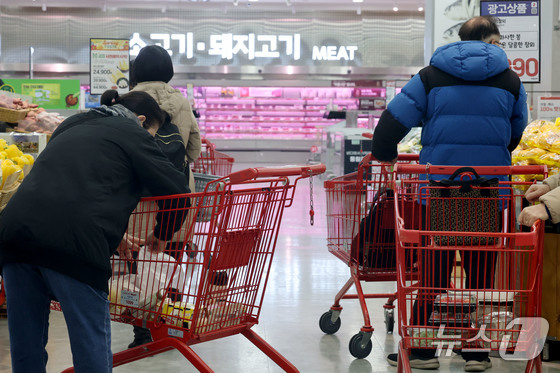
First inflation data to reflect Middle East war shock — how much did prices rise in March?
The National Data Office will publish the March 2026 consumer price report on April 2. This release will be the first to capture the economic impact of the recent Middle East war. Consumer prices rose 2.0% year‑over‑year in both January and February, but analysts expect March’s figure to tick up into the low‑2% range as the oil‑price shock feeds through, exerting upward pressure on domestic prices—especially for petroleum products. If the Middle East crisis persists, inflationary pressures could intensify further, with implications for the Bank of Korea’s monetary policy stance.










Most Commented