
Translation result.
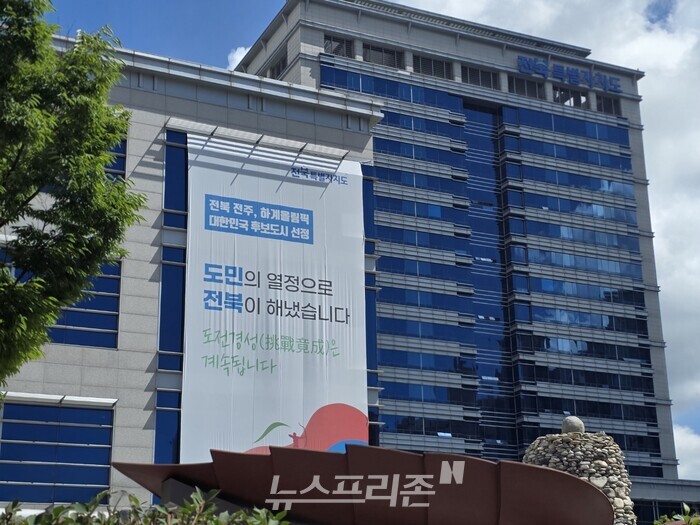
Jeonbuk Special Self-Governing Province is trying a bold experiment: reworking the very structure of its tourism policy. Rather than running scattered, department-level projects, officials are stitching those initiatives into a single collaborative system—what they’re calling an integrated provincial tourism strategy. The goal goes beyond simply attracting more visitors; it’s about reorganizing how government works so tourism becomes a genuine engine of local growth.
On March 26, the provincial government convened the \”2026 Jeonbuk Special Self-Governing Province Tourism Council Kickoff Meeting\” in the provincial video conference room, with Shin Won Sik, director of the Department of Culture, Sports and Tourism, presiding. The session officially launched the new tourism collaboration system. Attendees included the Tourism Industry Division and 8 departments across 6 bureaus, together with representatives from the Jeonbuk Research Institute and the Jeonbuk Culture & Tourism Foundation, who aligned on a unified approach to managing tourism policy.
While the council aligns with the national push to attract 30 million inbound visitors and the broader shift toward regional tourism transformation, Jeonbuk’s effort is notable for its systemic focus. Historically, tourism work in the province has been driven by isolated, department-led projects, which limited coordination and made it hard to expand offerings that encourage longer stays. Despite rich tourism resources, Jeonbuk has struggled to pull them into a single, cohesive narrative—this initiative aims to fix that.
The discussion zeroed in on connectivity rather than standalone projects. Using the 8th Jeonbuk regional tourism development plan as a backbone, officials are bundling policies across wellness tourism, the MICE (meetings, incentives, conferences, exhibitions) sector, eco-friendly mountain tourism, culinary tourism, and inbound marketing. There was clear agreement on the need to build a convergent tourism model that blends tourism with environment, construction, economic, rural, and marine planning.
The real test will be whether the move to \”tear down silos\” stops at rhetoric and becomes operational. Past councils were set up before but often failed to produce tangible results because departmental interests and fragmented budgets blocked follow-through. Analysts say success hinges on joint project design and a system that shares budgets and performance outcomes across departments.
Jeonbuk plans regular working-level meetings to keep collaborative projects on track and to shape tourism policies based on field feedback. Officials frame this as a shift from event-driven tourism toward a circulatory model that feeds the regional economy more sustainably.
Shin Won Sik, director of the Department of Culture, Sports and Tourism, said, \”Tourism is no longer just about consumption; it’s a core industry that drives the regional economy. Through this council, we will develop practical solutions to connect Jeonbuk’s resources into a single, coherent system.\”
In short, the tourism council’s launch is more than another policy meeting. It’s a proving ground for whether Jeonbuk can move from a loose collection of projects to an integrated industry structure. If the province executes the plan effectively, the initiative could become a turning point that amplifies tourism’s ripple effects across the regional economy.











Most Commented