
Translation result
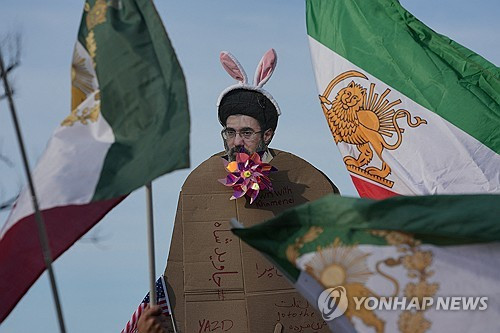
A cardboard effigy of Iran’s supreme leader Moztaba Hameinei appears at a protest in Washington, D.C., on the 14th (local time)[Reuters/Provided by Yonhap News][Reuters/Provided by Yonhap News]
It has been two weeks since Ayatollah Seyyed Moztaba Hameinei was selected as Iran’s new supreme leader after his father’s reported death, but doubts over whether he is alive persist.
On the 21st (local time), the Wall Street Journal reported that skepticism about Moztaba’s survival is growing even inside Iran.
In his first speech after taking office on the 12th, Moztaba vowed “blood vengeance,” but the message was read on state television by an anchor rather than delivered by him in person.
His Nowruz address on the 20th followed a similar pattern.
The WSJ said it worked with visual-imaging experts to analyze Moztaba’s photographs and concluded that many of the images were AI-generated or digitally altered.
It also found that his X (formerly Twitter) profile picture was an older photo modified using Google AI.
As the uncertainty continued, some began mocking him as the “cardboard ayatollah,” the paper reported.
Recently, Tulsi Gabbard, director of the U.S. Office of the Director of National Intelligence (DNI), asserted that Moztaba suffered serious injuries, a claim she said has caused confusion within Iran’s leadership.
Iranian officials, however, maintain that Moztaba is alive, continues to exercise authority, and is keeping a low profile for security reasons.
Moztaba has long shunned public appearances and limited his media exposure.
He has given only one media interview, in 2021.
Separate from the debate over his status, the WSJ noted that the Iranian regime continues to demonstrate combat capability and is concentrating its messaging—via posters and advertisements—on bolstering Moztaba’s legitimacy as the successor.
#Iran #UnitedStates #Hameinei #Moztaba
Yonhap News TV inquiries and tips: KakaoTalk/Line jebo23
Eun-na-rae Kang (rae@yna.co.kr)












Most Commented