
Understanding Korea’s Major Legal Shift: A Guide to the New Prosecution and Investigation Framework
Daniel Kim Views
On the 21st, the National Assembly passed bills to create the Public Prosecution Office and the Serious Crimes Investigation Office (SCIO), both slated to be established this October. The amendment to the Government Organization Act provides the legal foundation for two new criminal-justice bodies that will separate prosecution from investigations into major crimes, replacing the current Prosecutor’s Office.
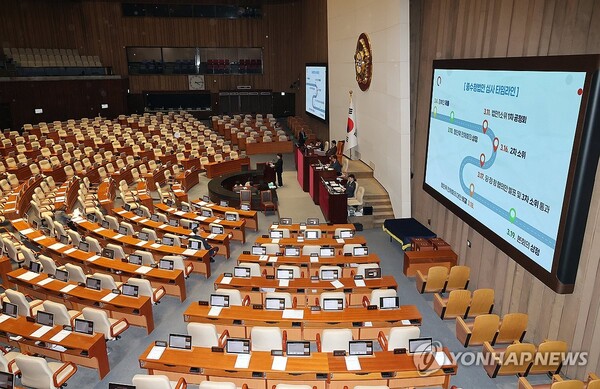
In a plenary session, the National Assembly approved the SCIO Act under the leadership of the Democratic Party and allied pro-government parties. The bill places the SCIO under the Minister of the Interior and Safety and identifies six principal areas for investigation: corruption, economic crimes, defense-industry offenses, drug offenses, insurrection and foreign-exchange crimes, and cybercrime.
The SCIO will also be empowered to investigate so-called \”law-distortion\” offenses and crimes committed in office by officials of the Prosecution Office, the police, the Corruption Investigation Office for High-ranking Officials (CIO), and court personnel.
SCIO investigators will be appointed as special public servants within a single rank structure spanning grades 1 to 9. Open recruitment is the default, but the law permits career hires for candidates with relevant academic qualifications, professional experience, technical skills, or research records. The government’s original draft required the SCIO to notify the Prosecution Office when it opened an investigation; that clause was removed after consultations among the party, the government and the presidential office.
Earlier, the National Assembly approved the Prosecution Office Act in a plenary session the previous day, defining the Prosecution Office’s organizational structure and the powers of its prosecutors. Consistent with the separation of investigation and prosecution, the Prosecution Office will handle prosecutions only and operate on a three-tier system of central, regional, and local prosecution offices.
The bill abolishes the prosecution’s authority to command and supervise special judicial police and adds a prohibition on abuse of power. It also explicitly lists dismissal as a disciplinary measure for prosecutors, enabling removal without a separate impeachment process.
The opposition People Power Party denounced the legislation as an effort to destroy the prosecution and staged a filibuster. After the 24-hour filibuster period allowed under parliamentary rules elapsed, the Democratic Party, joined by smaller progressive parties, cut off debate by vote and sequentially approved the bills.
With the Prosecution Office and SCIO laws now passed by the National Assembly, the Democratic Party said it will continue its so-called prosecution reform, next pursuing amendments to the Criminal Procedure Act after the June local elections.














Most Commented