
Translation result
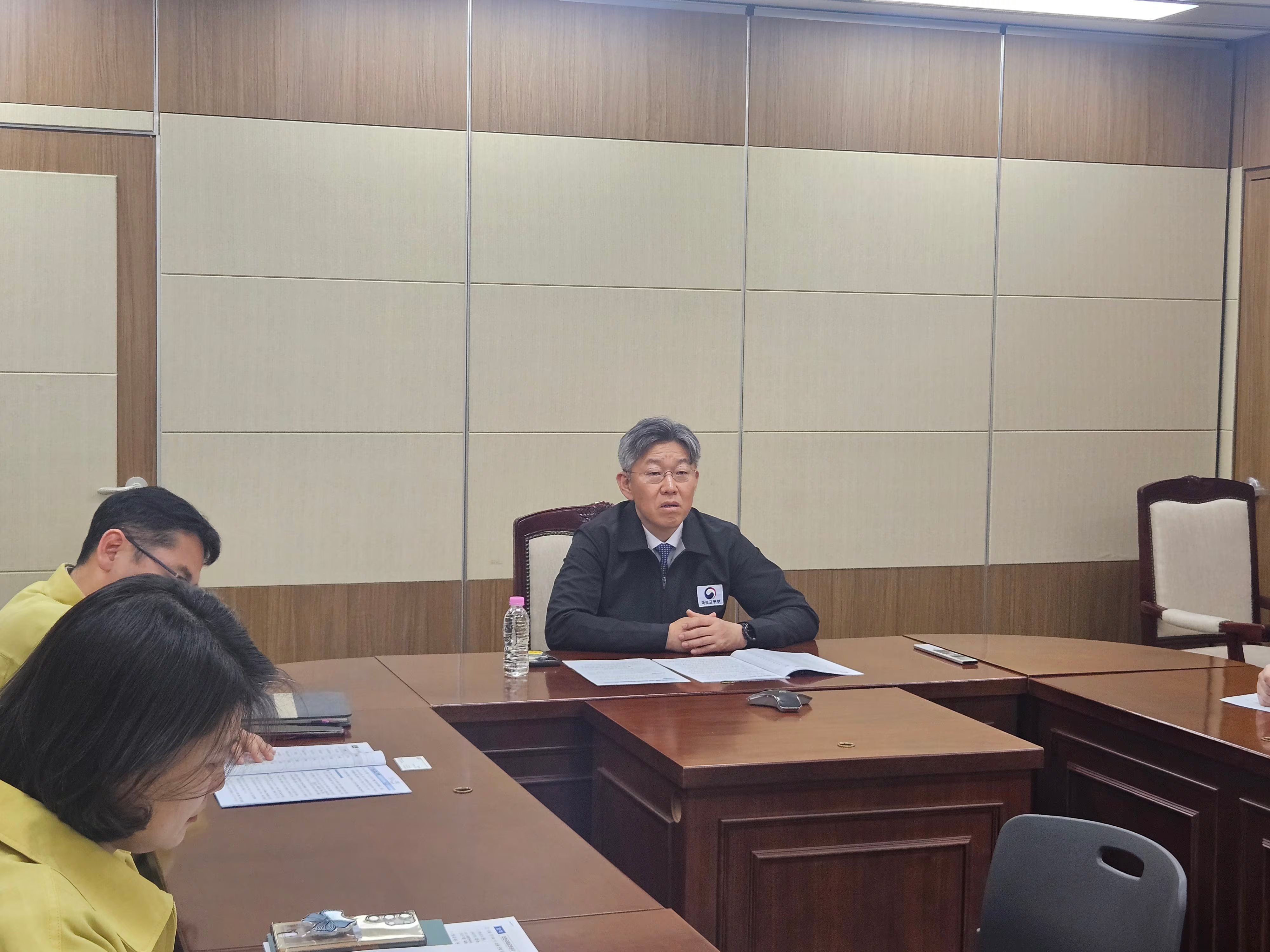
The Ministry of Land, Infrastructure and Transport said First Vice Minister Kim I-tak convened a video meeting on the afternoon of the 20th with senior officials from major affiliated agencies to discuss emergency measures related to developments in the Middle East. The gathering reviewed how international instability could affect the ministry’s responsibilities across land and transportation and discussed possible response strategies.
Kim urged agencies to develop proactive measures across all land and transportation areas, taking into account potential external shifts stemming from recent Middle East events and preparing for worst-case scenarios.
He directed agencies to closely review impacts on costs, timelines, and financing for major national projects—housing, roads, and rail—and to report any risks of disruption to the government without delay. Noting that rising energy prices may alter public transit demand, he also asked agencies to assess operational stability and service quality and to implement preemptive measures to ensure the public can travel safely and conveniently.
He warned that disruptions to operations on Middle East routes, together with currency depreciation and higher oil prices, could place burdens on both airlines and passengers. Agencies were ordered to monitor air service capacity, industry conditions, and passenger impacts closely, and to actively evaluate potential support measures.
On overseas construction, he emphasized that the safety of Korean companies and workers must be the top priority. Agencies were asked to work closely with clients and local authorities to manage situations steadily and to minimize the impact on overseas contracts.
Preparing for a prolonged situation, Kim said the public sector should lead efforts to reduce energy demand. He instructed agencies to design effective, organization-specific energy-saving measures appropriate to their respective functions.
“We will conduct a detailed assessment of impacts across all land and transportation sectors and assume potential future problems so we can prepare proactively,” Kim said. “To minimize public inconvenience and market shocks, we will consult with relevant ministries and actively pursue the necessary support measures.”










Most Commented