
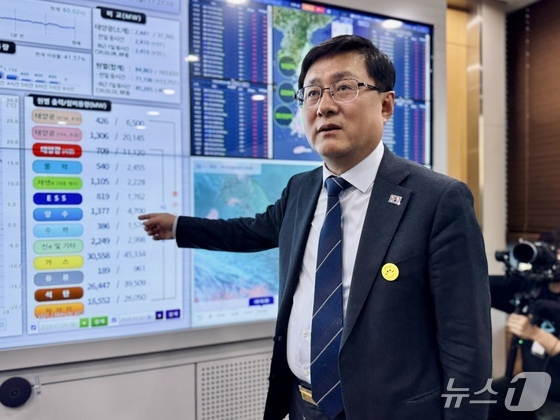
On February 9, Climate, Energy, and Environment Minister Kim Sung-hwan held his inaugural New Year’s press conference and unveiled his office for the first time since taking the helm. Among the most eye-catching items was a collection of recently acquired books, reflecting his contemplation on balancing nuclear and renewable energy, the AI revolution, and climate and environmental solutions.
Scattered across his desk were titles such as “Understanding the Paris Agreement,” “The Song of the Earth,” “Turbulence and Balance,” “AI War 2.0,” “Is Your Home Safe?,” “I’ve Decided to Save This Damned Planet,” “Finding Answers in the Forest,” and “The Future of Food in South Korea.”
“Understanding the Paris Agreement” is authored by Professor Park Deok-young from Yonsei University’s Law School, who testified as an expert witness for the plaintiffs in a climate constitutional lawsuit. The book offers a systematic explanation of international negotiation structures, greenhouse gas reduction targets, national responsibilities, and institutional foundations, serving as a guide to comprehending climate policy and its legal underpinnings.
“The Song of the Earth,” penned by ecologist Dr. Stephan Harding, poetically explores the relationship between humans and nature, as well as ecosystem changes. Minister Kim’s choice reflects his commitment to balancing scientific analysis with humanistic and emotional perspectives on environmental issues.
“Finding Answers in the Forest” provides insights into sustainability and human impact based on observations in forests and nature. This selection underscores the minister’s interest in understanding the intricate connections between daily life, policy, and ecosystems.
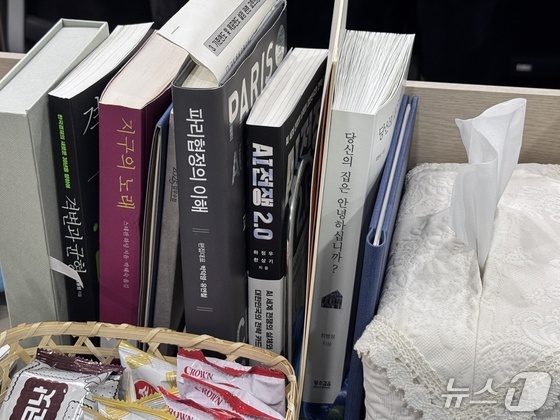
While “Turbulence and Balance” and “AI War 2.0” may seem tangential to climate, environment, and energy issues, they demonstrate Minister Kim’s holistic approach to social problems within a policy framework. “Turbulence and Balance” analyzes global political and economic instability and shifting international interests, while “AI War 2.0” examines how artificial intelligence and technological innovation impact energy policy, industrial competitiveness, and social structures.
Books emphasizing personal action and civic engagement are also prominent. “Is Your Home Safe?” presents concrete environmental actions for everyday life, illustrating how individual and family practices can catalyze social change. “I’ve Decided to Save This Damned Planet” combines a powerful message with practical approaches, connecting climate crisis response to personal commitment. “The Future of Food in South Korea” analyzes food security, agricultural policy, and climate change impacts on food production and supply, stressing the need for national-level responses.
Former Environment Minister Kim Wan-seop had “Why Nations Fail” and Hermann Hesse’s “Demian” on his desk. As the final minister under the Yoon Suk Yeol administration, Kim Wan-seop examined how national systems and political structures influence economic and social outcomes, while also reflecting on personal growth and social responsibility.










Most Commented