
Hyundai Motor Company is making waves in the Japanese imported passenger car market, recording an impressive 173.2% year-over-year sales increase this January.
According to the Japan Automobile Importers Association (JAIA) on the 10th, Hyundai sold a total of 71 vehicles in Japan last month, with compact cars accounting for nearly half of the sales at 35 units.
During the same period, a total of 79 imported compact cars were sold in Japan, with Hyundai leading the pack. Abarth followed with 20 units, while Fiat sold 11.
The Japanese auto market has long been dominated by domestic brands like Toyota, Honda, and Suzuki, earning it the reputation of being a “graveyard for imported cars.”
Hyundai itself entered Japan in 2001 but withdrew in 2009 after cumulative sales of only 15,000 units.
However, the tide has turned since Hyundai’s re-entry in 2022.
Starting with 526 units in its first year back, sales grew to 493 in 2023, 618 in 2024, and reached 1,169 units in 2025, showing a steady increase in market share.
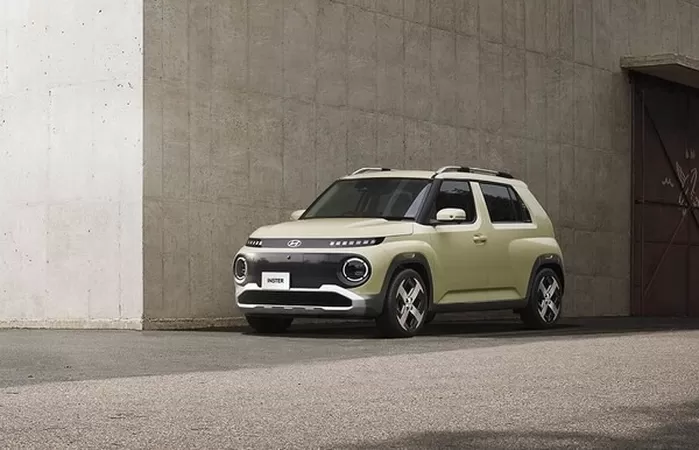
At the heart of this comeback is the ‘Inster,’ the export version of the Casper Electric.
Launched in Japan last April, the Inster’s compact dimensions – 3,830mm in length and 1,610mm in width – make it well-suited for Japan’s urban driving conditions and limited parking spaces.
While local brands dominate the internal combustion engine market, including HYBE, Hyundai’s focus on electric vehicles is seen as a key differentiator.
Hyundai plans to accelerate its push into Japan’s hydrogen fuel cell vehicle market with the launch of the ‘All-New Nexo’ in the first half of this year.
Kia, which exited the Japanese market in 2013, is also making a comeback by introducing the ‘The Kia VP5,’ aiming to enter the Purpose-Built Vehicle (PBV) market.












Most Commented