
100% of 20-Somethings Intend to Buy… “Anticipating Charging Cost Savings”
76.5% “Willing to Pay for Autonomous Driving Features”
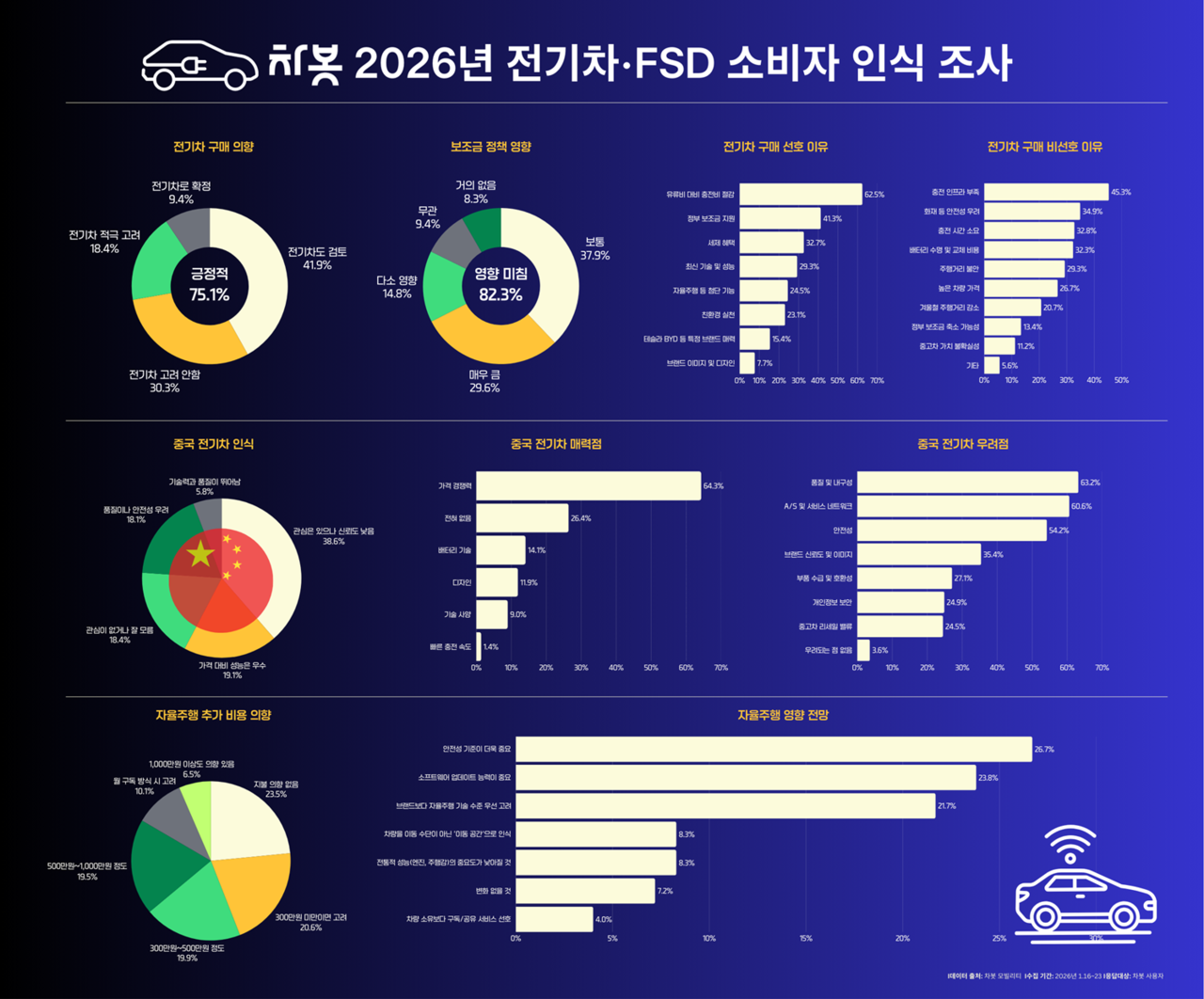
A recent survey by Chabot Mobility, a mobility concierge platform company, reveals that 7 out of 10 prospective car buyers are considering electric vehicles (EVs) for their next purchase. The study, which polled 450 individuals planning to buy a new car this year, highlights the growing acceptance of EVs in the market.
When asked about their intention to purchase an EV, a substantial 75.1% of respondents expressed a positive attitude. Breaking down the responses, 41.9% said they were considering an EV as an option, 18.4% were actively leaning towards an EV, and 9.4% had already decided on an EV. Only 30.3% of respondents were not considering an electric vehicle.
The survey uncovered a stark generational divide in EV acceptance. Remarkably, 100% of respondents in their 20s expressed interest in purchasing an EV, with those in their 30s following closely at 85.4%. In contrast, interest waned among older age groups, with those in their 50s and 60s showing less enthusiasm. This trend underscores the rapid adoption of EVs among younger consumers.
Economic factors emerged as the primary driver for EV consideration. The prospect of lower charging costs compared to fuel expenses topped the list at 62.5%. Government subsidies (41.3%) and tax incentives (32.7%) also played significant roles. Other motivating factors included cutting-edge technology and performance (29.3%), advanced features like autonomous driving (24.5%), and environmental consciousness (23.1%).
On the flip side, infrastructure and safety concerns were the main deterrents for potential EV buyers. The lack of charging infrastructure was the top concern (45.3%), followed by safety issues such as fire risks (34.9%), lengthy charging times (32.8%), battery lifespan and replacement costs (32.3%), range anxiety (29.3%), and high vehicle prices (26.7%).
The government’s EV subsidy policy appears to be a crucial factor in vehicle selection. A majority of respondents acknowledged its influence on their decision-making process, with 37.9% saying it has a moderate impact and 29.6% citing a significant impact. When including those who reported a slight influence (14.8%), over 80% of respondents indicated that the policy affects their purchasing decisions to some degree.
Perceptions of Chinese EV brands revealed a mix of interest and caution. The most common response, at 38.6%, indicated interest but low trust, suggesting that while awareness and curiosity about these brands exist, consumers still harbor doubts at the point of purchase.
Price competitiveness emerged as the most attractive feature of Chinese EV brands, with an overwhelming 64.3% of respondents citing it as the primary appeal. Other factors included battery technology and range (14.1%), stylish design and appearance (11.9%), cutting-edge tech specs (9.0%), and charging speed (7.6%).
Regarding willingness to pay for advanced autonomous driving features, 23.5% of respondents expressed no interest in additional costs. However, the majority showed some willingness to invest: 20.6% would consider paying up to 3 million KRW (about 2,250 USD), 19.9% would pay between 3-5 million KRW (about 2,250-3,750 USD), and 19.5% would consider 5-10 million KRW (about 3,750-7,500 USD). In total, 76.5% of respondents indicated some level of willingness to pay for these features.
Looking ahead, respondents believe that advancements in autonomous driving technology will shift vehicle selection criteria. Enhanced safety standards topped the list at 26.7%, followed by software update capabilities (23.8%), prioritization of autonomous driving technology levels (21.7%), and a focus on technical prowess over brand reputation (18.0%).
A spokesperson for Chabot Mobility commented, “This survey confirms the rapid transition of EVs from a niche market to a mainstream choice. Consumers now view electric vehicles not just as an eco-friendly option, but as a practical choice for reducing long-term ownership costs and maintenance expenses.”














Most Commented