
Are Property Rights at Risk? A Deep Dive into South Korea’s New Land Transaction Laws
Daniel Kim Views
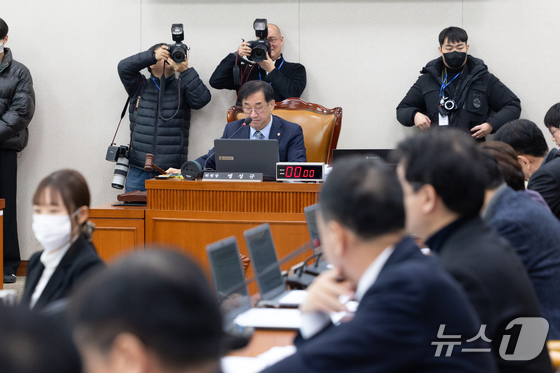
On November 10th, the People Power Party criticized the Democratic Party for pushing through legislation in the National Assembly’s standing committee that expands the Minister of Land, Infrastructure and Transport’s authority to designate land transaction permission zones. They argued this move shifts the blame for policy failures onto the public.
Representative Lee Jong-wook, the opposition party’s chief negotiator, along with other People Power Party members of the Land, Infrastructure and Transport Committee, held a press conference at the National Assembly. They stated, “The land transaction permission system is an exceptionally powerful measure that restricts constitutionally guaranteed property rights. It should be implemented minimally under clear and strict conditions.”
They emphasized, “The People Power Party has consistently called for the law to specify objective criteria comparable to those for designating adjustment target areas or speculative overheating zones. However, the Ministry’s revised proposal merely changes wording; the criteria remain vague and broad, effectively granting the Minister unlimited discretionary power. This amounts to a blank check.”
They added, “Currently, all of Seoul and 12 regions in Gyeonggi Province are designated as land transaction permission zones, limiting citizens’ property rights. How much further do they intend to restrict with this bill?”
The party also condemned the unilateral passage of an amendment to the Urban and Residential Environment Improvement Act, which allows public institutions to apply a floor area ratio up to 1.3 times the legal limit for redevelopment and reconstruction projects. They stated, “The Democratic Party processed the bill unilaterally without reporting subcommittee discussions or allowing further debate. They also completely ignored our repeated calls for special provisions on private floor area ratios to revitalize urban renewal projects.”
After the press conference, Representative Lee told reporters, “We’ve been arguing that expanding land transaction permission authority infringes on property rights, so specific criteria should be outlined in the law. However, they rushed the bill through without finalizing our discussions.”
Regarding the Urban and Residential Environment Improvement Act amendment, he said, “They’re prioritizing floor area incentives for public projects while delaying action on private projects. Given that over 80-90% of housing supply comes from private redevelopment, relying on just 10-20% from public projects won’t be enough. We need dramatic deregulation for private redevelopment projects, but the government and Democratic Party have rejected this approach.”












Most Commented