
How the ‘Choi Eun-soon Prevention Law’ Aims to Stop High-Value Tax Evaders in South Korea
Daniel Kim Views
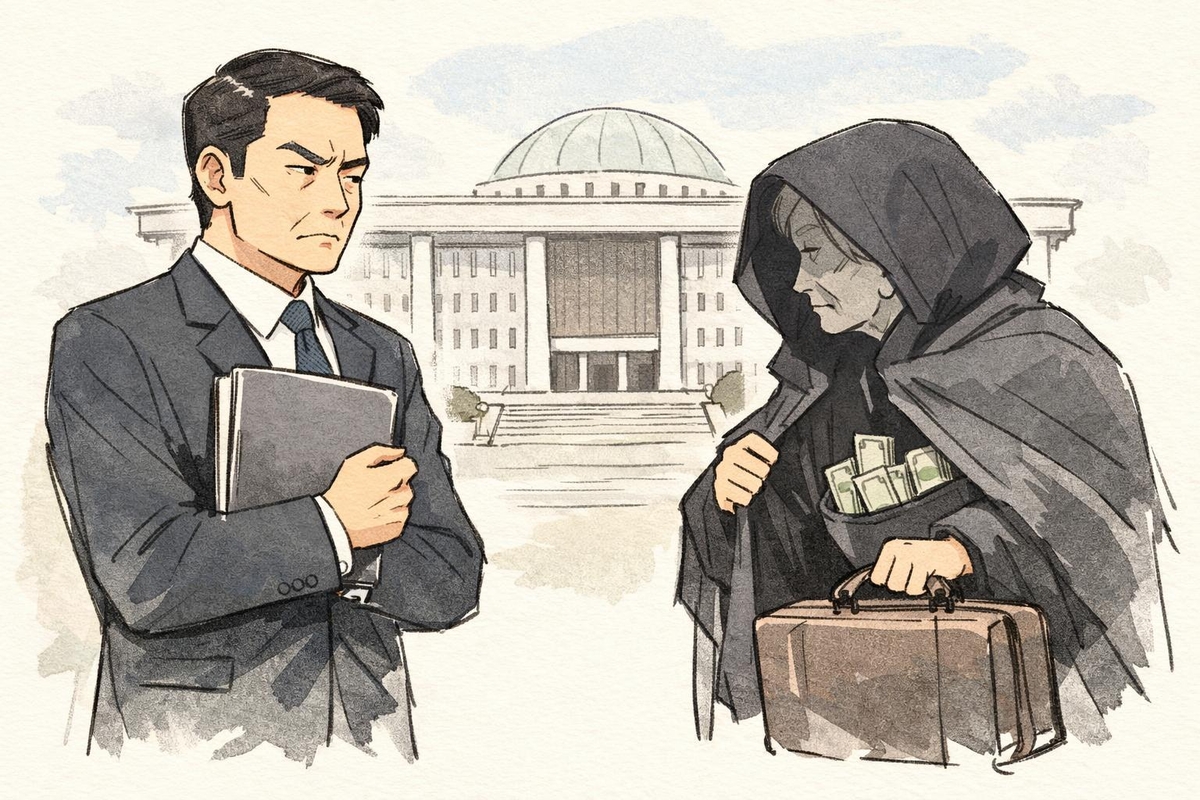
On February 10, Gyeonggi Province announced plans to introduce legislation tentatively called the “Choi Eun-soon Prevention Law.” This law aims to prevent cases like that of Choi Eun-soon (79), mother-in-law of former President Yoon Suk Yeol, who willfully evaded payments of fines amounting to billions of won.
The province intends to amend two laws: the Local Administrative Sanctions Act and the Financial Real Name Act. These amendments would allow for travel bans, additional fines, and access to financial information for high-profile tax delinquents.
The provincial government has prepared and submitted these legislative proposals to the national government.
Gyeonggi Governor Kim Dong-yeon stated, “The Choi Eun-soon Prevention Law demonstrates Gyeonggi Province’s firm resolve to eliminate future ‘Choi Eun-soons’ who live comfortably while avoiding substantial tax payments. We will reform laws and systems to address this issue at its root.”
Non-tax revenue refers to income collected for public purposes, such as fines for legal violations or fees from development projects. The problem arises when some delinquents hide assets or leave the country, as the current system lacks sufficient enforcement measures.
Choi Eun-soon violated the law by purchasing land in Seongnam City’s Dochon-dong area through a name trust contract in 2013, resulting in hefty fines.
As of the December 15 deadline last year, Choi had not paid her delinquent amount of 2.5 billion KRW (about 1.7 million USD). Consequently, one of her properties in Seoul’s Gangdong district is currently being auctioned.
As cases like Choi’s increase, where individuals fail to pay fines for violating real estate laws or development-related fees, some are evading collection by concealing deposits, transferring money overseas, and frequently traveling abroad.
The first component of the Choi Eun-soon Prevention Law involves amending the Law on the Collection of Local Administrative Sanctions and Fines. This would establish regulations for travel bans and additional fines on high-profile tax delinquents.
Currently, laws allow for travel bans on those owing significant amounts in national and local taxes, but delinquents of other revenues face no such restrictions when leaving the country.
The province argues that to ensure a fair tax system, new regulations should prohibit overseas travel for individuals with substantial debts in other revenues.
The province recommends that local governments be given legal authority to request travel bans from the Justice Ministry for individuals owing more than 30 million KRW (about 20,400 USD) in other revenues, aligning with standards for local tax delinquents.
Additional fines are penalties for late payments. While such regulations exist for national and local taxes, rules for other revenues vary, leading to inconsistencies.
Even for revenues with a strong punitive nature, like fines for legal violations, the absence of additional penalties often results in intentional payment delays.
The province proposes a systematic approach to imposing additional fines based on the nature of the revenue. Higher fines would apply to penalties for violating laws such as the Real Name Act and the Building Act.
For fees due at the start of projects, like development and metropolitan traffic facility fees, the province suggests applying additional fines at local tax levels for delayed payments.
The second aspect of the law involves expanding access to financial information by amending the Financial Real Name Transactions and Confidentiality Act. Currently, financial records can only be accessed for national or local tax delinquents, leaving no legal basis to track assets of those owing other revenues.
Consequently, some delinquents can hide deposits or transfer money abroad undetected. The province maintains that the Act should be amended to allow financial information access for all types of tax delinquents.
Meanwhile, the province reported recovering 140 billion KRW (about 95.2 million USD) in taxes through its recent “100-Day Operation to Collect from High-Profile Delinquents and Eliminate Tax Evasion” initiative.












Most Commented