
The Samsung Bonus Crisis: Why South Korea’s Tech Giants Are Fueling a Social Divide
Daniel Kim Views
Translation result
Large firms’ wage race is deepening the labor market’s dual structure
Accelerating adoption of AI and robots could worsen the youth employment cliff
Company-level bargaining has limits; sectoral bargaining can narrow wage gaps
Business needs social strategies…must weigh industrial competitiveness and employment together
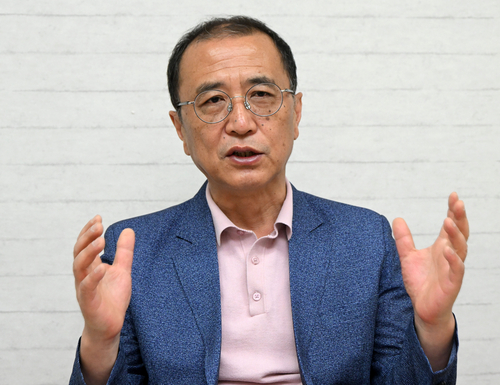 Samsung Electronics and SK Hynix’s bonus dispute has emerged as a new source of social conflict in Korea. The debate over how to distribute excess profits from the semiconductor boom goes beyond pay: it ties into wage polarization, inter-worker conflict, the youth employment crisis and questions about industrial competitiveness. In an interview with Seoul Economic Daily on June 1, Han Seok-ho, secretary general of the Korea Labor Foundation, called the Samsung bonus issue “a symbolic case showing the labor market’s dual structure pushing to an extreme.” He urged labor to reclaim values of equality and solidarity, and urged business leaders to develop national-level corporate, industrial and social strategies. He warned that competition over bonuses among large firms could accelerate AI and robot adoption and further squeeze youth employment. Han proposed creating a social solidarity fund and building sectoral bargaining systems to ease the dual labor market, saying, “Labor and capital must jointly create social adjustment mechanisms now.”
 – How do you assess the Samsung bonus controversy?
△ The Samsung bonus controversy is not just a wage dispute or a routine labor-management fight. It symbolically ignited a competitive push among employees at large firms for much higher pay. Given the semiconductor sector’s central role in the national economy, the impact will spread beyond individual companies to the entire industry and society. For workers who received bonuses, the pay may seem justified, but many citizens feel relative deprivation and disillusionment. When I speak with other workers, they describe a harsh reality check. Many young people say they feel discouraged, noting that even with hard study and job preparation they are unlikely to receive comparable rewards. Ultimately, there are no winners here. The labor movement has lost sight of equality and solidarity; management faces higher labor costs and potential erosion of competitiveness; and society bears the cost in deeper labor-market polarization and conflict. Samsung’s semiconductor workers may see a bargaining victory, but at the national and social level everyone loses.
– What lies at the core of this episode?
△ Both sides focused only on the fires at their own feet. Under a company-by-company bargaining system, unions and management concentrated on each firm’s profits and performance. Unions stayed inside corporate boundaries and failed to consider how outcomes affect the broader labor market. I believe this case exposes a greater strategic failure on the management side than on labor’s. Management long insisted that wages should be set by the market, but relying solely on market logic will widen pay gaps and intensify social conflict. That outcome also undermines individual firms’ operations and national industrial competitiveness. This controversy makes those consequences visible.
– Are bonus disputes spreading to other industries?
△ The disputes at Samsung and SK Hynix are not isolated. They signal how deeply Korea’s labor-market dual structure has taken hold. People now say that ten years of pay at small firms can match a single year’s bonus at large companies. Unions in major sectors — autos, steel, shipbuilding and IT — are watching Samsung’s negotiations closely. Demands for bonuses and higher wages are likely to strengthen. As big-company unions secure pay increases, unions in other sectors will push for similar gains, widening the overall wage gap and conflict across the labor market.
– Could conflicts among worker groups intensify?
△ I think they already have. The Samsung case revealed tensions even among regular employees across different business divisions. The conflict could expand to include prime contractors and subcontractors, regular and non-regular workers, and younger versus older generations. Emotional divides between higher-paid and lower-paid workers could deepen. Historically, the labor movement sought to represent workers’ common interests, but internal labor-market disparities are now too large. Even workers in the same class face vastly different conditions, and a slogan of “worker solidarity” alone will not easily bridge these rifts.
– Will this trigger broader labor-market change?
△ Competition over bonuses and rising wages will likely accelerate the adoption of AI and robots. For firms, automating can be a rational choice compared with sustaining growing labor costs. Competitive small and medium-sized firms are already rapidly introducing automation. With labor shortages and falling costs for AI and robotics, firms have increasing incentives to invest in automation when weighing productivity and expenses.
– How will this affect youth employment?
△ Youth employment could deteriorate significantly. Young people already face acute job shortages, and the next generation — today’s children and adolescents — may encounter even tougher labor-market conditions. Labor should not simply demand higher wages. In exchange for agreeing to some degree of social wage coordination, unions should press firms to slow the pace of AI and robot adoption and to build systems that allow human labor to coexist with automation. Today, wage and employment issues cannot be treated separately.
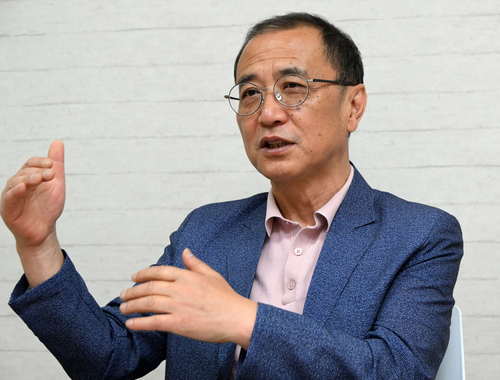 – Does the labor movement need to change?
△ Labor movements in the 1970s through the 1990s emphasized solidarity and class unity. But as the labor-market dual structure deepened, internal disparities within labor grew. Differences between prime contractors and subcontractors, and between regular and non-regular workers, stem from gaps in pay and treatment, so they cannot speak with a single voice. As AI-centered advanced industries expand, the dual structure could worsen. If unions continue to act primarily to protect individual firms’ interests, they risk losing recognition as a social alternative force.
– Can labor itself resolve the dual structure?
△ I don’t think it will be easy. Unions are deeply accustomed to company-based structures. They will likely become even more segmented by business division, as seen in the Samsung case. The two main national confederations cannot ignore the influence of large-company unions. Critics fault younger-generation (MZ) unions, but that misses the point. Union activity has evolved to prioritize company-specific interests over broader social solidarity. Expecting generations raised in that environment to suddenly embrace solidarity and mutualism is unrealistic.
– What responsibilities does management bear?
△ Capital has no border, but it does have nationality. Company growth cannot be divorced from national interests. Korean business tends to focus on firm-level strategies while neglecting national social strategies. Japan’s Keidanren, for example, has argued early on for minimum wage increases to support consumption and sustain industrial bases. Sweden’s Wallenberg family considers corporate profits alongside industrial and social sustainability. By contrast, Korean management often concentrates on issues like inheritance-tax relief or dual-class share structures. They need to propose solutions first for social challenges such as the labor-market dual structure, youth employment and labor issues in the AI era.
– What solutions do you propose for the bonus conflict?
△ First, create a social solidarity fund. Labor should lead a proposal to share part of corporate gains with society. Companies and unions could jointly build a fund to support long-term social sustainability. One option is to divide the fund into three parts: one-third for subcontractors, non-regular workers and unemployed youth support; one-third for R&D and national strategic investments such as power grids and water infrastructure; and one-third as a reserve for corporate crises.
– You also call for sectoral bargaining.
△ Labor often cites sectoral bargaining rhetorically, and management worries about cost. But company-level bargaining alone cannot resolve the high-wage problem that threatens labor-market balance and industrial competitiveness. Look at Japan’s Keidanren and Rengo (Japanese Trade Union Confederation): industry-level coordination did not weaken corporate competitiveness. If sectoral bargaining enables wage coordination and adjustments to working conditions, it can help ease the dual labor market. I would welcome management proposing it first.
– What about controversy over the “yellow envelope” law?
△ Labor-law revisions should have aimed to establish an industry-level bargaining system. We need a structure to discuss wages and conditions for regular and non-regular workers within the same industry, and for prime contractors and subcontractors. If an industry-wide joint bargaining system were in place, many disputes over subcontractor unions’ bargaining rights could have been significantly reduced.
– Could the bonus debate affect talks about raising the retirement age?
△ That’s why wage coordination matters. Labor should demand reasonable wages, and management must design ways for labor to coexist with AI and robots. If we raise the retirement age without reforming the wage system, firms will feel the burden and young workers will fear losing jobs.
He is…
Born in 1964 in Yecheon, North Gyeongsang Province, Han entered the activist movement while studying urban administration at the University of Seoul. In 1988 he joined organizing work among frontline laborers in Incheon, a center of labor activism. He led activities in the National Council of Trade Unions, the predecessor of the Korean Confederation of Trade Unions. After the KCTU’s founding in 1995, he served as organization director of the Metal Industry Federation and as chair of the Social Solidarity Committee. He raised the issue of labor polarization directly and resigned from the Jeon Tae-il Foundation secretary-general post in 2021 amid pressure from militant unions. He now serves as secretary general of the Korea Labor Foundation, launched last year to address the labor-market dual structure.












Most Commented