Quick access to main page (top) Direct access to main contents Quick access to main page (bottom)

Will Robots Pay Taxes? The High-Stakes Battle Over AI and Human Labor

Daniel Kim Views  

경사로
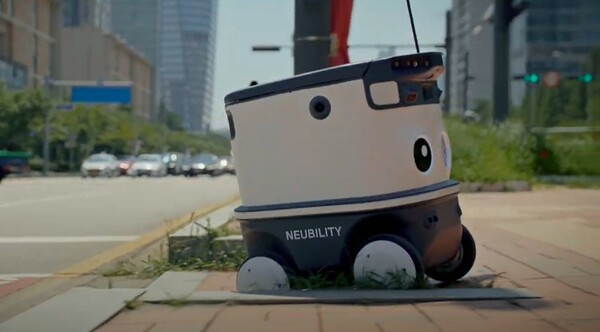
Autonomous mobile robot Newby moving along a slope

(The CEN News / Reporter Jae-yeon Choo) As artificial intelligence and robotics accelerate the displacement of human labor, lawmakers and industry leaders are increasingly debating how to distribute the gains from technological innovation. Hyundai Motor’s announced deployment of humanoid robots, together with the government’s basic-income pilot, has moved the idea of a so‑called “robot tax” from theoretical discussion to a realistic policy option.

Policy experts, including the National Assembly Future Institute, have urged consideration of an “AI social-security tax.” The proposal would impose a charge — effectively a “machine-worker usage” fee — on firms that reduce labor costs or capture disproportionate value by implementing AI systems.

Researchers warn that while AI raises productivity, it also creates social costs, including widening income inequality and data monopolies. They propose using tax revenues to bolster the social safety net: funding retraining for workers displaced by AI and expanding digital education for underserved communities. President Lee Jae-myung has likewise stressed the need for benefit-sharing, arguing that when companies profit from AI, accepting corresponding responsibilities helps reduce social resistance.

The debate has gained momentum amid rapid advances in robotics. Hyundai Motor Group unveiled a humanoid robot called “Atlas” and plans to deploy it on actual production lines by 2028, signaling a potential transformation of manufacturing floors.

Labor leaders have voiced serious concerns. The Hyundai union opposes deployments without labor-management agreements and is demanding a full-wage protection policy to prevent pay cuts. As robots move beyond simple repetitive tasks to substitute for substantial human roles, the technology has become a new flashpoint in labor relations.

Discussion of a robot tax naturally connects to debates over basic income. Global tech figures such as Elon Musk and Sam Altman have argued that if AI maximizes productivity, governments may need to guarantee a baseline income or create public wealth funds to distribute the resulting gains.

South Korea is testing alternatives as well. A pilot program would pay rural residents 150,000 KRW per month (approximately $112.50). The Presidential Committee on Basic Society is acting as a policy control tower to set sectoral priorities. Experts caution, however, that careful policy design and broad social consensus are necessary to ensure automation-driven productivity actually stabilizes household finances for ordinary people.

Industry has pushed back, saying early talk of taxation risks stifling innovation. Companies warn that excessive taxes could dampen investment and encourage shifting production overseas. One industry insider suggested that a voluntary corporate retraining fund might be a more pragmatic alternative to direct taxation.

Others counter that an AI tax could serve as an essential safeguard to enable technology and society to coexist. Experts recommend that any tax base consider all job-displacing technologies — not only physical robots but also AI agents and paid subscription services. Ultimately, finding ways to translate the wealth created by AI and robots into real improvements in human well-being will be a central challenge of the digital transition.

Photo: Yonhap News

(The CEN News) Reporter Jae-yeon Choo luckychoo0617@naver.com

Daniel Kim
content@tenbizt.com

Comments0

300

Comments0

[Social] Latest Stories

  • Starbucks Korea CEO Fired Over Controversial ‘Tank Day’ Promotion
    Starbucks Korea CEO Fired Over Controversial 'Tank Day' Promotion
  • 25,000 Robots vs. Human Workers: The High-Stakes Battle at Hyundai
    25,000 Robots vs. Human Workers: The High-Stakes Battle at Hyundai
  • Hotel Hygiene Scandal: Cleaner Caught Using Guest Towels to Wipe Toilets
    Hotel Hygiene Scandal: Cleaner Caught Using Guest Towels to Wipe Toilets
  • South Korea’s Tech Giant Kakao Faces First Major Strike in 20 Years
    South Korea's Tech Giant Kakao Faces First Major Strike in 20 Years
  • South Korea’s Aging Crisis: How One Leader Is Redefining ‘Well-Dying’
    South Korea’s Aging Crisis: How One Leader Is Redefining 'Well-Dying'
  • Stop Calling Them ‘Hey You’: South Korea’s New Push for Worker Respect
    Stop Calling Them 'Hey You': South Korea's New Push for Worker Respect

Weekly Best Articles

  • Choi Dong-seok’s Family Bond: How a Simple Engraving Reveals Deep Love for His Children
  • Kwak Sun-hee’s Stunning Wedding Photos: A Celebration of Love and Courage
  • Is ‘I Am a Natural Person’ Just a Big Lie? Comedian Yoon-taek Reveals Shocking Secrets!
  • Health Scare: Why Fans Are Worried About Go Ji Yong’s Dramatic Weight Loss
  • Discover the Winter Gongju Chestnut Festival: A Taste of Korea at H-Mart in the USA!
  • 2026 Spring Wildfire Prevention: How Gyeryong City is Cutting Response Time to 30 Minutes!

You May Also Like

  • 1
    Trump Backs Colombia's 'El Tigre' — What It Means for U.S. Relations

    Politics 

    Trump Backs Colombia’s ‘El Tigre’ — What It Means for U.S. Relations
  • 2
    Trump Backs Colombia's Far-Right Outsider—What's at Stake?

    Politics 

    Trump Backs Colombia’s Far-Right Outsider—What’s at Stake?
  • 3
    12.5% Tariff Hit: South Korea Faces New U.S. Trade Penalties

    Politics 

    12.5% Tariff Hit: South Korea Faces New U.S. Trade Penalties
  • 4
    12.5% Tariff Alert: Why the U.S. Is Targeting South Korean Imports

    Politics 

    12.5% Tariff Alert: Why the U.S. Is Targeting South Korean Imports
  • 5
    Marta Kostyuk Makes History at French Open Amid Ukraine Crisis

    Politics 

    Marta Kostyuk Makes History at French Open Amid Ukraine Crisis

Popular Now

  • 1
    37 Years in Exile: The Tiananmen Leader Who Just Wants to Go Home

    Politics 

  • 2
    South Korea's Cheongju Airport Faces Crisis as Passenger Numbers Explode

    Politics 

  • 3
    Nuclear Submarine Race: South Korea's High-Stakes Bid for U.S. Fuel

    Politics 

  • 4
    France Finally Admits Complicity in the 1994 Rwandan Genocide

    Politics 

  • 5
    South Korea Election Crisis: Ballot Shortages Spark Calls for Re-Vote

    Politics 

Weekly Best Articles

  • Choi Dong-seok’s Family Bond: How a Simple Engraving Reveals Deep Love for His Children
  • Kwak Sun-hee’s Stunning Wedding Photos: A Celebration of Love and Courage
  • Is ‘I Am a Natural Person’ Just a Big Lie? Comedian Yoon-taek Reveals Shocking Secrets!
  • Health Scare: Why Fans Are Worried About Go Ji Yong’s Dramatic Weight Loss
  • Discover the Winter Gongju Chestnut Festival: A Taste of Korea at H-Mart in the USA!
  • 2026 Spring Wildfire Prevention: How Gyeryong City is Cutting Response Time to 30 Minutes!

Must-Reads

  • 1
    Trump Backs Colombia's 'El Tigre' — What It Means for U.S. Relations

    Politics 

    Trump Backs Colombia’s ‘El Tigre’ — What It Means for U.S. Relations
  • 2
    Trump Backs Colombia's Far-Right Outsider—What's at Stake?

    Politics 

    Trump Backs Colombia’s Far-Right Outsider—What’s at Stake?
  • 3
    12.5% Tariff Hit: South Korea Faces New U.S. Trade Penalties

    Politics 

    12.5% Tariff Hit: South Korea Faces New U.S. Trade Penalties
  • 4
    12.5% Tariff Alert: Why the U.S. Is Targeting South Korean Imports

    Politics 

    12.5% Tariff Alert: Why the U.S. Is Targeting South Korean Imports
  • 5
    Marta Kostyuk Makes History at French Open Amid Ukraine Crisis

    Politics 

    Marta Kostyuk Makes History at French Open Amid Ukraine Crisis

Popular Now

  • 1
    37 Years in Exile: The Tiananmen Leader Who Just Wants to Go Home

    Politics 

  • 2
    South Korea's Cheongju Airport Faces Crisis as Passenger Numbers Explode

    Politics 

  • 3
    Nuclear Submarine Race: South Korea's High-Stakes Bid for U.S. Fuel

    Politics 

  • 4
    France Finally Admits Complicity in the 1994 Rwandan Genocide

    Politics 

  • 5
    South Korea Election Crisis: Ballot Shortages Spark Calls for Re-Vote

    Politics 

Share it on...