
Translation result.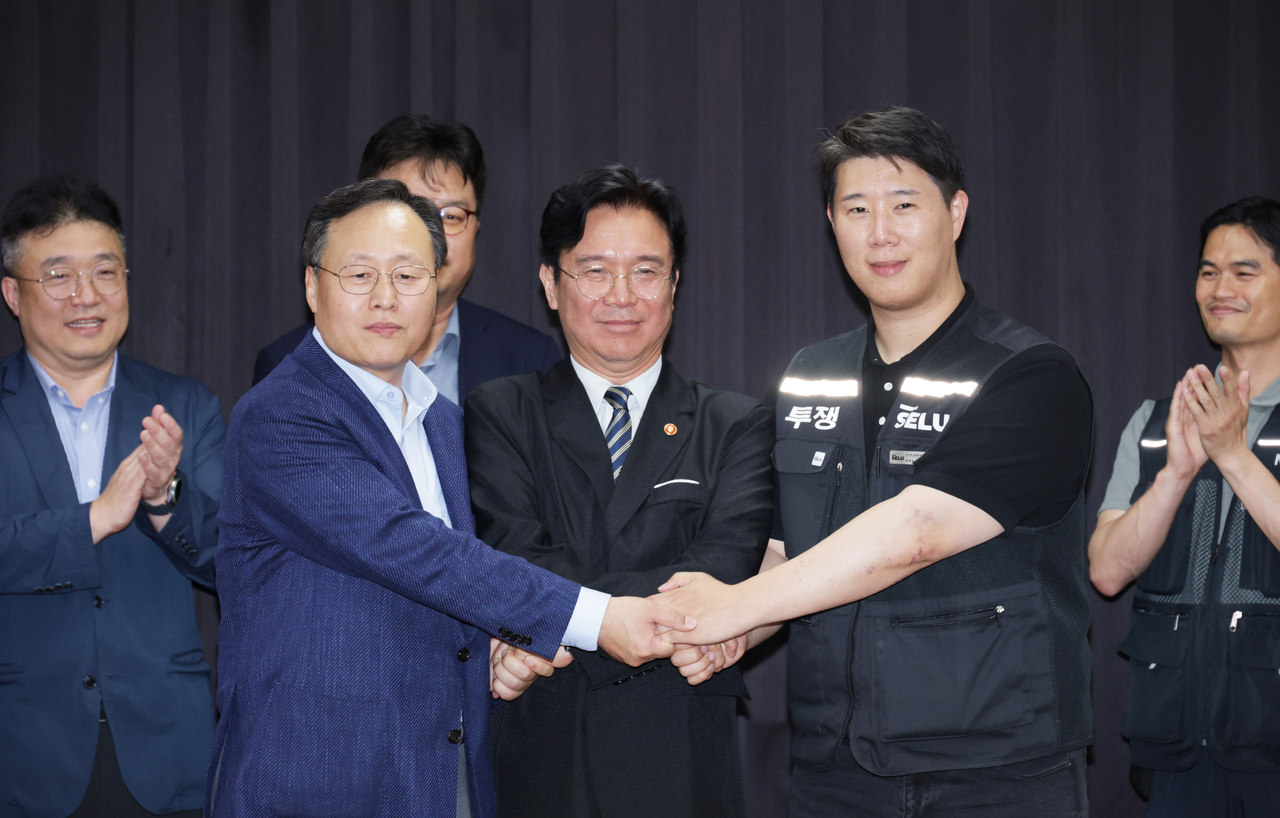 [Herald Economy=Ji-young Park] “We demonstrated K-democracy,” said Kim Young-hoon, minister of Employment and Labor.
Over the past six months, Samsung Electronics’ unions consistently pressed for “greater transparency and the removal of the performance-bonus cap.” The divide between management and labor often seemed irreconcilable. Yet sustained negotiations produced a compromise — the outcome Minister Kim cited as evidence of the power of dialogue. The dispute threatened an unprecedented general strike that could have caused more than 100 trillion KRW (about $75 billion) in damage; the six months from the strike’s emergence to the tentative agreement were tense and high-stakes.
Last December, Samsung and the unions opened the first round of wage negotiations. A joint bargaining team composed of the National Samsung Electronics Labor Union (Jeonsamno), the cross-company union, and Samsung Electronics’ local unions demanded transparency in the over-profit incentive (OPI), elimination of the performance-bonus cap, and a 7% base pay increase.
Relations began to fray in February. Rival SK Hynix allocated 10% of operating profit to performance bonuses and removed its cap, intensifying pressure within Samsung for equal or superior compensation. The union demanded “compensation at or above competitors’ levels,” declared the talks deadlocked, and requested mediation by the Central Labor Relations Commission. Even after six days of intensive negotiations, the commission suspended mediation.
The joint bargaining group converted to a joint action committee, campaigned on “removing the performance-bonus cap and making bonus calculations transparent,” and held a strike authorization vote. Members voted overwhelmingly in favor: 93.1% supported securing the right to strike.
Vice Chairman and CEO Jeon Young-hyun personally intervened. After meeting union leaders, management restarted negotiations. Management offered that, if Samsung maintained industry leadership, it would allocate 10% of operating profit to bonuses and provide special awards beyond the cap; the union rejected that, insisting the cap’s removal be institutionalized and arguing that loss-making divisions such as Foundry and System LSI remained undercompensated.
As talks continued without narrowing differences, tensions escalated. Choi Seung-ho, head of the cross-company union’s Samsung Electronics branch, urged a March general strike and made hardline remarks, including saying nonparticipants would be “first in line for dismissal.” Allegations emerged that the union had compiled a “blacklist” targeting nonmembers; management filed complaints with the police, further straining relations.
Employees sympathetic to the union’s demand for competitor-level pay flocked to the cross-company union. What began with roughly 6,000 members in September 2025 swelled to 75,000 within six months, giving the union majority status. On April 17 the cross-company union formally announced its majority-union status, increasing momentum for a general strike.
On April 23 some 40,000 people gathered at the Pyeongtaek campus for a strike rally, intensifying pressure on management. Choi framed the confrontation as “a fight for Samsung’s future and South Korea’s competitiveness,” calling for the removal of the bonus cap and allocating 15% of operating profit to bonuses, and he reiterated the intent to proceed with the strike.
The union’s announced 18-day strike threatened over 30 trillion KRW (about $22.5 billion) in losses, heightening industry-wide concern. With no breakthrough in sight, management reached out in May. CEOs Jeon Young-hyun and Roh Tae-moon issued a statement pledging responsible leadership and asked the union to resume talks. With roughly ten days before the strike, both sides entered the first post-strike adjustment process under the Central Labor Relations Commission, but the union later declared the talks deadlocked, saying its demand to institutionalize and make transparent the abolition of the bonus cap had not been accepted.
With the strike one week away, management made another overture. Eighteen division presidents issued an apology, visited the Pyeongtaek plant, and proposed additional talks. The commission called for a second post-strike adjustment, and Minister Kim Young-hoon met with both sides to hear their positions.
Chairman Lee Jae-yong ultimately broke the impasse. He issued a public apology, saying, “I will face the storm and take responsibility,” and appealed for unity: “We are one family. Let’s pool our wisdom and move in the same direction so we can be proud to be Samsung people.” Following Lee’s apology, management agreed to the union’s request to replace bargaining representatives, and private, behind-the-scenes talks resumed ahead of the second mediation.
From the 18th — three days before the planned strike — the commission led a second adjustment process, with Commission Chairman Park Soo-geun personally participating. The situation was urgent. Despite a 25-hour marathon session, management declared the talks broken on the morning of the 20th, a day before the strike, arguing that the union’s demands threatened the company’s fundamental principle that “rewards follow performance.”
Minister Kim countered, saying “it’s not over until it’s over,” convened both sides around 4 p.m., and took charge of additional talks. After roughly six and a half hours of bargaining, the parties reached a tentative agreement and postponed the general strike. The deal secured a bold compensation framework by fixing the bonus pool at roughly 10% of operating profit. The union will hold a ratification vote among members over six days beginning on the 22nd.













Most Commented