
Translation result
Cleaning workers’ fight over a tiny hourly raise widens pay gaps
Subcontractors and others fall further behind
Risk grows that workers will stratify into classes
Big firms face higher costs and weaker competitiveness
At worst, production sites could move overseas
 The Duksung Women’s University branch of the Public Transport Workers’ Union, made up of 44 cleaning staff, is still negotiating and demanding a 270 KRW (≈ $0.20) per‑hour raise. Fifteen universities in Seoul bargained together on the same demand; 14 reached wage agreements, but Duksung Women’s University did not. As a result, Duksung cleaners earn 48,000 KRW (≈ $36.00) less per month than their counterparts at other universities this year.
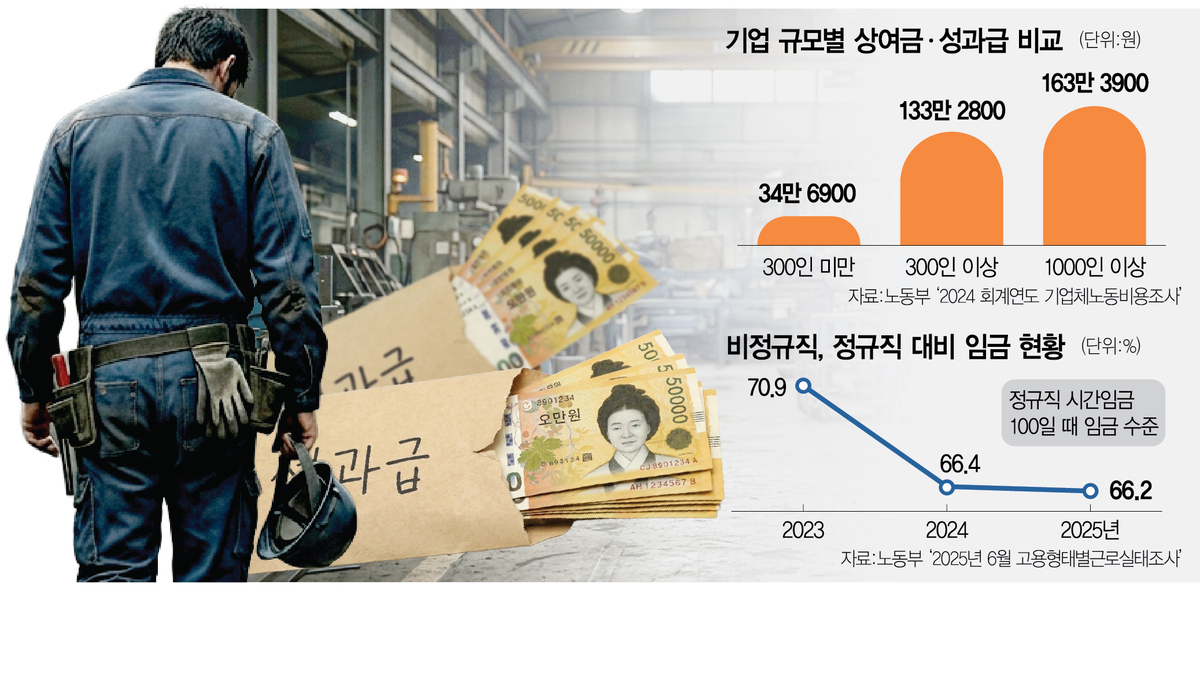 When Samsung Electronics’ management and union agreed to performance bonuses worth several hundred million KRW per person (roughly hundreds of thousands of USD), concern grew that pay polarization across the labor market could harden into a class divide among workers. Observers warn that workers in different situations will set different bargaining targets and demands, deepening splits within the labor movement. Business leaders say that if high wage demands combine with bargaining uncertainty, domestic production sites will lose cost competitiveness and firms may consider overseas relocation or expansion.
According to labor sources on the 29th, while large-company unions are demanding bonuses in the hundreds of millions of KRW per worker (roughly hundreds of thousands of USD), low‑paid, subcontracted and dismissed workers mostly seek job security and protection of basic rights. Workers at Company A have spent nearly two years demanding reinstatement after a corporate liquidation they call an unfair dismissal. A dismissed worker from Hotel B has staged an almost yearlong protest, including a high‑altitude sit‑in, after being let go amid COVID‑19–related business troubles. Sales staff at Carmaker C, who were fired for alleged poor performance, recently returned to work after more than a year of legal fights.
Meanwhile, large-company unions are shifting their bargaining agendas toward large bonus pools. More unions are now pursuing performance-pay demands tied to operating or net profits, following Samsung’s example. Some unions seek bonus shares as high as 30%—double the Samsung union’s initial 15% demand. Affiliated unions are also moving to treat the parent company’s deal as the bargaining benchmark.
The problem is that this trend can widen pay gaps within the labor market. The Ministry of Employment and Labor’s enterprise labor‑cost survey shows that in 2024, bonuses and performance pay accounted for 25% of direct labor costs at firms with 1,000 or more employees—more than three times the 8% share at firms with fewer than 300 employees. If performance pay drives firm‑size pay differences, broader adoption of large bonus demands by big‑company unions could significantly increase income gaps among workers.
That gap could also fracture the labor movement. Low‑paid and subcontracted workers press for employment stability and a restoration of minimum standards, while regular employees at large firms increasingly claim a larger share of corporate profits. As bargaining focuses on each company’s ability to pay and the immediate benefits to union members, the labor movement’s historic role in defending low‑paid and irregular workers may weaken.
Skeptics say the Yellow Envelope Act (the revised Trade Union Act), designed to improve subcontracted workers’ conditions, may not be enough to close the gap. The law intends to reduce bargaining imbalances between contractors and subcontractors and to encourage better treatment of subcontracted workers. But the spread of high bonus demands at major contractor unions could erode that rationale.
Business groups warn that when high wage structures combine with bargaining uncertainty, domestic production sites lose cost competitiveness and firms will prioritize overseas investment or expansion. In the Korea Employers Federation’s “2026 Labor‑Management Outlook” survey, 72.9% of respondent companies said labor relations will worsen this year compared with last year. One industry official said, “Large firms can’t openly discuss this because they must maintain a certain level of domestic employment,” but added, “If costs spike under a rigid labor market, the likelihood of moving production facilities abroad will inevitably rise.”














Most Commented