
Translation result
The 2026 Gyeongnam gubernatorial race has been engulfed by an AI deepfake video scandal, which has emerged as the campaign’s biggest late-stage liability and a major wildcard.
Allegations have moved beyond routine negative campaigning to include illegal electioneering, violations of the Public Official Election Act, political intervention by civil servants, and accusations of state-backed electioneering. The episode has quickly become a central issue that could shake the entire Gyeongnam contest.
With the Democratic Party’s Kim Kyung-soo campaign, the People Power Party’s Park Wan-su campaign, and the National Innovation Party all issuing statements and clashing publicly, observers expect the controversy to influence late-campaign public opinion.
– The AI deepfake fallout that began with a JTBC report
The controversy was sparked by a report from JTBC.
According to the report, an insider alleged that a member of Park Wan-su’s campaign produced and distributed an AI deepfake video designed to disparage Kim Kyung-soo.
The fallout widened after allegations surfaced that officials at the Gyeongnam provincial office provided materials and assisted with edits during the video’s production.
AI deepfakes use artificial intelligence to create the appearance that a person said or did things they did not actually say or do.
Because deploying them in campaigns can mislead voters with false information, the Public Official Election Act strictly limits the creation and distribution of deepfakes for electioneering purposes.
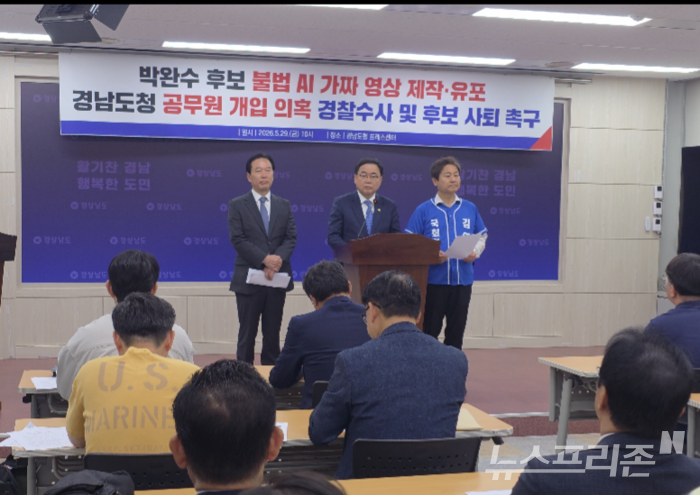
Kim Kyung-soo’s campaign: Allegations of a grave crime that undermines democracy
Kim’s campaign held an emergency press conference and issued strong criticism.
They framed the incident not as a routine campaign spat but as allegations of a grave crime that threaten democracy and the fairness of elections.
The campaign put particular emphasis on the alleged involvement of current public officials.
“If public officials participated in producing campaign content for a specific candidate, they would have directly violated their constitutionally guaranteed duty of political neutrality,” the campaign said. “When administrative power intervenes in elections, democracy is at risk.”
They called on the election commission and the police to carry out a thorough investigation and demanded that Park Wan-su withdraw his candidacy.
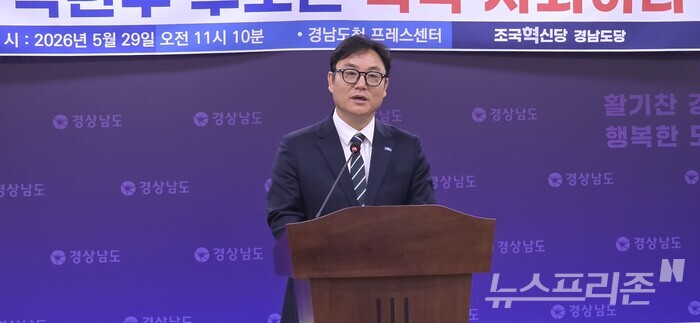
National Innovation Party: Allegations of state-backed electioneering
The National Innovation Party’s Gyeongnam chapter quickly joined the calls for investigation.
In a statement, Shim Kyu-tak, the party’s former Changwon mayoral candidate, described the AI deepfake allegations as an attack on the foundations of democracy and called them a textbook example of using the civil service as an election apparatus.
Shim said that if civil servants were involved, the matter would not be limited to campaign wrongdoing but would directly undermine the credibility of the Gyeongnam provincial government as a whole.
“The provincial office exists to serve residents, not to act as a campaign organization for any candidate,” he said. “If a taxpayer-funded institution were mobilized for a candidate, it would constitute a serious breach of democratic norms.”
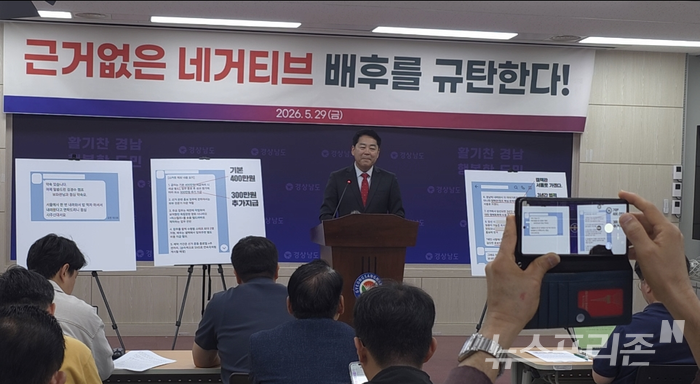
Park Wan-su’s campaign: No dedicated deepfake team, no organized involvement
Park’s campaign pushed back immediately.
The team flatly denied the allegations, saying they never commissioned a deepfake video or used one in the campaign.
They also rejected claims that a dedicated deepfake unit existed within the campaign.
Park’s team argued that the accusations rest solely on the whistleblower’s claims.
They highlighted that the internal source, identified as A, referenced a past KakaoTalk message mentioning a lunch with a Kim Kyung-soo campaign aide. The campaign says investigators should therefore probe the origin of the tip and whether A had any contact with the Kim camp.
Park’s camp demanded that the election commission verify not only A’s claims but also the circumstances of the tip and any contacts with the Kim campaign.
Summarizing the facts disclosed so far, the dispute centers on five key questions:
▲ First, was an AI deepfake video actually produced and distributed? ▲ Second, did Park Wan-su’s campaign systematically participate in producing the video? ▲ Third, did Gyeongnam provincial office officials provide materials or assist with edits? ▲ Fourth, do these facts amount to violations of the Public Official Election Act? ▲ Fifth, how credible is whistleblower A, and what is the origin and motive of the tip?
At present, claims from competing camps sharply conflict, and it is difficult to establish the facts based on one side’s assertions alone.
Biggest late-campaign variable — investigation results could decide the race
Political observers view the scandal as more than a campaign issue; it could shift the trajectory of the entire Gyeongnam governor’s race.
If investigators confirm illegal deepfake production or civil servant involvement, the case could escalate into election-law violations and allegations of state-backed electioneering.
Conversely, if the tip lacks credibility or no organized involvement is found, the allegations could backfire on those who raised them.
Ultimately, the controversy is likely to be resolved by the findings of the election commission and law enforcement agencies.
Gyeongnam residents are calling not for partisan attacks but for a clear and transparent fact-finding process.
The late-campaign AI deepfake scandal poses fundamental questions for Gyeongnam voters about democracy, electoral fairness, and the political neutrality of the civil service — issues that go beyond any single candidate.










Most Commented