
Translation result.

Sometimes a single song seizes a listener’s heart. It can summon forgotten regrets and pry open old wounds. For some people it’s just a track on a playlist; for others, it becomes the memory that kept them going through a day that might have fallen apart.

Recently, the YouTube comment thread for singer Woo Hyo’s song “Dandelion” has been flooded with personal accounts. Rather than short reviews, commenters have been posting long confessions about family, breakups, loss, regret and love, turning the video’s comments into something like an anonymous confession board.
On the way to pick up divorce papers… a listener turned back after hearing the song
One of the most resonant comments came from someone who said they were driving to the courthouse to pick up divorce papers when the song played on the radio—and they changed course. The commenter wrote that they heard Woo Hyo’s “Dandelion” and cried alone in their car for about an hour.
As they listened, thoughts swirled: “How did it get like this?” “Did I fail to love them as they were?” “Could I have smiled more at our children?” In the end, they stopped heading to the courthouse and wrote, “Thanks to the song, I changed my mind,” vowing to keep loving.
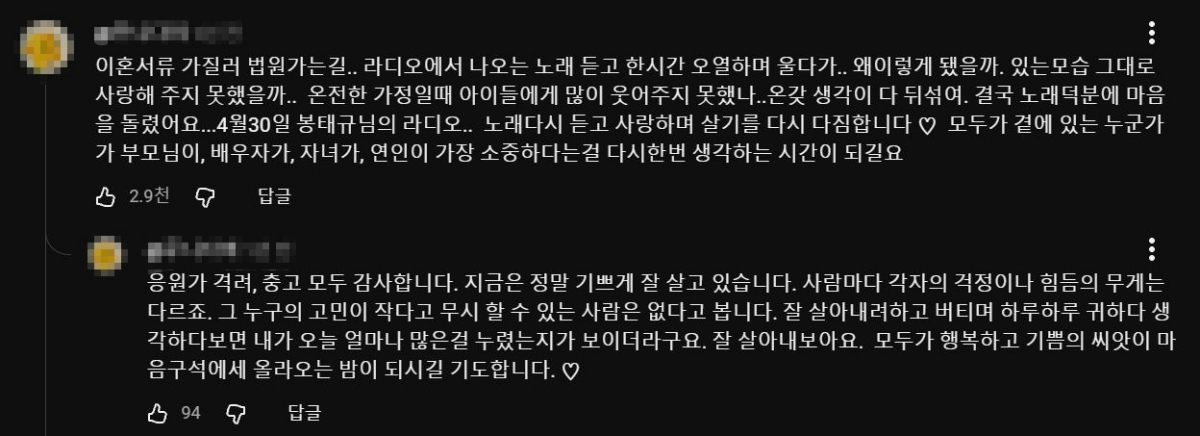
The post drew thousands of likes and many replies. Readers left messages such as, “I hope you find happiness,” “You can feel music’s healing power,” “It reminds you that family matters most,” and “That’s the power of a good song.”
Some responses said the comment reminded them of Seo Taiji and Boys’ “Come Back Home.” One person recalled stories of runaway teens returning after hearing that song, noting that music—or even a single line—can change a person’s heart.
The original poster later added that they are “truly living happily now,” writing that treating each day as precious helped them see how much they had already enjoyed.
From a bride-to-be to memories of lost family—stories pour into the comments
The thread filled with more accounts about family, love and grief. Many users posted detailed personal stories rather than brief praise for the song.
A bride-to-be preparing for her wedding after a cancer diagnosis drew strong sympathy. She wrote that she was diagnosed two months earlier but chose to marry as planned, and that chemotherapy’s side effects would soon force her to shave her head. “I’m so grateful to the man who loves me as I am,” she wrote, adding that she wanted to use this song for her wedding processional.
Other comments appeared to come from parents who have lost a child. One writer promised to bring birthday gifts, Children’s Day presents and Christmas gifts when they meet their child again, and asked the child to be happy and free of pain in heaven. They also asked the child to visit their dreams whenever they felt scared or hurt.
Several commenters remembered family members who had died. One user—whose father was known for doting on his daughter—wrote that it’s nearly been three years since his father passed, and he still cries from missing him, grateful for the love he received. Another said they regretted not approaching or hugging their stoic, emotionally awkward father sooner.
Others used the thread to confess personal wounds and anxieties. One recalled being bullied in elementary school and said the song comforted that younger self. Another said that after years of self-loathing, falling ill made them want to tell themselves to love themselves more.
Some people described unexpectedly rediscovering the song in daily life. One user said they were fired, heard the song while eating at home, and cried reading the stories in the comments. Another wrote that a song that would normally have passed them by struck deeply and shattered an emotional wall they had held up.
Many noted that the song stirred memories tied to specific moments. A middle-school student wrote that their elementary homeroom teacher used to play the song during cleaning time; hearing it now brings back the classroom’s mood, friends’ laughter and sunlight. As they prepare for high school, the student said the song comforts them and reminds them they’ve done well so far.
Comment sections become spaces for stories, not just reviews
Most people can point to at least one moment tied to a song—a track they replayed during a season, a tune that played while walking with someone, or music that helped them through a hard time. Songs stay linked to specific scenes, and hearing one again can bring back the air, faces and unresolved feelings from that moment.
Online, those experiences often converge in a song’s YouTube comments. Instead of short reactions, users leave stories about breakups, loss, regrets about family and current anxieties. Other users reply with empathy and support, and the chain of personal stories continues.
Longer accounts accumulate for the same reason. People come to hear a song, read another’s confession, recall their own memory, and add their own story. A reaction becomes a confession; a confession becomes another person’s comfort.
In this way, comment threads become places where past times and present feelings sit side by side. As more people use them to share life, regret, love and loss instead of posting brief reactions, music is less just content than a medium for shared emotion.














Most Commented