
2026: Discover the Revolutionary Conducting Style of Lee Seung-won with National Symphony Orchestra
Daniel Kim Views
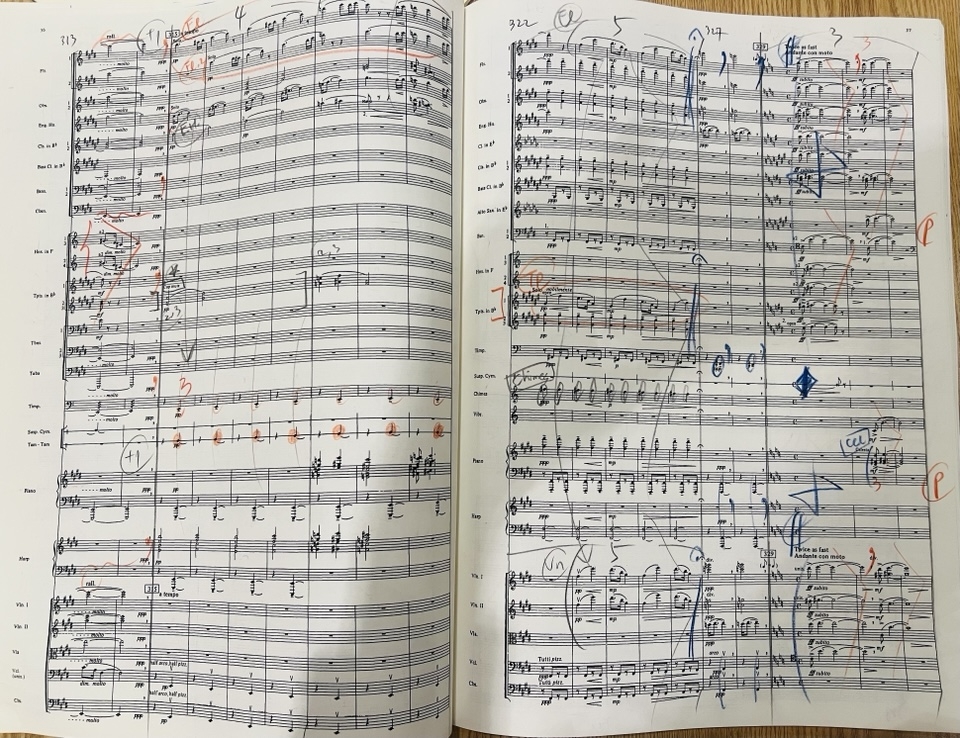
Translation result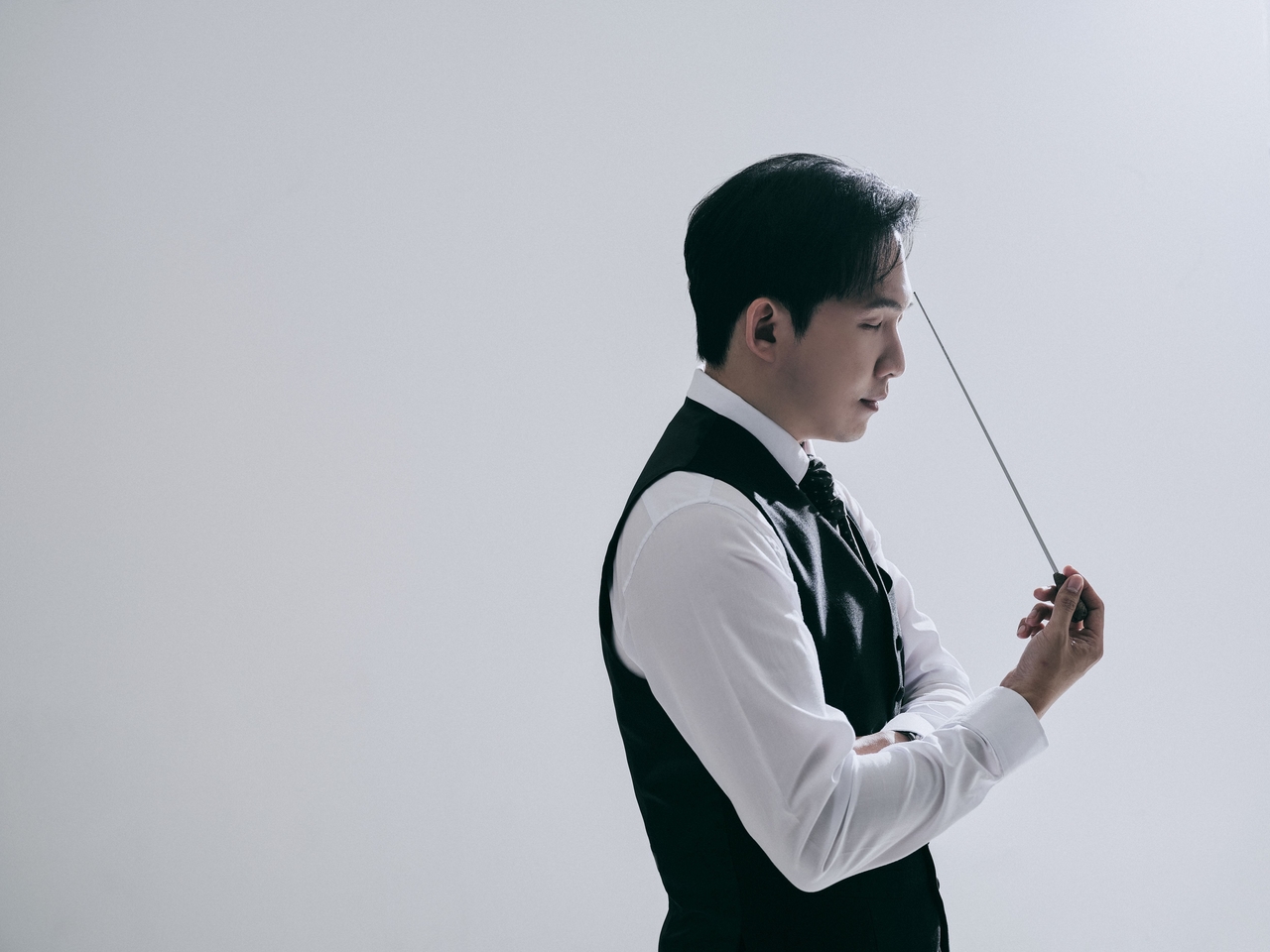 [Herald Economy = Reporter Ko Seung-hee] Colorful pencil strokes swept across the densely notated score like a conductor’s baton. A red line climbed with the melody’s sweep; a blue mark denoted the exact spot where the brass must explode. Minute, hushed sonic details were bound together in orange.
“Here the brass has to open up suddenly. It shouldn’t just be loud — it must feel like the energy we’ve been restraining finally breaks free.”
The score read like an anatomy lesson: notes for brass balance, accents, the direction of energy, and rhythmic cue signs. He had mapped the sound with surgical precision—down to tenths of a decibel. The piece on the page was Bernstein’s Symphonic Dances from West Side Story.
Every page turn revealed more evidence of his labor. Between the notes were layers of calculation, imagination, and revision — the fingerprints of a conductor who rehearses in his head long before meeting the players.
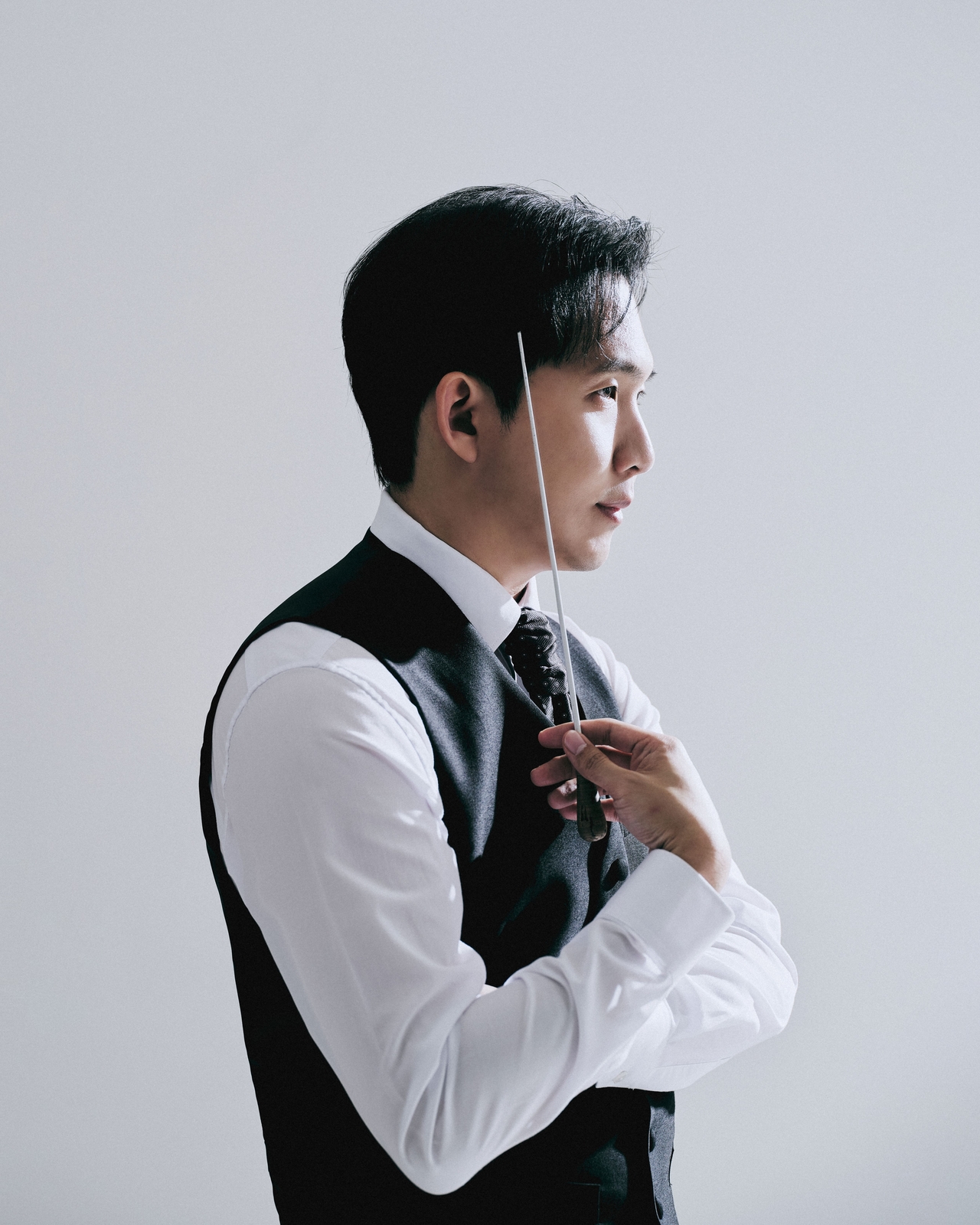
People often attach the label “genius” to a conductor with an IQ of 162, but the better word for him is “diligent.” The worn score bore witness to countless solitary hours of study. Preparing for his first concert in Korea in 1 year and 7 months, Lee Seung-won said, “I’ve been poring over this score for more than a month.”
Since winning the Mahler-Kleiber Conducting Competition at the end of 2024, he has been hailed as a rising star in the classical world. For his debut with the National Symphony Orchestra he chose an unconventional program: Charles Ives’s The Unanswered Question, Samuel Barber’s Cello Concerto, Bernstein’s Symphonic Dances from West Side Story, and Gershwin’s An American in Paris. Neither the program’s combination nor his conducting of these works is something he has done before.
“It’s a big gamble,” he acknowledged.
Classical programming often follows a “2B rule”: include at least one heavyweight composer like Beethoven or Brahms to guarantee ticket sales. Orchestras default to familiar repertoire because it’s the safe bet. This time, though, the National Symphony wanted music that fit Lee Seung-won’s sensibility now, and he answered with the boldness he sharpened at the Cincinnati Symphony.
“You should take more risks while you’re young,” he said. “All 35 programs I conducted this season (2025–26) were pieces I’d never led before.”
Risk has been a through line in Lee’s life. At each fork, he chose the adventurous path. He left his position as a violist in the Novus Quartet and pivoted to conducting. He gave up a tenured professorship in viola at the Leipzig University of Music. Those were decisions without guarantees. At the first round of the Mahler-Kleiber competition he even performed Haydn symphonies in a Baroque style with harpsichord accompaniment — a daring choice.
“My life has been one adventure after another. Even failures become part of the artistic foundation,” he said with a laugh. “Compared with that, selecting repertoire doesn’t feel so risky.”
The program he chose with the National Symphony reflects that mindset. “These pieces aren’t ones that specialists necessarily perform often in a lifetime,” he said. “If you’re a young conductor, you have to ask: if not now, when?”
He doesn’t play favorites when negotiating programs with overseas orchestras. “When an orchestra’s management says, ‘We really want this,’ you shouldn’t hesitate,” he said. “This is the time to prove you can do anything.”
His approach isn’t merely about expanding his repertoire. It’s tied to a broader musical philosophy and even echoes advice from his wife, a composer.
“Every composer writes for a reason. A conductor’s duty is to draw out that music’s appeal and introduce it to the audience. If I cross a piece off because I don’t like it, the public loses the chance to hear it.”
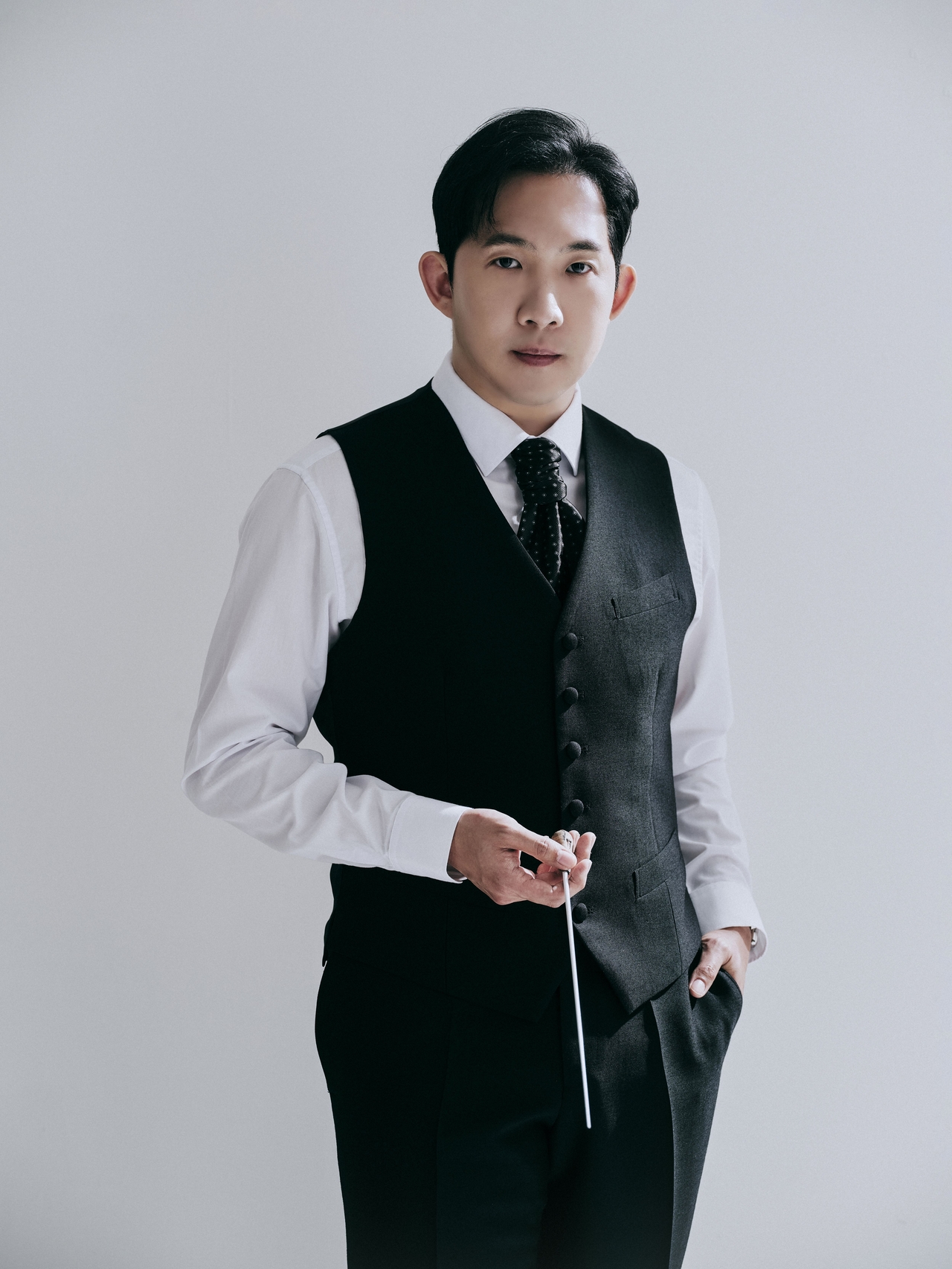
After taking the competition title, Lee began traveling the globe. He’s worked with ensembles across Europe, the U.S., and Japan. His time with the Cincinnati Symphony in particular taught him the distinct sensibility of American orchestras.
“European orchestras prize resonance and space — they grew up playing in churches and halls where classical traditions developed over centuries. America is different: the sound is denser and more agile.”
That distinctive American sound developed from a cultural mix. Pop culture’s influence combined with classical technique to create a hybrid musical language. “American orchestras take pops programs seriously,” he observed. “The same players wear black for the classical concert and red jackets for pops, and they produce wholly different sounds.”
His goal for this concert is straightforward: “Bring the American orchestra sound to a Korean stage.” He explained, “It’s about brass and percussion pushing forward, and jazz and pop sensibilities blending naturally into the classical fabric — that’s the authentic American sound.”
The National Symphony is well suited to that aim. Although this is their first regular concert in Korea, they’ve already toured together internationally. The orchestra reports that its musicians are very fond of Lee.
“The National Symphony is remarkably flexible,” he said. “They do ballet, opera, and many genres. That experience gives them an exceptional ability to shape their sound to a conductor’s demands.”
One highlight will be Ives’s The Unanswered Question. “You really have to hear this live to grasp its meaning,” Lee said.
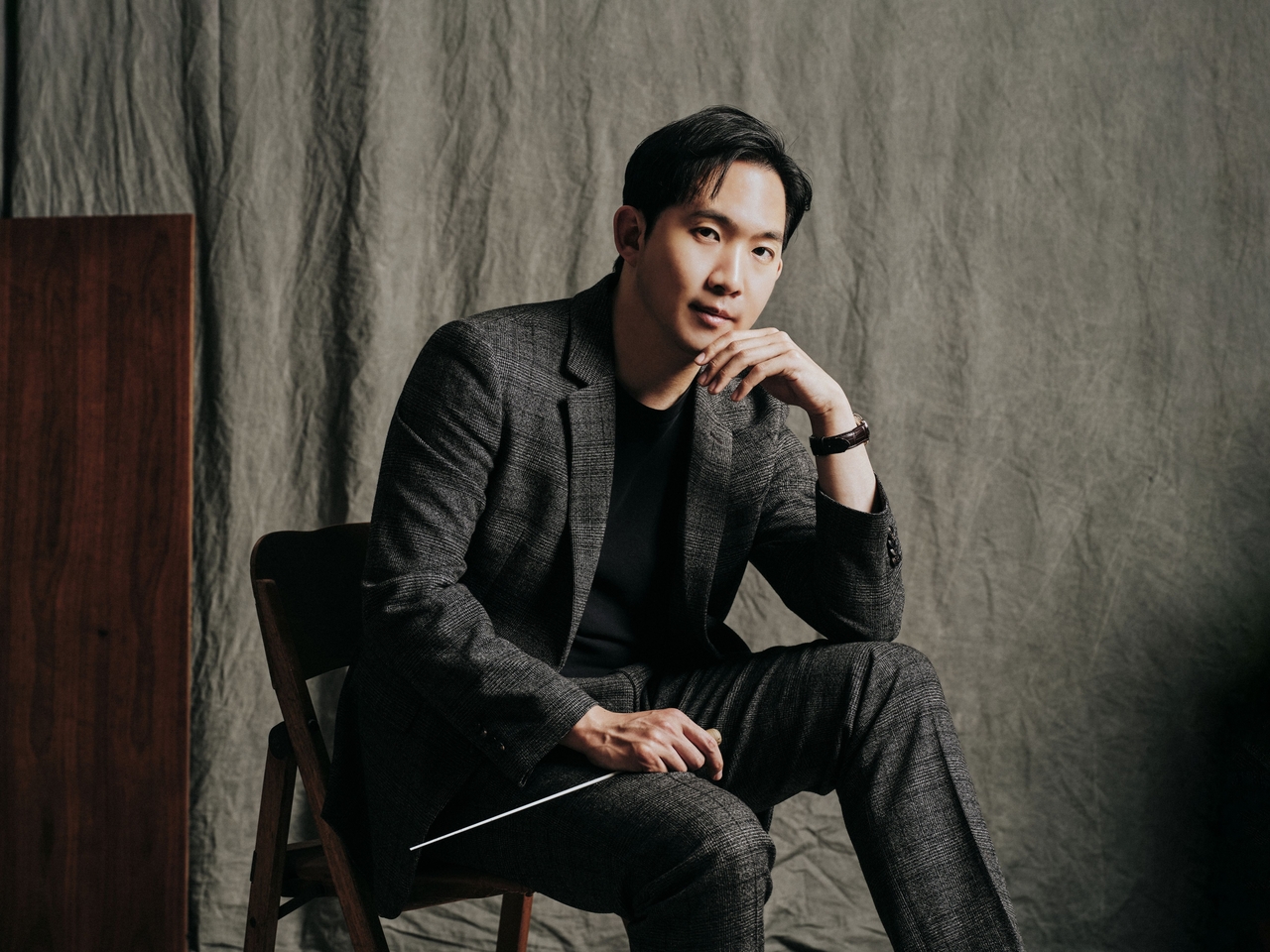 The trumpet’s placement is striking: the instrument that poses the question doesn’t sit on stage. Instead it emerges from somewhere in the hall — the audience, a balcony — catching listeners off guard. Strings occupy the center with sustained lines; four woodwinds at the edge of the stage offer increasingly sharp, nervous responses. “It’s almost like a non sequitur,” he said.
He pointed to numbered annotations in his score. The question appears seven times. The woodwinds’ replies accelerate from andante to molto allegro. “By the end it almost sounds angry,” he said.
Though the piece seems to rely on precise timing between trumpet and woodwinds, Lee opts for mystery. “I might deliberately withhold a clear cue for the trumpet,” he said. He argues that too much specificity can destroy the work’s sense of wonder. “I want the question to seep in from somewhere,” he said. He’s aiming less for mechanical accuracy than for a psychological distance that reverberates through the hall. “The woodwinds should move like chamber players,” he added.
Bernstein’s Symphonic Dances and Gershwin’s An American in Paris are more familiar fare. “Bernstein’s writing is a percussion-driven thrill — it creates an ecstatic atmosphere. Gershwin blends jazz and classical to form something almost like a new genre,” he said. “Both pieces are accessible for listeners who are new to classical music.”
From his studies in Germany to his current work, Lee has spent 13 years in the world of conducting. His relentless study of scores has given his music an uncommon persuasive depth. Working with top orchestras around the world built the technical and interpretive stamina he relies on today.
Touring taught him that each orchestra has its own “sound grammar.”
American orchestras represent efficiency and agility. Because funding and rehearsal time are tightly linked, players exhibit extraordinary preparation and responsiveness. He has a special affection for Nordic ensembles. “Nordic players project a purity of sensibility into their sound,” he said. “When people and sound align, it’s one of a conductor’s happiest moments.”
 German orchestras, rooted in long tradition, function as arenas of rigorous interaction. Players freely challenge a conductor’s interpretation and insist on logical clarity. That environment forces a conductor to be not just expressive but intellectually armed.
“For that reason, you need to analyze a piece so thoroughly that you can answer any question in a second,” he said. He conducts from memory, but he treats memorization as a byproduct: only after long periods of analysis, disassembly, and recombination does the score become internalized.
He spends about 25 weeks a year away from home. This season he worked with 23 orchestras. On tour he typically carries 20–30 scores; this month, with an opera gala (22–23 at Sejong Center’s “Arias in Gwanghwamun”), his stack grew to about 50.
“A conductor opens a score any spare moment he gets — on planes, in hotels, in the green room,” he laughed. Audiences judge a conductor by the one or two hours onstage, but Lee purchases that time with hundreds of hours of study.
Having absorbed different sound mechanisms across cultures, he said he is learning to balance adaptability with maintaining his own artistic voice.
To him, a good conductor is first and foremost a good listener. “Conducting requires proposing the sound ahead of time while also reacting instantaneously to what has just occurred,” he said. “Listening to what the players produce is as demanding as shaping the sound.”
“Ultimately, good music comes from good people. Unlike other musicians, a conductor produces sound without an instrument, so his demeanor, character, and humanity all color the music. That’s why you need broad life experience. I try every day not just to be kind, but to be a better person in relationships.”











Most Commented