
Janis Joplin: The Unmatched Voice of Freedom and Pain – A Deep Dive into Her Legacy
Daniel Kim Views
Translation result
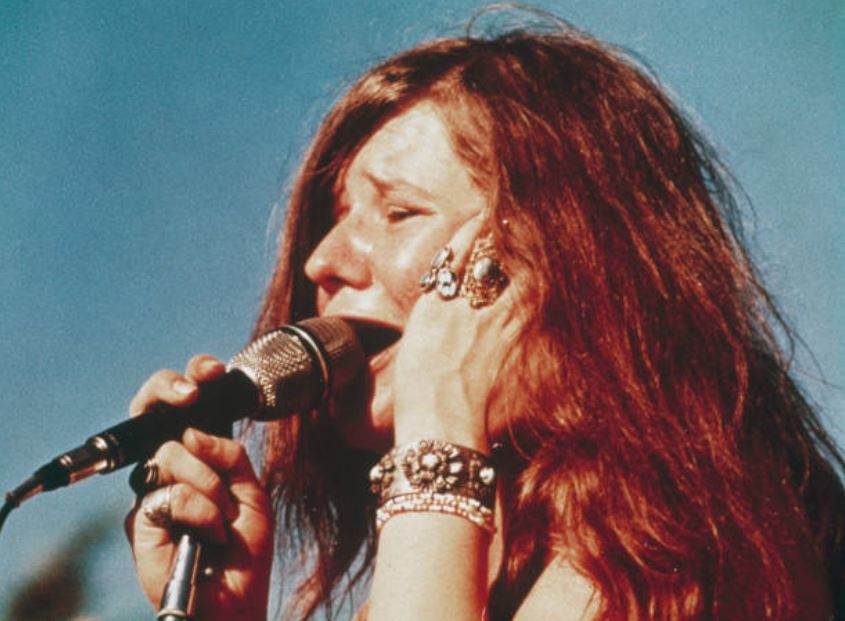 [Herald Economy = Juri Kim] Her voice tore and split—sometimes it sounded like a scream.
Janis Joplin left a vocal imprint on popular music that no one could copy. It wasn’t about range or volume alone. When she began to sing, the air seemed to fracture; the pain, longing, and lack inside her spilled out as if contorted. Her tones split raw, her breath faltered, and the voice poured from her body beyond tidy melody.
And yet it was perfect. Her technique defied conventional standards, but it hit the emotional center that music must reach. Like a flame born to burn and unable to hold itself back, her performances felt sacrificial—each moment an eruption. Music did not simply set the stage for the song; her voice led, and the music followed as consequence.
Joplin’s work showed how luminous a person can be when they refuse to suppress themselves—and how perilous that brilliance can become.
Either take the love I offered, or let me be
What’s a poor girl to do with your love
When her heart just dangling?”
(Please don’t throw me away, my love.
If you won’t take my heart, don’t just ruin me.
What is this poor girl supposed to do with your love?
Her heart just hangs in the air.)
– Janis Joplin, ‘Move Over’ –
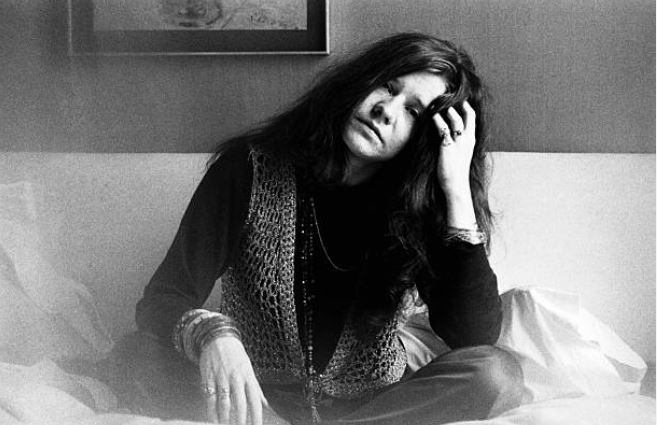
Janis Joplin was born in 1943 in Port Arthur, Texas, and grew up in the conservative, community-minded South. Her atypical personality and plain looks clashed with local expectations, and she faced repeated ridicule and exclusion.
One wound that lingered was a college episode at the University of Texas at Austin, where classmates cruelly dubbed her the “Ugliest Man on Campus.” That wasn’t harmless teasing; it revealed how a community can mock and exclude someone who fails to meet narrow standards of female beauty, compliance, and decorum.
From her teens, Joplin immersed herself in blues and folk. She found a language in Black artists like Bessie Smith, Ma Rainey, and Odetta that allowed her to voice the alienation and hurt she felt. For her, the blues wasn’t just a musical preference: it offered permission not to conform, a way to let wounds and want live openly in sound. Her voice was not a random timbre but the product of long exclusion meeting a musical idiom that required no hiding. The blues let her let pain erupt rather than neatly package it for public consumption. The explosive singing she later displayed on stage was less a reenactment of pain than a transformation of pain into vocal material.
And it felt just like a ball and chain
Why does every single little tiny thing I hold on goes wrong?
Honey, I just wanted to hold you, I said, for so long”
(Something came and grabbed me—
it felt like a ball and chain.
Why does every small thing I cling to go wrong?
Darling, I only wanted to hold you—for so long.)
– Janis Joplin, ‘Ball and Chain’ –
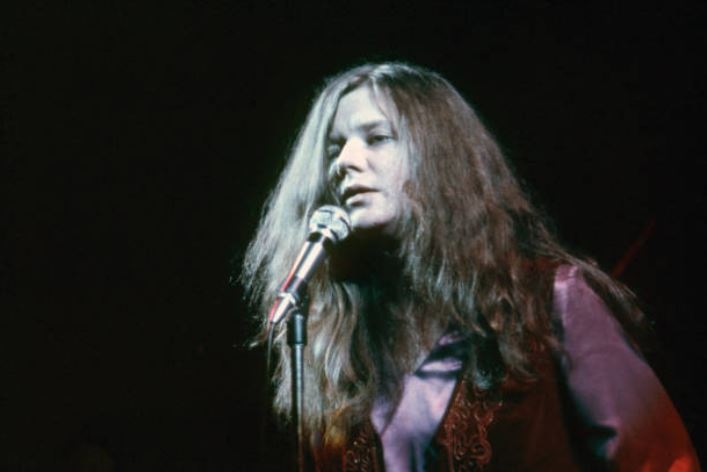
It would be reductive to cast Joplin simply as a norm-defier. She wanted fiercely to be loved and accepted as she was. She refused to hide her feelings and desires. The ferocity in her voice is not mere spectacle or vanity. For Joplin, desire was a force that opposed lack. The memory of not being loved and the feeling of not being accepted pushed her, not into mindless aggression, but toward the instinct to reach someone at last. Blues gave her a way to present herself unvarnished to the world.
She compared singing to “the thrill of first falling in love,” and said performing gave her sensations “stronger than sex.” On stage she threw herself at the audience; her voice was both an expression of inner feeling and an attempt to transmit her whole being.
Her freedom, then, was not the result of healed wounds but a refusal to hide them—a declaration. Opposite the smooth tone, composed face, and restrained emotion expected of women singers of the time, she offered a creaking, cracking timbre, near-wails at the top of her range, and gestures that seemed to spill beyond control. By refusing to conform to beauty’s rules, she claimed a form of freedom.
At the 1967 Monterey Pop Festival—often cited as one of rock’s most electrifying performances—her version of “Ball and Chain” became legendary. She held low tones to contain pain, used silence and breath to build pressure, and then opened her voice so pent-up lack exploded into a roar. The performance felt like an inevitable release from a self that could no longer remain contained, and it remains a touchstone decades later.
In “Piece of My Heart,” her voice does more than convey pain: it pleads, collapses, clings, and, paradoxically, takes control of the song. That sound compresses the desire to be loved, bruised pride, and the anger of being rejected despite offering oneself.
Joplin’s vocals organized twisted, entangled feelings into music. They would not be called “stable” in the usual sense, yet her musical aim landed with uncanny precision. Her voice left the song’s form but consistently targeted its emotional core.
The freedom she found through singing was concrete: wounds remained visible, lacks were not romanticized, and desire refused to be sanitized. She turned shame into a primal instrument. That transformation made her singing overwhelming. Few musicians have turned pain into sound as powerfully and precisely.
But one question follows: could the inner eruption that made her incandescent on stage protect her offstage? The unapologetic voice that made her singular may not have had the internal structure to contain such fire. Freedom can make a person shine; without a sustaining structure, that light can become a blaze that consumes the self. In Joplin’s case, the tragedy leaned toward that latter fate.
Nothing don’t mean nothing honey if it ain’t free, now now.
And feeling good was easy, Lord, when he sang the blues,
You know feeling good was Good enough for me and my Bobby McGee.
(Freedom is just another word for having nothing left to lose.
Nothing means nothing if it isn’t free.
I felt good when he sang the blues—feeling good was enough for me and my Bobby McGee.)
– Janis Joplin, ‘Me and Bobby McGee’ –
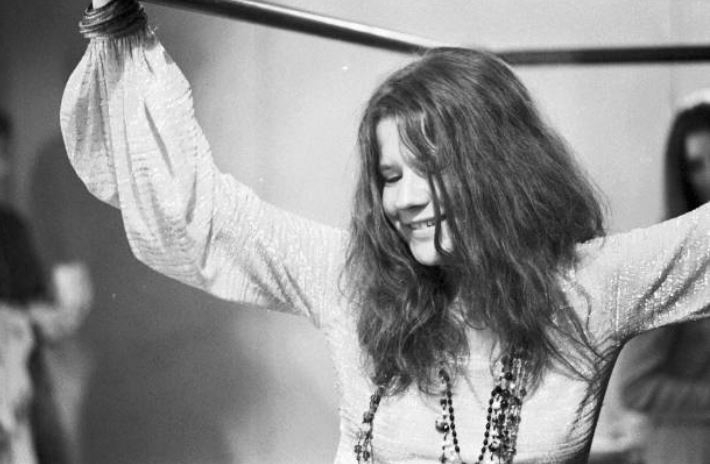
On October 4, 1970, Janis Joplin was found dead in a Los Angeles hotel room from a heroin overdose. She had been due at a scheduled recording session that day.
Her death shocked many, but it did not come from nowhere. Alcohol and drugs had repeatedly entered her life. She used alcohol to dull longstanding shame and anxiety, struggled with drug dependency at times, and even after rising to stardom she never fully escaped the shadows of heroin and alcohol. She tried to stop, but the explosive stage persona and the unstable offstage life remained intertwined.
The image of Joplin’s excess fit the rock-era mythology—drugs, alcohol, sexual freedom, rough relationships. In the late-1960s counterculture, those elements were read as refusals of repression, and the industry consumed Joplin as one of its most extreme embodiments.
When did her freedom cross from liberation into self-destruction? Substance use, licentious relationships, and desire sometimes soothed her wounds and served as temporary ways to endure the emptiness after intense stage encounters. Her chaotic behavior reflected a person who had no language besides music to bear her deficit; she struggled to manage her freedom.
Her freedom made her brilliant, but she lacked the internal architecture to sustain it. External pressures enabled unmatched performances, but that energy did not translate into a life-sustaining structure.
Ooh-ooh, sit there, oh, count those raindrops
Oh, feel ’em falling down, ooh, honey all around you
I know you’re unhappy
Baby, I know just how you feel”
(My unhappy little child, little girl so blue—
sit there and count the raindrops.
Feel them falling all around you.
I know you’re unhappy—baby, I know exactly how you feel.)
– Janis Joplin, ‘Little Girl Blue’ –
Joplin’s music was a real place of liberation. When she sang, she was no longer the “unpretty woman,” the mocked outsider, or someone who needed to fix herself to be loved. While her voice poured out, she came closest to being herself. But music offered only the language to express wounds; it did not provide the systems to care for them.
Freedom divides into being free from something and free toward something. The first frees you from external rules; the second asks how you will build and sustain yourself afterward. Joplin claimed the first fiercely, but she could not secure the second.
On stage, music likely gave her all the freedom she needed. But life continues after the set. Cheers fade, lights go down, and the body remains—deficits return. Music let her reveal herself, but it could not always hold her.
The deeper irony is this: she found her freest self on stage but then faced pressure to remain that liberated persona constantly. To endure, she had to become rougher, more candid, hotter, and more completely self-abandoning. What once freed her became an internal demand. For Joplin, singing liberated her and simultaneously required self-exhaustion to maintain that freedom. She sang as herself, but when that “self” was repeatedly demanded on stage, freedom became another trap.
She gained freedom but could not find comfort in it. The woman who refused to hide herself to be loved became someone who could be loved only in extremes. That gulf made her life crueler.
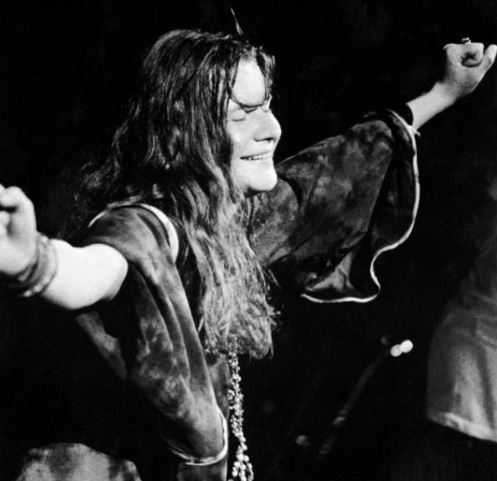 Janis Joplin’s voice stands as the record of a great vocalist and a narrative that resists easy explanation. It shows how intensely bright a person can be when they release themselves—and how quickly that flame can turn to ruin when nothing protects it.
Freedom can save, but it can also erase the refuge that lets a body rest. An unrestrained self is liberation, but liberation does not guarantee safety.
A voice that carried wounds, longing for love, and a passion on the verge of collapse—more vivid than almost anything else.
The voice no one could imitate remains the lingering echo of freedom: the rapture of release and the shadow of destruction.











Most Commented