
Why You Can’t Miss the 2026 PCMF Pyeongtaek Chamber Music Festival: A Deep Dive into Classical and Contemporary Works
Daniel Kim Views
Translation result
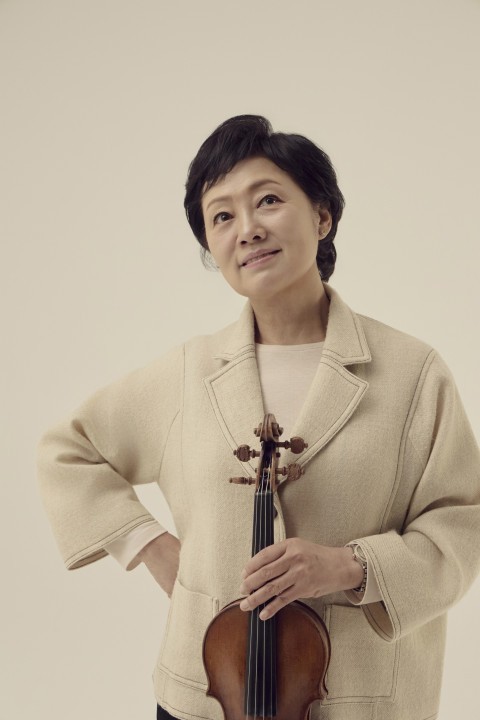
[NewsCulture reporter Lee Sang‑wan] The 2nd PCMF Pyeongtaek Chamber Music Festival runs from May 29 through June 6. Across four concerts, the festival traces chamber music’s continuity across eras and generations. Following last year’s inaugural edition, this year’s program is built around the theme “Continuum,” an effort to link musical forms, instrumental lineups, performer generations and local audiences into a single, unfolding experience.
Chamber music, unlike a large orchestra, exposes the close breathing between players, the interplay of timbres and the conversational exchange among instruments. In smaller ensembles, a single performer’s tone and gesture can reshape the whole structure. The PCMF Pyeongtaek festival spans a broad historical range, from the Classical period to contemporary works.
This year’s festival is organized around violinist and music director Hyun‑mi Kim. A professor at the Korea National University of Arts, Kim has long championed the importance of chamber music in both performance and pedagogy. The festival’s roster has expanded to include faculty from leading conservatories, principal players from major orchestras and specialists in chamber repertoire.
Among the participants are Robert Shannon and Hye‑won Song from Oberlin Conservatory; Nils Neubert from Juilliard; Yuri Kim from Mannes School of Music; and professors Sang‑min Park, Seok‑jun Lee and Young‑wook Kim from the Korea National University of Arts. Also performing are Jong‑hwa Park, Hong‑bak Kim and Jae‑chang Sung from Seoul National University; Hyo‑sun Im of Kyunghee University; In‑hyuk Jo of Hanyang University; and Tae‑guk Moon of Yonsei University. Principal players from the KBS Symphony Orchestra, Daejeon Philharmonic and Gwacheon City Orchestra join chamber specialists, forming a 45‑member ensemble across the festival.
The program widens the festival’s instrumental palette, adding clarinet, horn, trumpet and percussion. Highlights include Mozart’s Trio in E‑flat Major, KV 498 “Kegelstatt” (for clarinet, viola and piano); Beethoven’s Sextet in E‑flat Major, Op.81b (for two horns and string quartet); Martinů’s La Revue de Cuisine, H.161 (for clarinet, bassoon, trumpet, violin, cello and piano); and Gareth Farr’s Kembang Suling (The Flute’s Flower). These selections emphasize that chamber music is an open, dialogic form, not a genre confined to the string quartet.
The opening concert, “A New Resonance,” captures the festival’s spirit. It begins with Boccherini’s String Quartet in C Major, G.164, then turns to Mozart’s Kegelstatt Trio—here in clarinet, viola and piano—offering intimate, conversational chamber textures.
The second half features Martinů’s La Revue de Cuisine, scored for clarinet, bassoon, trumpet, violin, cello and piano. The piece bristles with jazz‑inflected rhythms and theatrical energy. Hummel’s Piano Quintet in E‑flat minor, Op.87 rounds out the program, blending piano, strings and double bass to show the richer ensemble possibilities that followed the Classical era.
Day two, “Conversations of Intimate Melody,” pairs voice and instruments. Puccini’s Three Minuets for String Quartet, SC.61, reveals a chamber‑music side of a composer best known for opera. Schubert’s “Auf dem Strom,” D.943, for tenor, cello and piano knits poetic mood and flowing melody into a compact, expressive whole.
Mahler’s “Ich bin der Welt abhanden gekommen” from Rückert Lieder channels inner solitude through a chamber setting. Schoenberg’s “Die Eiserne Brigade” for piano quintet exposes the tension and new sonorities of 20th‑century music. Later in the program, Mendelssohn’s Capriccio in E minor for String Quartet, Op.81, and Schumann’s Piano Quintet in E‑flat Major, Op.44 complete the evening.
Day three, “Expanding the Melody,” emphasizes larger instrumentations. Kalliwoda’s Trio for Flute, Cello and Piano in G Major, Op.119 balances the flute’s lyrical line, the cello’s resonant depth and the piano’s structural role. Beethoven’s Sextet for Two Horns and String Quartet, Op.81b, pairs horns with a string quartet to broaden chamber music’s spatial and sonic possibilities.
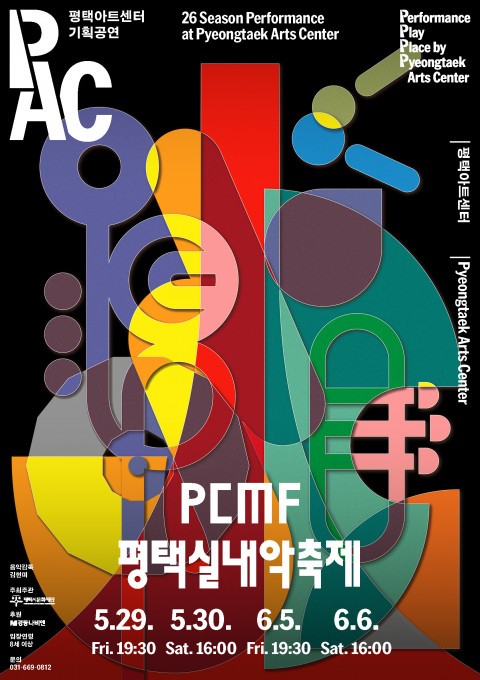
Gareth Farr’s “Kembang Suling” widens the festival’s color by pairing flute with percussion, creating rhythmic and breathlike tensions that depart from conventional Western chamber lineups. Götz’s Quintet in C minor for Violin, Viola, Cello, Double Bass and Piano, Op.16 mixes low strings and piano to thicken the range and texture of chamber sonority.
The festival’s final day, “The Summit of Resonance,” brings together larger string forces and piano duos. Borodin’s String Sextet in D minor and Frank Bridge’s String Sextet in E‑flat Major, H.107 expand the strings’ strata. Compared with quartets, these sextets offer denser sonorities, refined inter‑part balances and the concentrated ensemble textures that six players create.
Later, Robert Shannon and Hye‑won Song perform as a piano duo. Dvořák’s Slavonic Dance in E minor, Op.72 No.10 draws on folk rhythms and lively melodies, while Gershwin’s “Someone to Watch Over Me” blends American lyricism with jazz inflection.
Kapustin’s Sinfonietta for Piano 4 Hands, Op.49 (I. Overture. Allegro) fuses classical form with jazz rhythms and signals the festival’s contemporary bent. The program concludes with Spohr’s Double String Quartet No.1 in D minor, Op.65, in which two string quartet groups converse to form a single, expansive sound—an apt, symbolic close to the festival’s “Continuum” theme.
Music director Hyun‑mi Kim said, “Buoyed by the support of Pyeongtaek residents last year, we concentrated on assembling a world‑class program that can stand alongside leading international chamber festivals.” She added, “We deliberately programmed contemporary composers rather than resting on familiar repertoire, aiming to open new horizons for chamber music in Korea.”
NewsCulture reporter Lee Sang‑wan prizewan2@nc.press









Most Commented