
Translation result
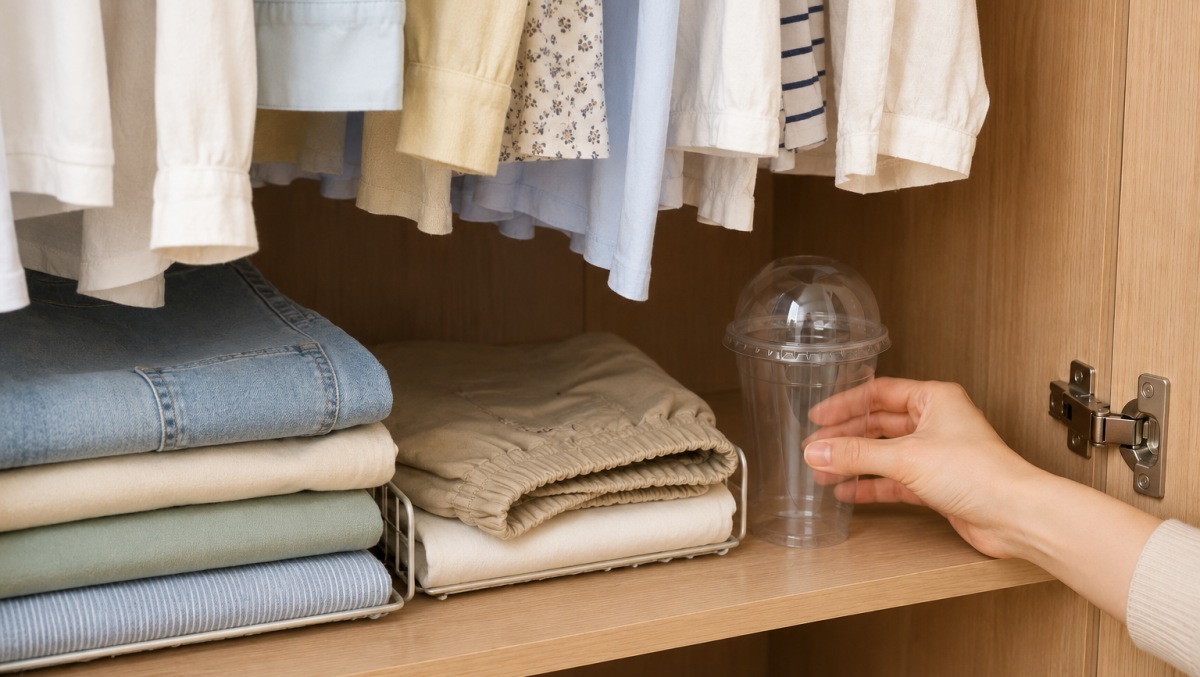
When summer humidity and the rainy season arrive, many households find their closets fighting a constant battle against moisture. People often buy bulk chemical dehumidifiers and tuck them into every compartment, but concerns about plastic waste and chemical residues are pushing more consumers toward natural alternatives. One everyday kitchen staple getting renewed attention is simple table salt.
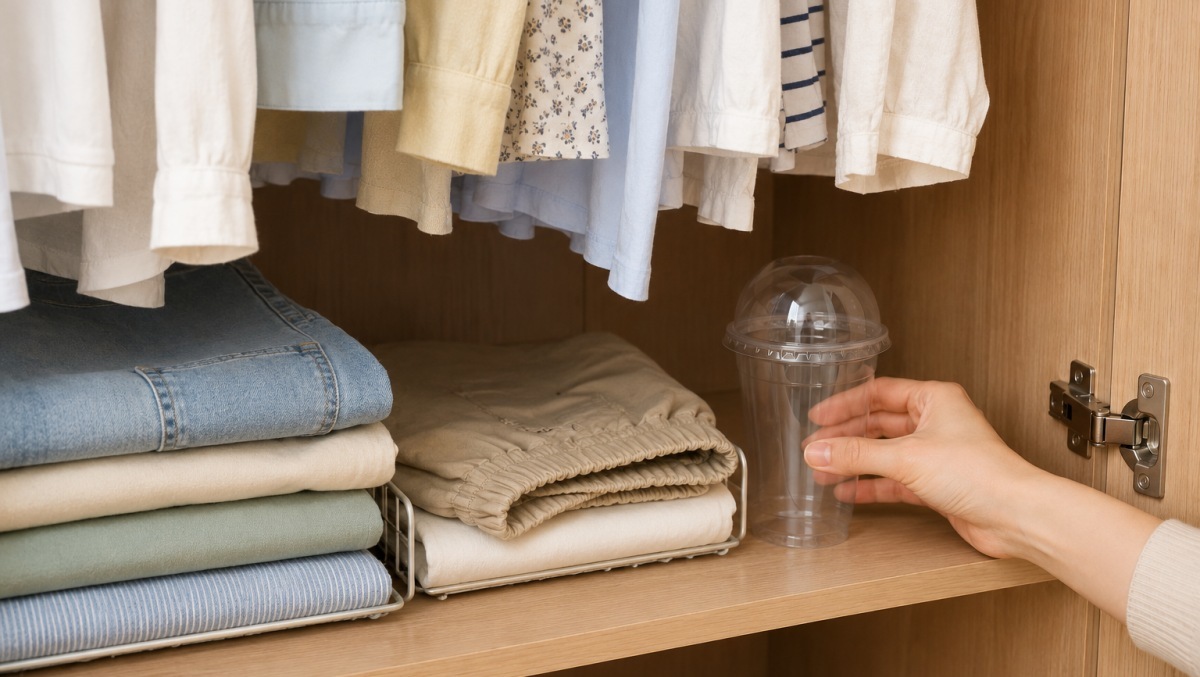
Many people think of salt only as a seasoning, but it’s actually an effective natural dehumidifier and a handy household tool.
It’s inexpensive and easy to make using cleaned PET bottles or disposable cups you already have. Because it contains no synthetic chemicals, salt dehumidifiers are safe to place near children’s clothing or bedding. If you’re skeptical that salt can pull this off, here’s a straightforward guide to try it yourself.
The science behind salt’s moisture absorption and how well it works
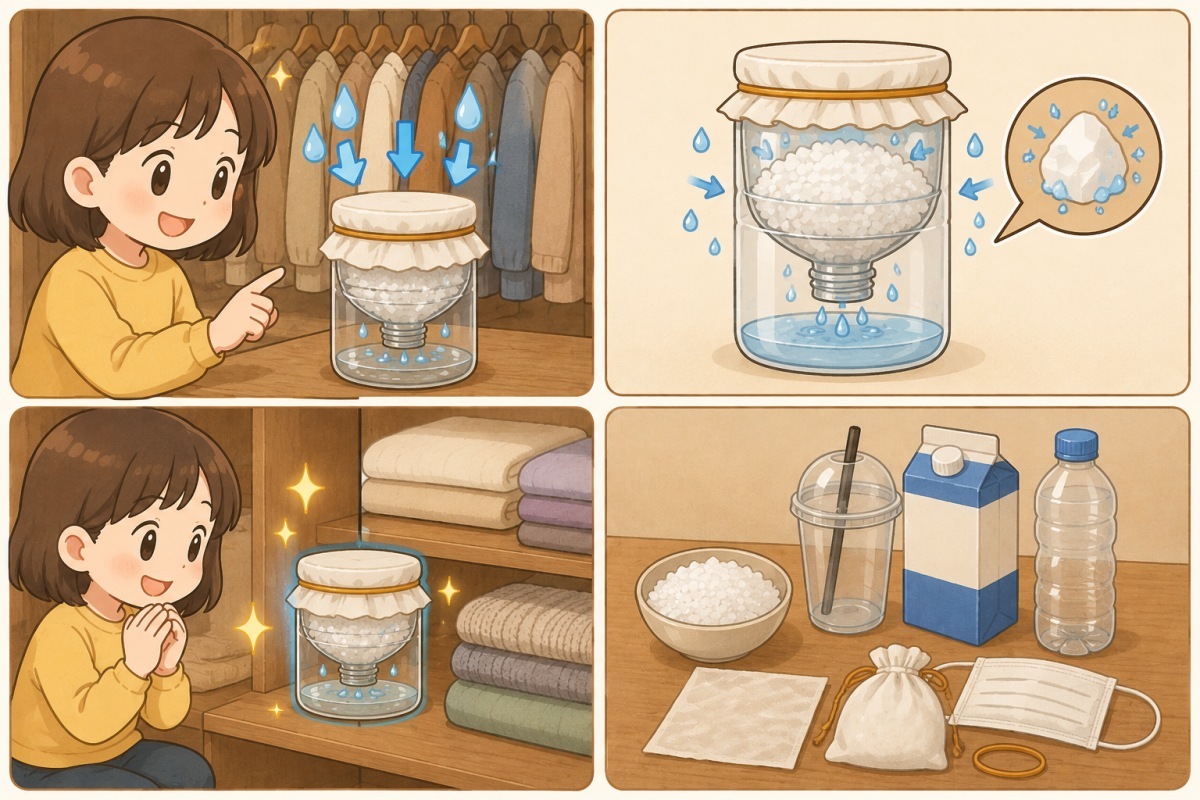
Salt’s main component, sodium chloride, strongly attracts water vapor from the air. Exposed in a humid environment, salt grains pull microscopic moisture onto their surfaces and gradually become damp. In very high humidity, salt can absorb enough water to dissolve into a liquid brine.
Salt is not as fast-acting as commercial chemical dehumidifiers, but in small, enclosed spaces like closets or linen cupboards it steadily lowers excess humidity. That steady action helps keep relative humidity in the roughly 40–50% range — conditions in which mold and dust mites find it difficult to thrive.
You don’t need new supplies to make a salt dehumidifier; recycled containers work fine. Here’s what to gather.
Choose coarse salt, such as sea salt. Fine table salt or refined salt has less surface area and tends to clump, so coarse-grained sea salt will absorb moisture more effectively.
Also prepare a cleaned, dried takeout coffee cup, paper cup, rectangular milk carton, or a 500ml PET bottle. To let air through while preventing the salt from pouring out, use hanji (Korean paper), a tea-brewing sachet (dasi bag), or the nonwoven fabric portion of a disposable mask. Have rubber bands or tape on hand to secure the cover.
Make a salt dehumidifier in 10 minutes
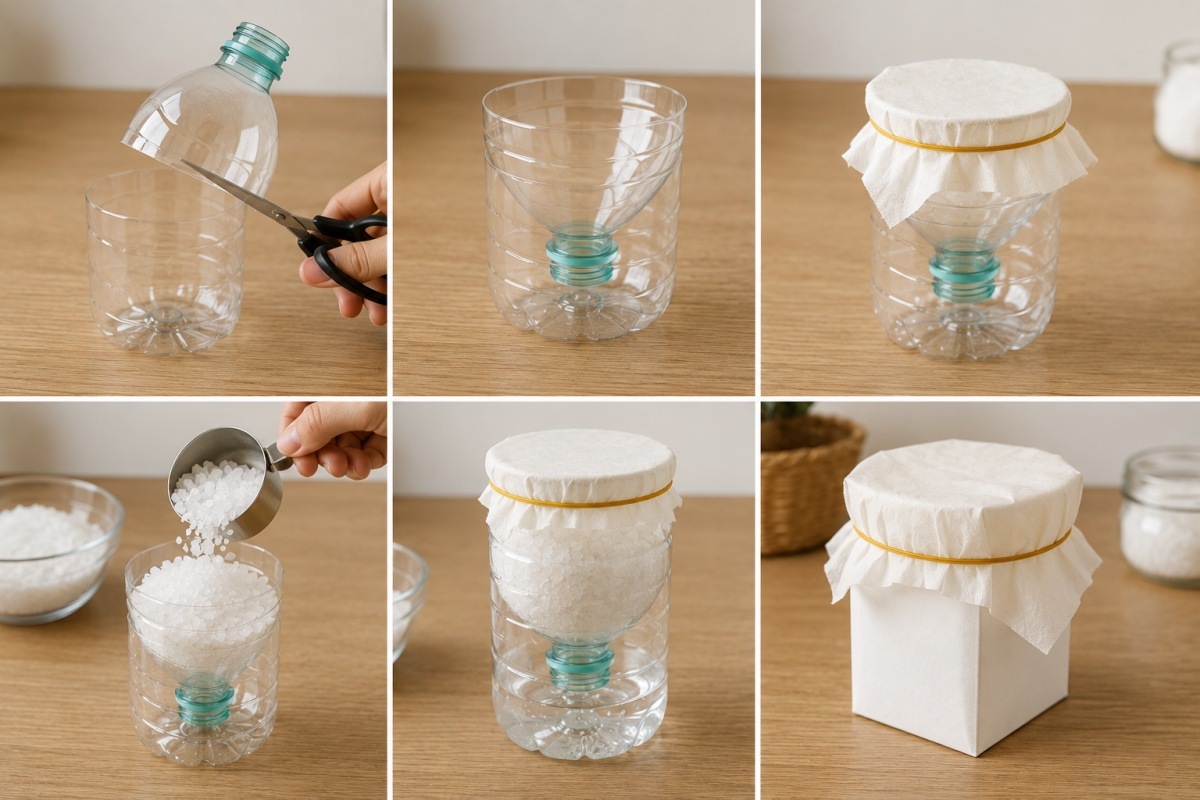
With materials ready, the assembly is quick. First, thoroughly clean and dry a PET bottle, then cut the middle section with a knife or scissors.
Invert the bottle’s top (the neck) and fit it into the lower body so it forms a funnel.
Line the inverted funnel with a perforated dasi bag or wrap the neck with hanji and secure it with a rubber band to keep the salt from falling through.
Fill the upper section with coarse salt to about 70–80% capacity, then cover the top with hanji or nonwoven fabric and seal it tightly with a rubber band so salt won’t spill and dust won’t enter.
This arrangement lets the water the salt absorbs drip into the lower bottle, creating a system similar to commercial dehumidifiers. If you use a coffee cup or milk carton, simply fill it with salt and cover the top with hanji.
Where to place the dehumidifier inside a closet for best results
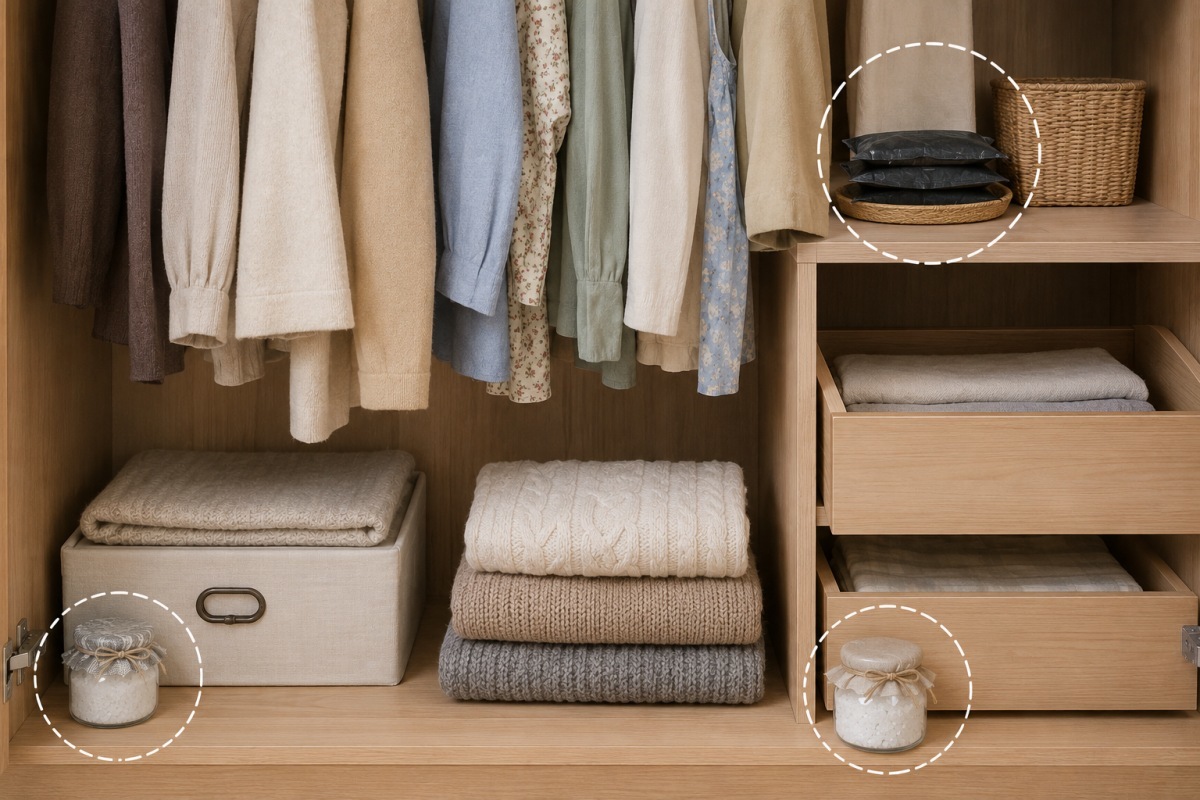
Even a well-made dehumidifier will underperform if positioned poorly. Cool, damp air is heavier than warm air and tends to sink to the bottom and into corners.
Place the salt dehumidifier on the closet floor rather than on an upper shelf. Set it in the back corner of drawers or the floor corner of a linen cupboard to capture sinking moisture first and most efficiently. For full-closet humidity control, pair a bottom-placed salt dehumidifier with lighter absorbers like charcoal or newspapers on the top shelf — an “upper-lower separation” strategy.
How long salt dehumidifiers last and how to reuse them indefinitely
Commercial chemical dehumidifiers are discarded when filled with water, but salt dehumidifiers offer a major economic edge: they’re reusable. After about 2–3 weeks in a closet, the salt will absorb moisture, become damp, discolor, and clump — a sign it’s saturated and less effective.
Don’t discard the salt. Spread it on a wide plate or place it in a microwave-safe container and heat it in the microwave for about 1 to 1½ minutes. Microwaves evaporate the moisture; after cooling briefly, the coarse salt returns to a dry, fluffy state. You can also dry it by lightly toasting the salt in a skillet over low heat until the moisture evaporates. Once fully dry, return the salt to the container — it works like new and can be reused indefinitely at no cost.
Try adding essential oils!
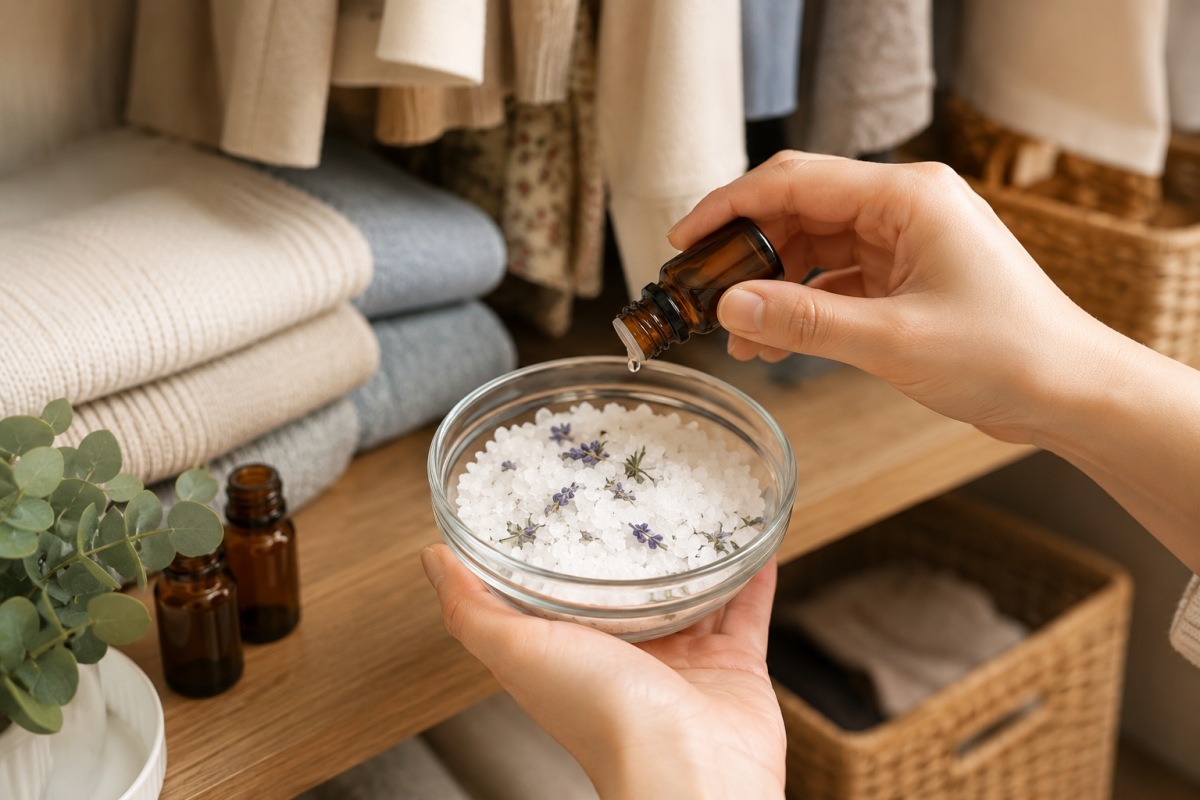
If you want your closet to smell pleasant when you open it, try adding essential oils to the salt. When you fill the container with coarse salt, add 3–5 drops of lavender, tea tree, or eucalyptus oil and mix it through the salt.
Natural essential oils provide fragrance and can have antimicrobial and anti-mite properties, helping suppress mold growth and deter fabric pests in the closet.
Safety precautions when using salt dehumidifiers
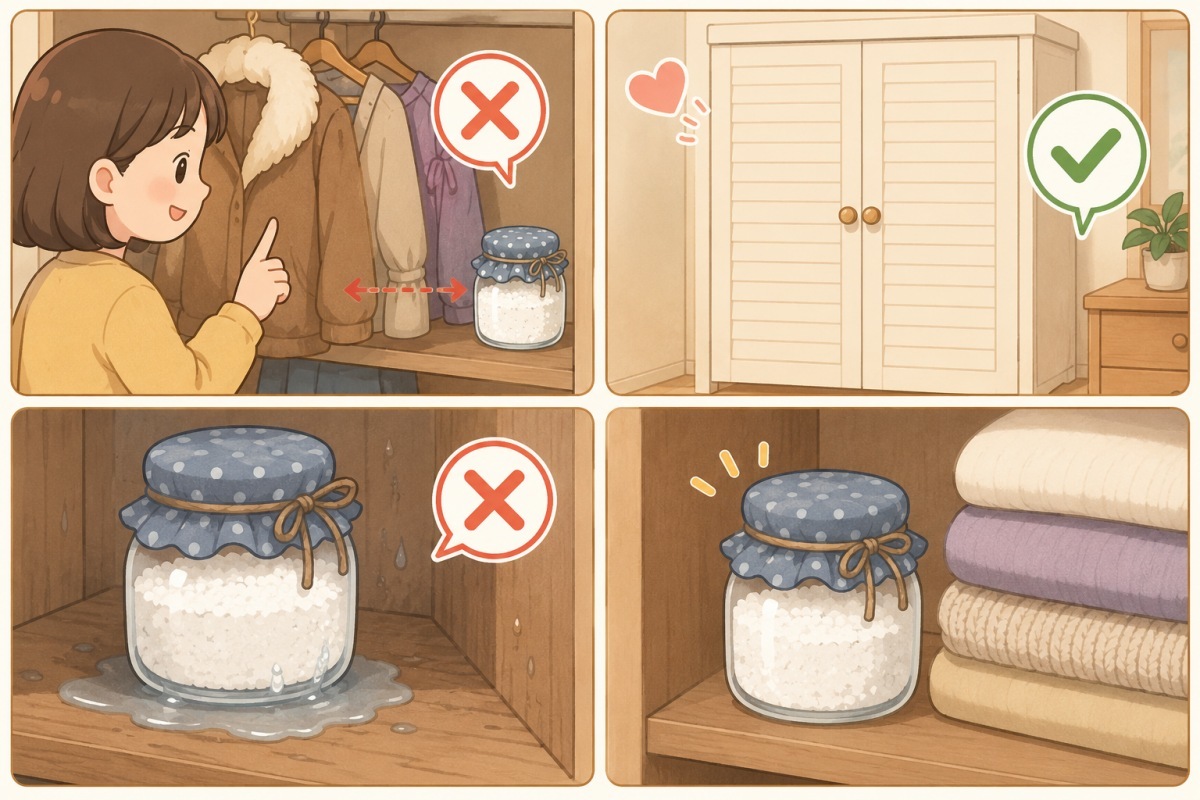
Follow these precautions to protect fabrics and use salt dehumidifiers safely.
Avoid direct contact with leather and silk. Salt contains sodium chloride, and if grains touch leather jackets, fur, or fine silk — or if saltwater soaks in — the proteins in those fibers can change, causing leather to stiffen or discolor and silk to suffer irreversible damage. Keep dehumidifier containers at a safe distance from garments so they never touch clothing directly.
Use salt dehumidifiers only in enclosed spaces. They’re ineffective in open areas like living rooms because incoming humidity overwhelms the salt’s ability to absorb moisture. Keep closet, drawer, and linen-cupboard doors closed so the dehumidifier can lower interior humidity.
If the salt takes on too much moisture it can turn into brine. If a container tips and that brine soaks into a wooden closet floor or walls, the salt can continue drawing moisture from the wood and may cause the furniture to warp or corrode. Build containers with a wide, stable base and secure them in a corner to prevent tipping and protect your furniture.














Most Commented