
Translation result
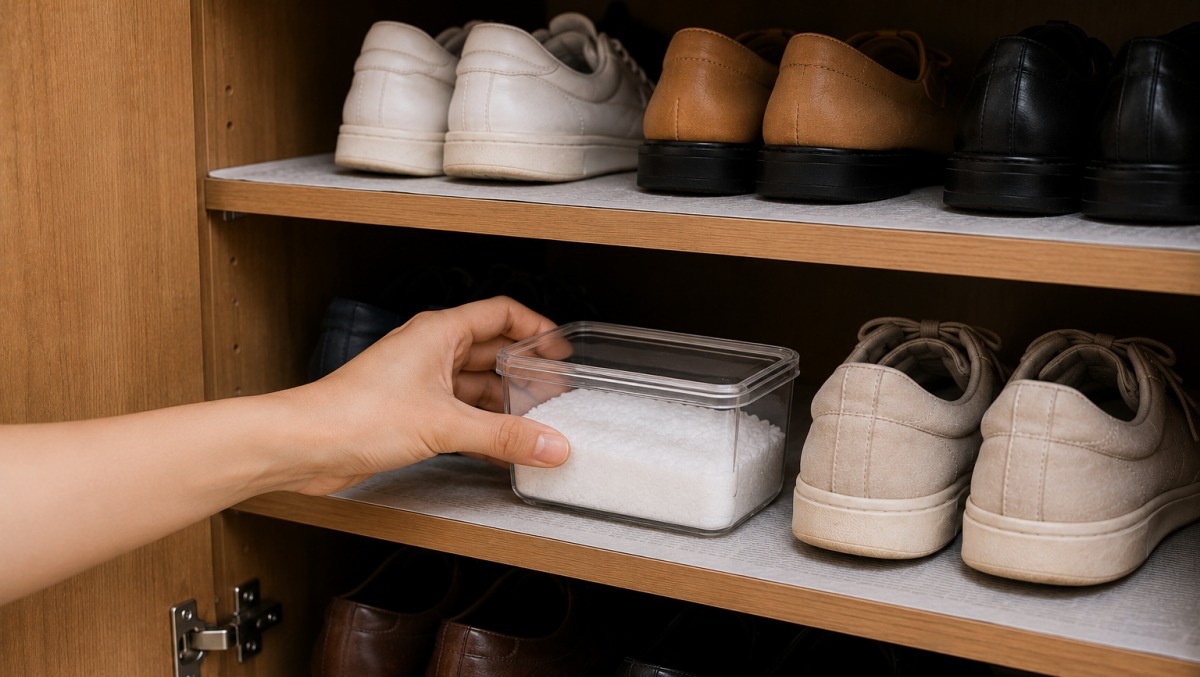
When the rainy season arrives, the whole house can feel damp — but none more so than the entryway and shoe cabinet, which often harbor pungent, fishy and sour odors. After returning from a rainy-day outing, water dripping from umbrellas and soaked shoes frequently pools in the entryway.
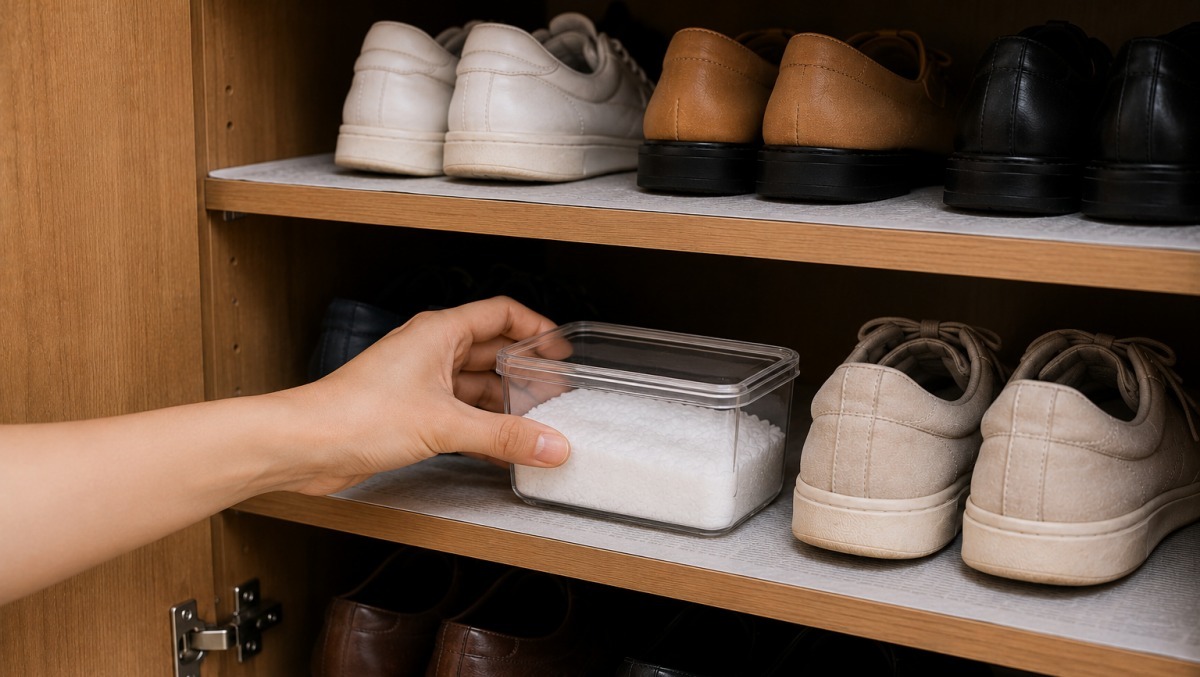
Narrow, tightly sealed shoe cabinets restrict airflow; when summer heat meets humidity they quickly become prime breeding grounds for mold and bacteria. Many people spray strong air fresheners to mask the musty smell, but that often backfires — the scent mixes with dampness and can create an even more offensive odor.
The solution to entryway and shoe-cabinet dampness during the rainy season isn’t buying an expensive dehumidifier or stockpiling commercial moisture absorbers. A single everyday item you were about to throw away, or a small ingredient from the kitchen, can deliver surprisingly strong dehumidifying results when tucked into the cabinet.
Understanding how natural materials absorb moisture like a sponge means you can open your front door to fresher, drier air without spending a dime. Here are simple, practical natural dehumidifying tips to protect your shoes from mold and stop entryway odors at the source.
How to manage your shoe cabinet
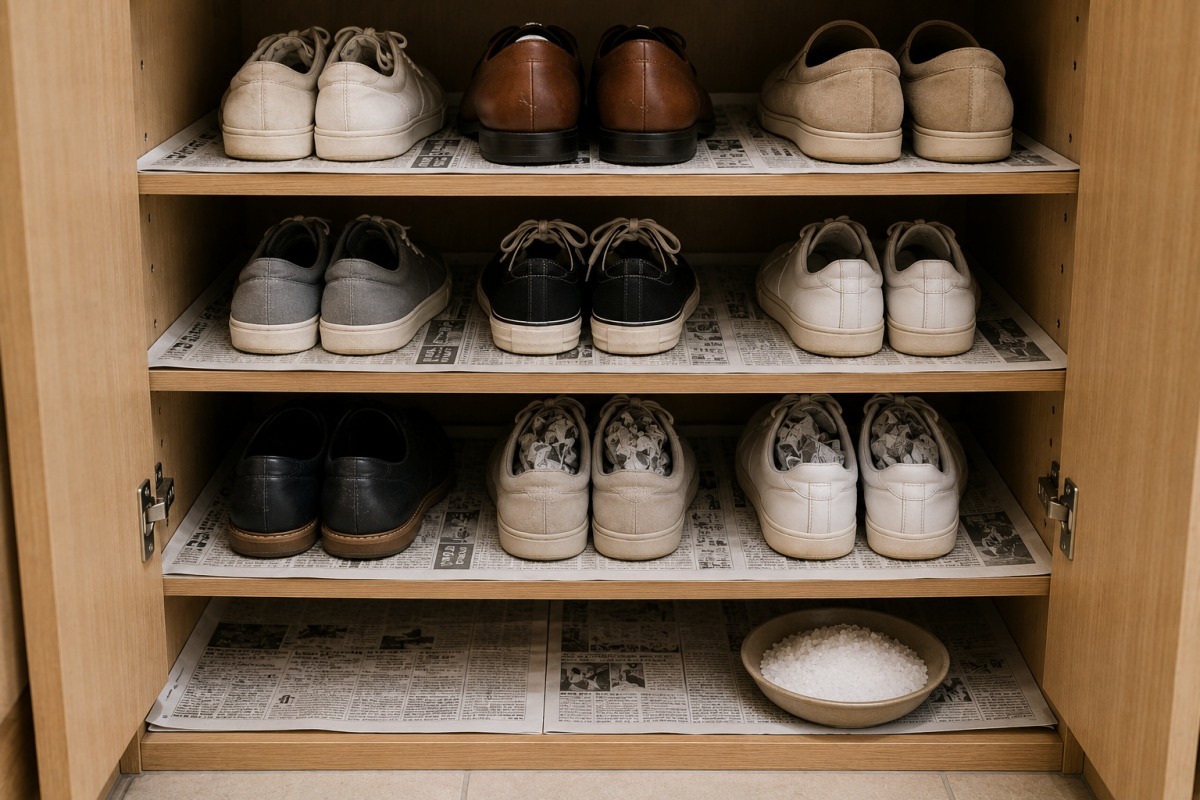
Line each shelf with two layers of newspaper
The cheapest and most reliable way to soak up moisture inside a shoe cabinet is newspaper. Its rough surface and tiny gaps make it excellent at absorbing airborne moisture. Before the rainy season, lay two thick layers of newspaper on each shelf; the paper will pull dampness from the air. If shoes get wet, stuff crumpled newspaper tightly inside them. That speeds drying, helps maintain the shoe’s shape, and draws sweat and rubber odors into the paper fibers so smells don’t spread.
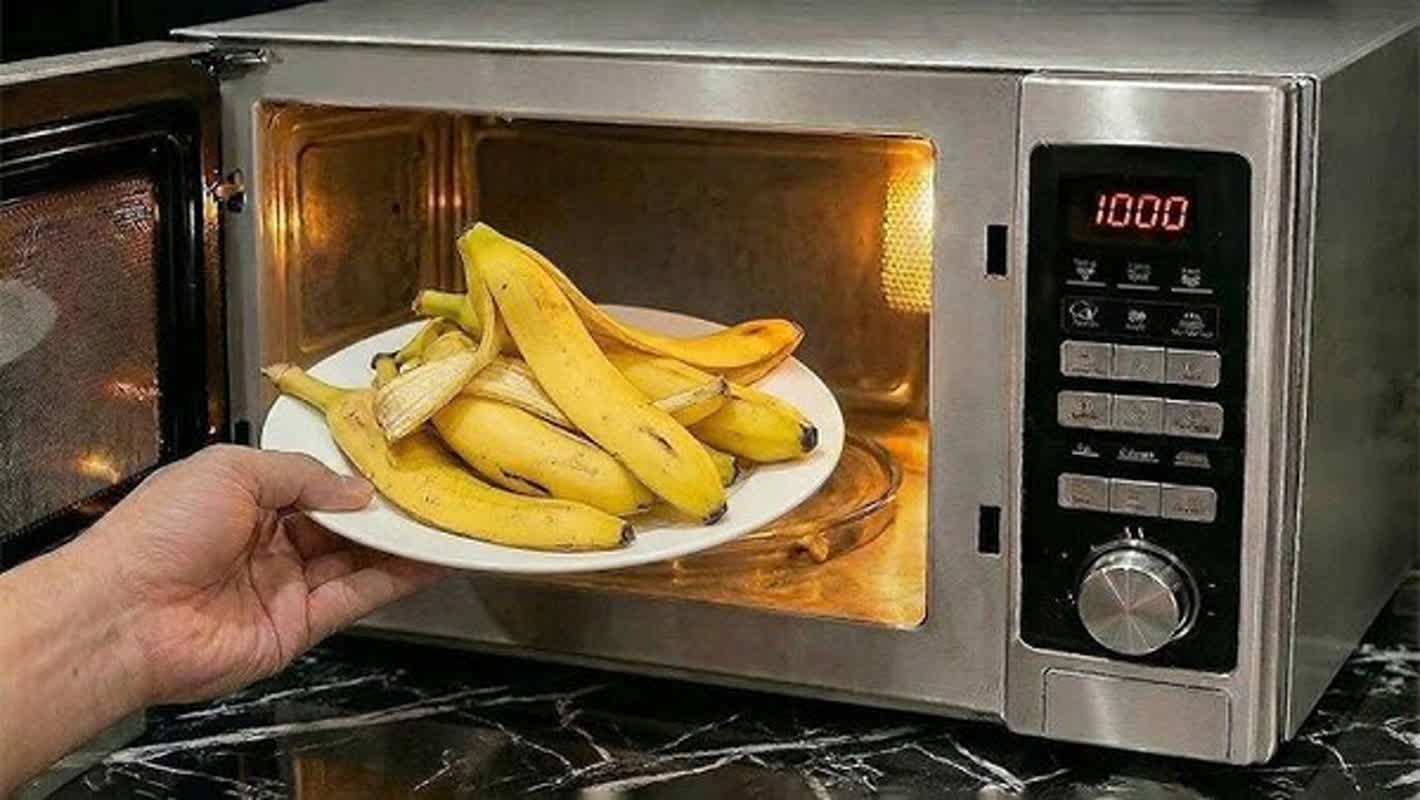
Coarse kitchen salt also works as an effective natural dehumidifier. The main component, sodium chloride, attracts moisture. Fill a shallow dish or a takeout plastic cup with coarse salt and set it on the cabinet floor or in a corner; you’ll notice the humidity drop. When the salt becomes damp and clumps, don’t toss it—dry it thoroughly in the sun or microwave it for 1 to 2 minutes to remove moisture. Once dry, reuse it, making this an economical solution.
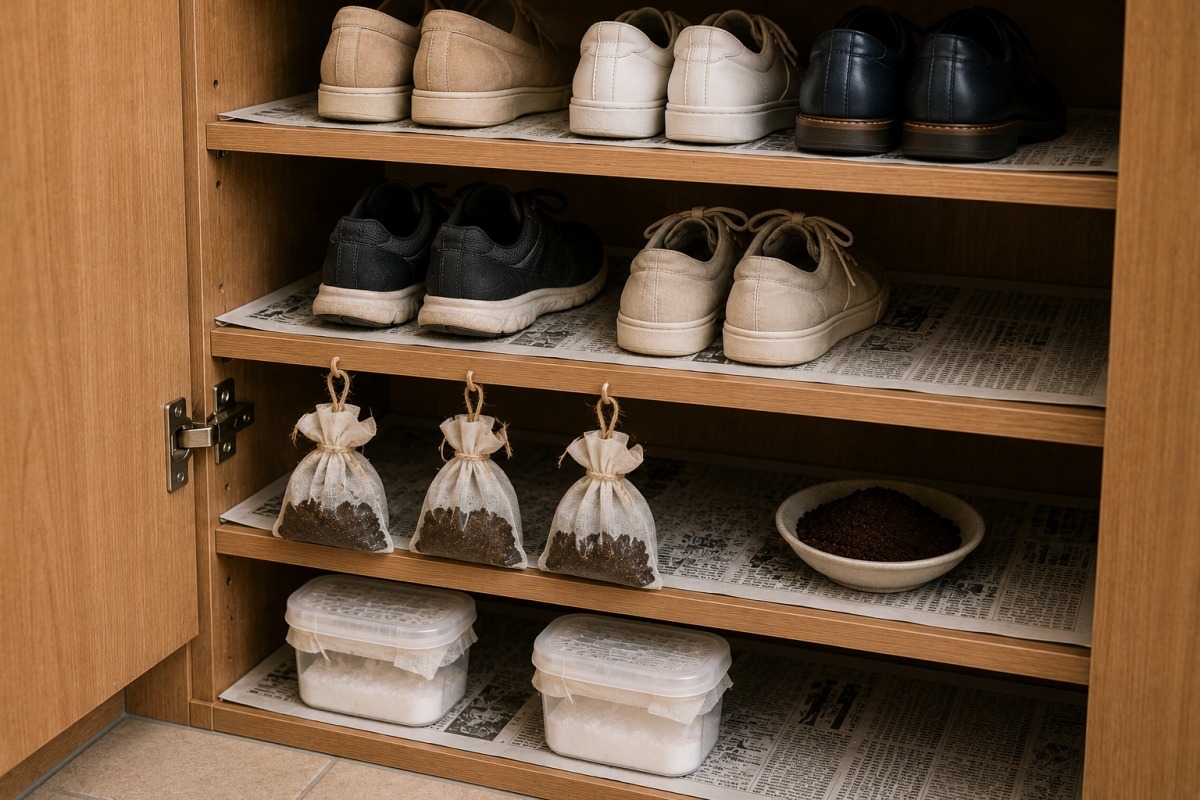
Use thoroughly dried coffee grounds to tackle both moisture and odors
Used coffee grounds from a café are an underrated asset for shoe cabinets during the rainy season. Roasted beans develop countless tiny surface pores that strongly adsorb moisture and ammonia-like odors. Important: dry the grounds completely — in the sun or a microwave — so they do not contain even 1% moisture. Putting damp grounds into the cabinet invites mold. Place well-dried grounds in a small cloth bag or thin sack and hang them around the cabinet. They absorb moisture and give off a subtle coffee scent, serving as a natural deodorizer.
Refill used desiccant containers with baking soda
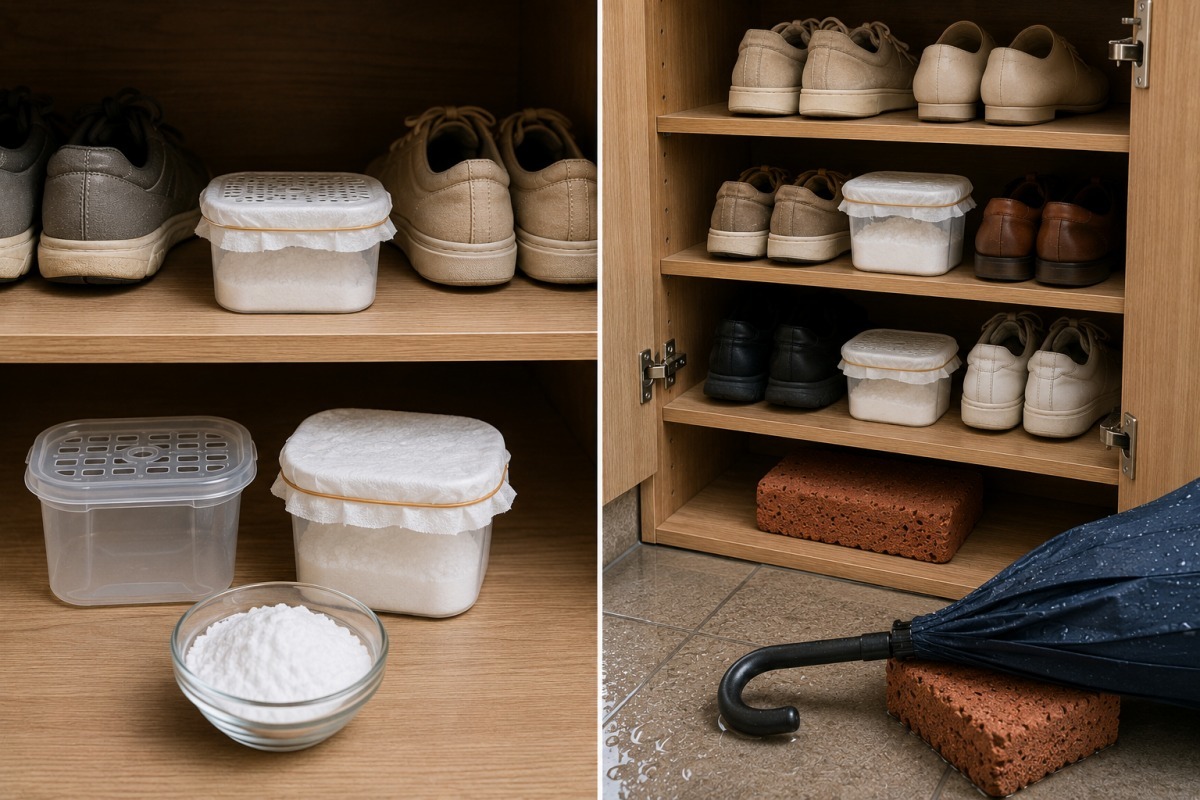
If you have empty disposable desiccant containers, don’t toss them. Wash and dry the container, then fill it with baking soda. Baking soda neutralizes acidic odor compounds and traps moisture in its fine particles. Fill the container about halfway, cover the opening with a thin sheet of paper (such as hanji) or nonwoven fabric, and secure it with a rubber band before placing it in the cabinet. It’s especially effective against foot and sweat odors. When the baking soda clumps from moisture after a few months, use it for kitchen or bathroom cleaning — another two-for-one benefit.
Placing a red or earthen clay brick — like those found at construction sites or in garden beds — on the entryway floor or in the cabinet’s bottom shelf is a clever, low-cost trick. Fired clay bricks contain countless microscopic pores. Put a brick on the entryway floor and rest a wet umbrella on it, or slide a brick into the lowest shelf; the brick will quickly absorb surrounding dampness like a sponge. When it gets heavy from moisture, set it out in the sun to dry and restore its absorption power. This free method prevents water pooling at the entry and reduces concentrated humidity at the cabinet’s base.

Leave the shoe cabinet door open and run a fan during the rainy season
No matter how effective your natural dehumidifiers are, they won’t work if air can’t circulate. During stretches of rain, pick a clear day or wait until the air conditioner has dried the room; once or twice a week, open the cabinet fully to ventilate.
With the doors wide open, point a living-room fan toward the entry for 10 to 20 minutes. The breeze pushes out trapped damp, sour air and brings in drier air. This simple habit prevents mold spores from settling and helps keep your shoes clean and hygienic.














Most Commented