
Translation result
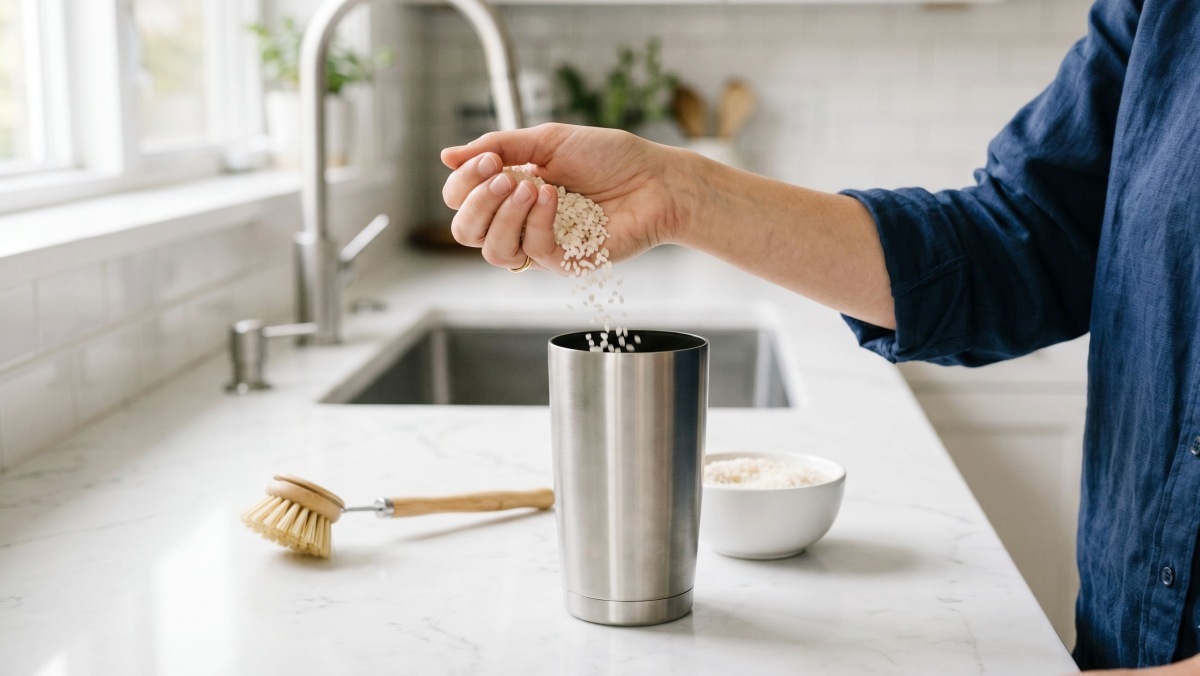
Rice is one of the kitchen’s most familiar staples, but its uses extend well beyond the dinner table. A handful of uncooked rice can clean a narrow container, draw moisture from a spice jar, or become a simple heat pack for everyday household needs.
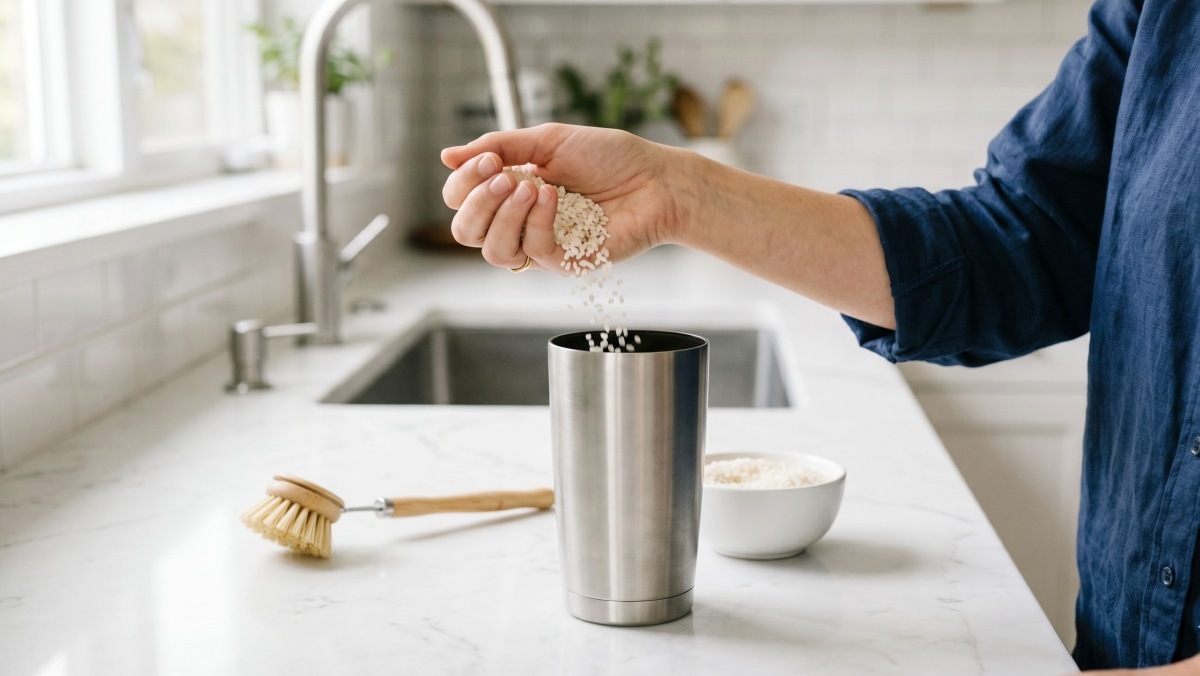
Cleaning narrow, deep tumblers
Insulated bottles and travel mugs have narrow openings and deep interiors, making them hard to clean with a regular sponge. Coffee, tea and other drinks can leave residue and mineral build-up on the inner walls. Corners at the bottom are especially difficult to reach. The hard surface of uncooked rice can act like a tiny abrasive, scrubbing the interior without any special tools.
Here’s how: empty the container, add a handful of uncooked rice and some warm water, then drop in one drop of dish soap. Close the lid and shake the container up, down and side to side. As the grains collide, they knock loose fine residue and scale from the inner walls. The rice acts like a miniature scrubber, getting into spots a hand or brush can’t reach. The same approach works for bottles and insulated containers with narrow mouths that a brush won’t fit into.
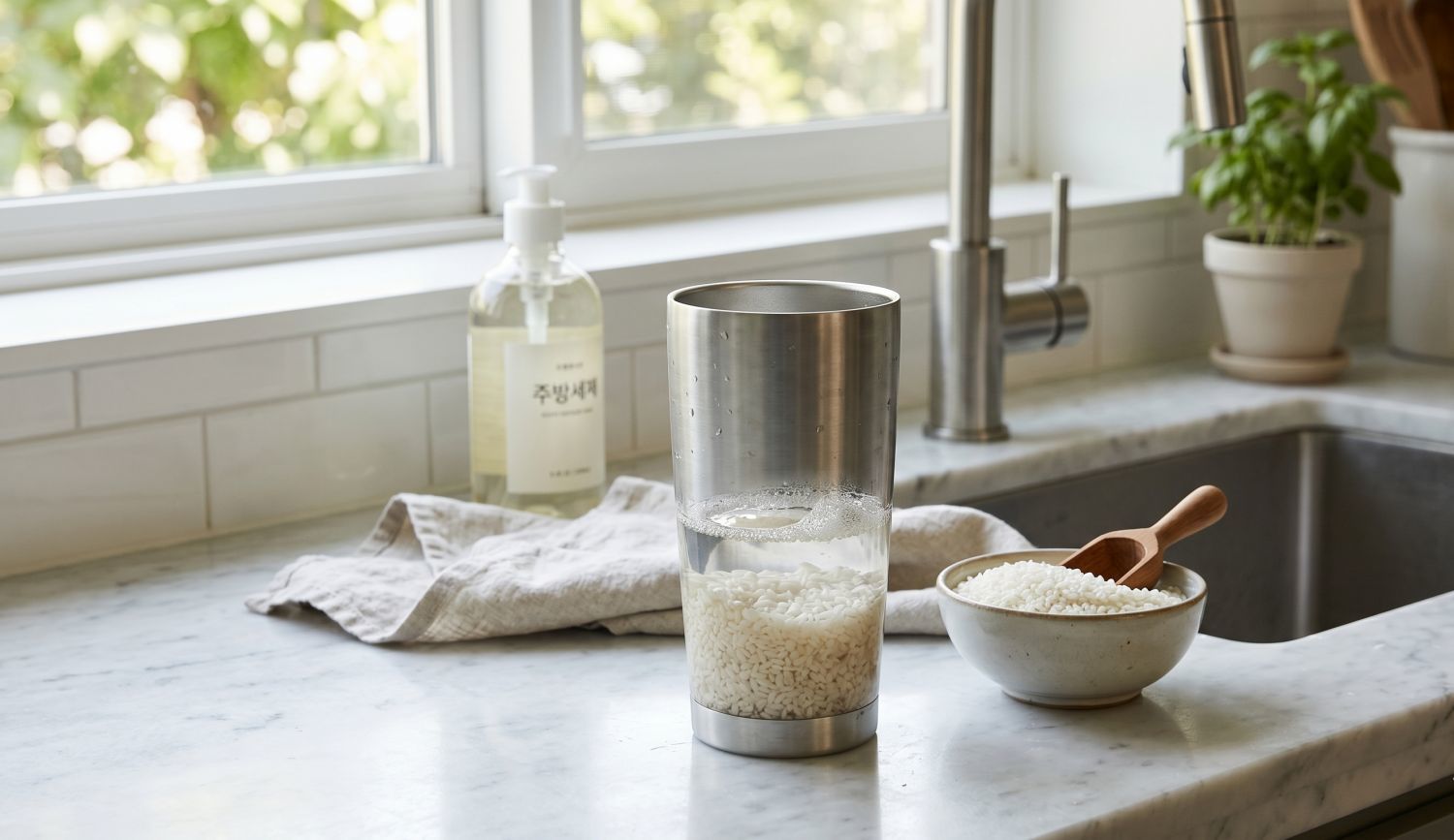
Watch the water temperature. Adding boiling water and shaking can increase internal pressure and cause splashing or burns. Use lukewarm or comfortably warm water instead. After washing, rinse thoroughly under running water until rice dust and soap residue are gone. Any grains left behind can cause odors, so check the bottom carefully. Leave the lid off to air the interior completely; closing the container too soon traps moisture and can encourage bacterial growth.
Removing residue from blenders and grinders
Blenders and coffee grinders have sharp blades and complex assemblies. Cleaning them by hand risks cuts, and debris lodged near the blades won’t always come out with water alone. Strong-smelling ingredients like garlic or oily coffee beans can leave lingering odors and grease. For appliances that are hard to disassemble, uncooked rice can help dislodge and absorb residue.
Pour about half a cup of rice into the appliance and run it for 20 to 30 seconds. As the grains break apart, they push out food particles stuck around the blades and on the container walls. The fine rice powder that forms also helps absorb residual oil and odor. When the cycle ends, discard the ground rice and then rinse or wipe the unit according to the manufacturer’s care instructions. This cleans tight spaces without removing the blades.
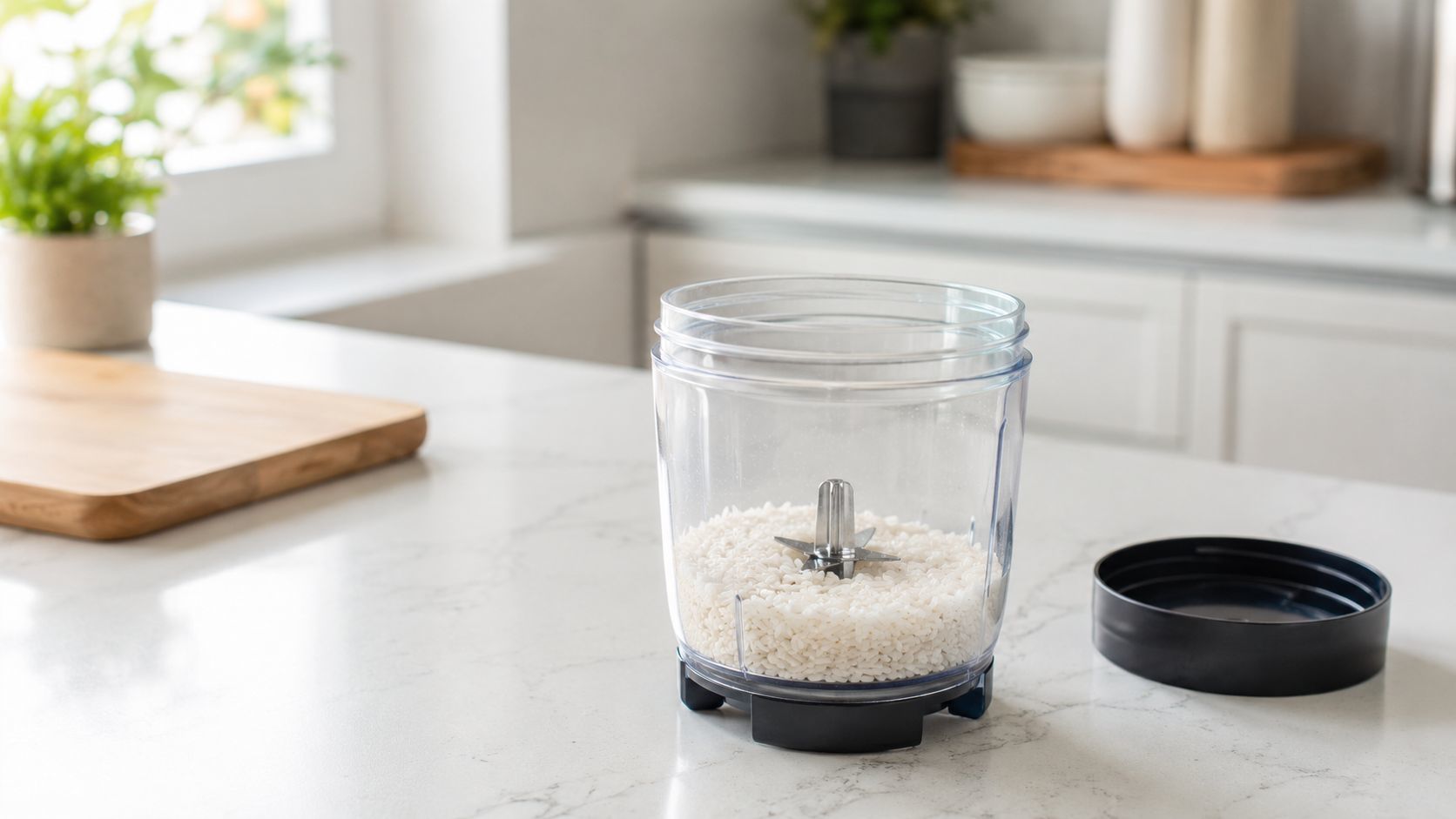
Don’t overload the motor with too much rice at once; that can strain small appliances. Compact grinders have limited capacity and varying blade wear, so operate them in short bursts. If rice dust gets into the motor shaft or internal gaps, cleanup can become harder—inspect the device’s construction first and remove any remaining powder carefully afterward. If the manual advises against rinsing with water, finish by wiping the interior with a dry cloth. Keep electrical components dry and separate from any cleaning steps involving water.
One spoonful of rice to dehumidify spice jars
Powdered seasonings—salt, chili powder and the like—clump when they absorb moisture. Steam from cooking or humid weather can harden powders, making them difficult to scoop or causing them to stick to the jar mouth. Persistent moisture can also promote spoilage, so it’s important to control humidity in storage.
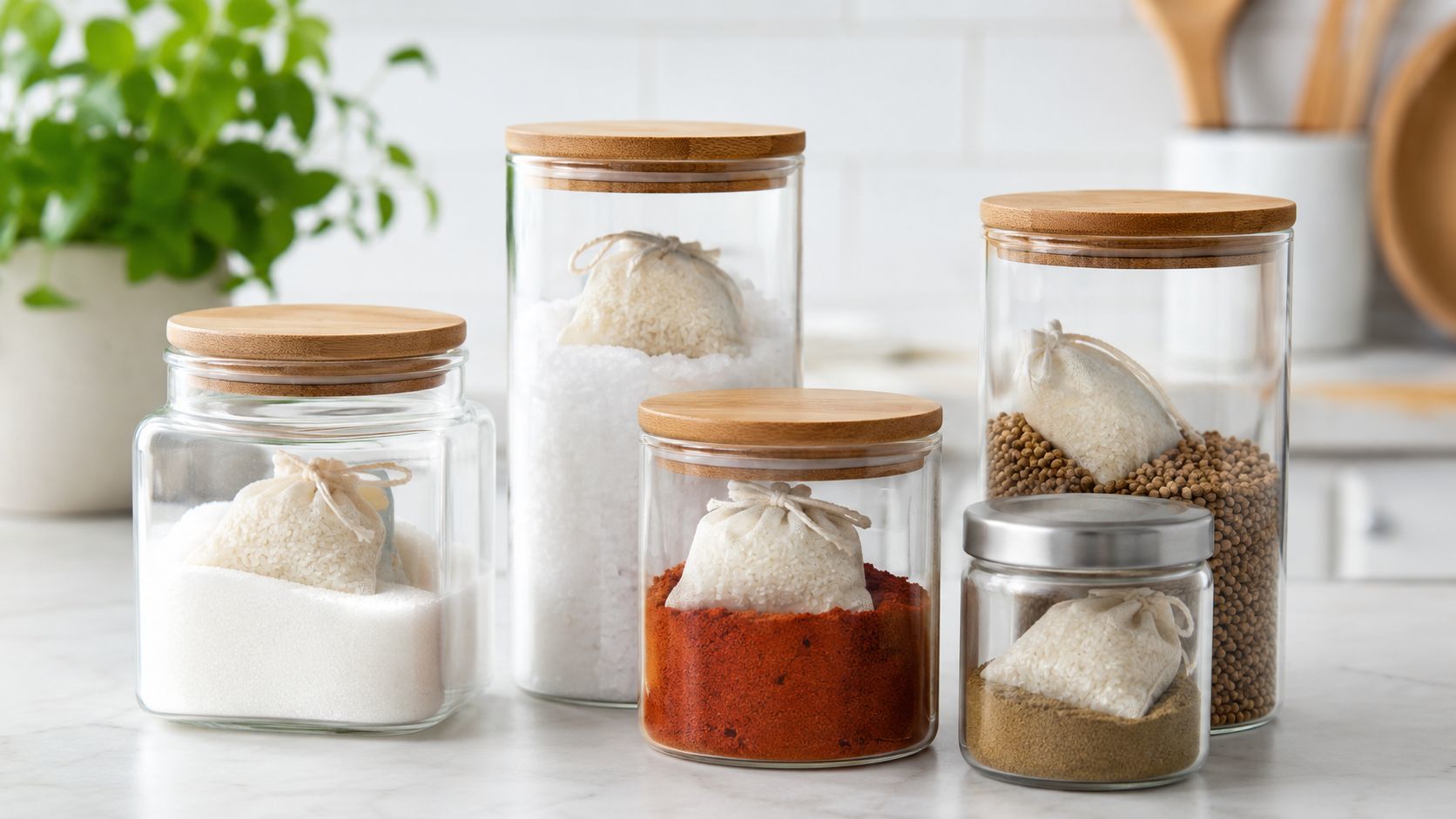
To reduce moisture, place about one spoonful of rice in a small breathable cotton bag or a stock-bag and tuck it into the spice jar, either on the bottom or on top of the spice. The rice will absorb excess humidity and help prevent clumping. It’s a low-chemical alternative to commercial desiccants. Make sure the rice remains sealed in a pouch so grains don’t mix into the spices.
Monitor the rice pouch regularly. If left in a damp state too long, rice can develop mold or attract pantry pests like weevils. Check and replace the pouch roughly every month, and more often in humid seasons or kitchens. Use a sturdy pouch to avoid tears that could let grains get into the spice. If the pouch feels wet or smells when you open the jar, replace it. Also consider where you store your spices—jars near the stove see more steam and may need more frequent attention.
Microwave rice heat pack
Rice holds heat well, so it can make an effective homemade heat pack. Fill a cotton pouch or sock with rice and warm it in the microwave to soothe the neck, shoulders, abdomen or other areas that need gentle heat. It’s a convenient, reusable alternative to disposable hot packs, but because it touches the skin directly, check materials and heating times carefully.
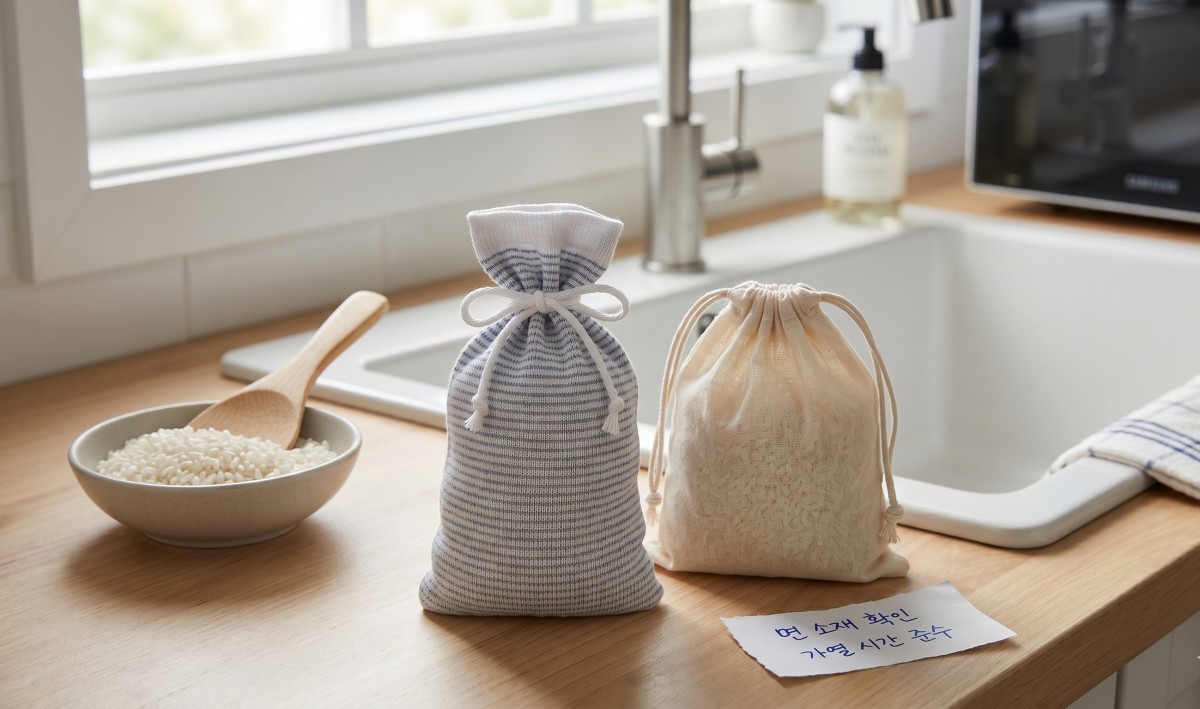
Use a clean pouch or sock made of 100% cotton—avoid heavily dyed or chemically treated fabrics. Fill the pouch about 70 percent full, then tie or sew the opening closed to prevent leaks. Don’t overfill; the pack should conform to body curves and the opening must stay secure. Heat the pack in the microwave for about 1 to 1½ minutes—the tiny moisture inside the grains warms and the rice retains that heat for some time.
Take precautions. Confirm the pouch is cotton; synthetic fibers can melt or catch fire in the microwave. Do not heat longer than 1 minute 30 seconds to avoid burning the rice or producing smoke. If the pack feels too hot, place a thin towel between it and the skin. Always check the temperature before applying it to children or older adults. When reheating, ensure the pack has fully cooled before heating again. Start with shorter heating intervals and test the temperature—this lowers the risk of accidents. If you detect a burning smell or the pack’s exterior discolors, stop using it and replace it.
Removing sticky residue from scissor blades
Cutting box tape or plastic wrap can leave adhesive on scissor blades, reducing cutting performance and making the scissors feel stiff. Sticky residue prevents clean cuts and can snag paper or plastic. Although a sharpening stone is the proper tool, it’s not always practical at home. Uncooked rice can serve as a quick, temporary fix.
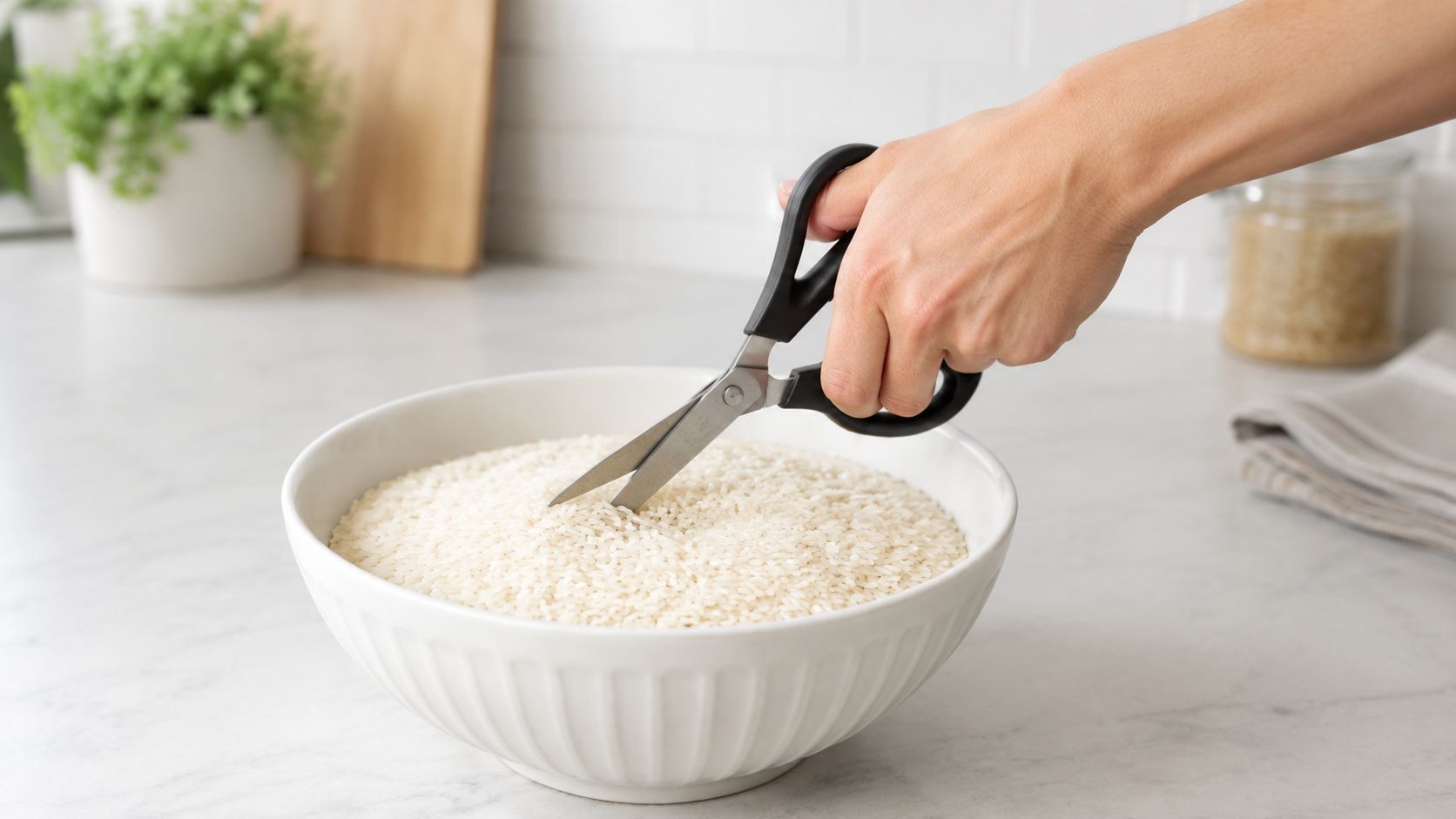
Fill a deep bowl with rice, insert the blades, and snip repeatedly. As the blades close, the rice grains rub against the surfaces and help lift adhesive and grime. The gentle abrasion can also smooth rough spots and make the scissors operate more smoothly. This is especially useful when you can’t immediately remove fresh adhesive.
Remember this is a stopgap measure. It won’t repair heavily damaged blades. Don’t press too hard—excessive force can misalign the pivot or damage handles. Afterward, wipe off starch residue with a dry cloth to prevent rust from trapped moisture. If sticky residue persists, follow this with a proper cleaning solution rather than repeating the rice treatment aggressively. For kitchen scissors that touch food, always clean and sanitize the blades after this process before storing them.
Do not reuse rice that has been used for cleaning
Handle rice used for household tasks according to how it was used. Rice employed to clean tumblers, blenders or scissors may have contacted soap, oil, metal filings or other contaminants. Even if rinsed, do not return that rice to the kitchen as food. Dispose of it according to local waste guidelines. It may look clean but could have absorbed or picked up impurities.
Rice used as a moisture absorber in spice jars also should be replaced regularly. Even without direct chemical contact, it can retain moisture. For hygiene, swap in fresh rice and discard the old pouch. Rice used inside a heat pack can be reused if kept dry—air it out in a cool, ventilated place after each use to release residual heat and moisture. If it smells or feels damp, stop using it.
Uncooked rice is a versatile household aid when its uses are managed carefully. Keep rice intended for cleaning or dehumidifying separate from food rice. Because cleaning processes can expose rice to water and detergents, avoid expanding its reuse. Use only what you need, store household rice in its own container, and always check the rice’s condition and storage environment after cleaning, dehumidifying or heating to finish the job safely and cleanly.














Most Commented