

Growing older isn’t an honor; aging well is a skill.
Too often, “preparing for old age” gets boiled down to numbers—bank balances, pension returns, apartment square footage.
Financial independence matters. Still, a healthy portfolio doesn’t automatically command respect or moral authority.

Look around: you will see billionaires who make people wince—what might be called “dignity bankrupts”—and plainly dressed people who make others want to linger—true examples of graceful aging. What explains that fine line?
We often assume age automatically brings wisdom and moral refinement. Reality is less tidy. The “back in my day” lectures, the intrusive probing of a child’s life disguised as concern, and the belief that age entitles you to special treatment on public transit or in public spaces—these behaviors can poison a lifetime of character.
We should face an uncomfortable truth: worse than an unprepared retirement is the slow slide into emotional isolation—becoming, without realizing it, a kind of “noise” in other people’s lives.
Real dignity in later life doesn’t come from business cards or past titles. It lives in adaptability to a changing world and in respecting others’ boundaries through appropriate psychological distance.
On the long road of a possible 100-year life, what sustains us is not the numbers in an account but the reactions of those around us—”I want to age like that”—and a steady, earned self-respect.
Dignity isn’t grandiose. It means withholding unsolicited advice, not displaying your pain to solicit sympathy, and maintaining the curiosity to keep learning. This is the “attitude capital” we ought to cultivate.
Today I want to examine the quality of attitude—something money cannot buy but which shapes lives more than wealth does. Set aside the thought “Why bother at this age?” for a moment. The instant you stop learning, you begin to age; the moment you embrace change, you regain a youthful vitality. As manners shape a person, so does dignity shape your later years.
8. ‘Hierarchical authoritarianism’—using past honors to dominate the present
Those whose identity was once wrapped up in social rank often try to keep asserting control after retirement by invoking past titles or roles. That attitude becomes the largest barrier to forming new relationships. Research shows many men who develop depression after retiring struggle because they cannot accept the gap between who they were and who they are now.
Persisting in issuing orders or lecturing after your “social business card” disappears exhausts people around you and ultimately fossilizes you as an elder trapped in the past.
7. ‘Emotional overexpectation’—mistaking favors for rights

Expecting help as a given corrodes self-worth. When adult children’s support or a friend’s kindness becomes an entitlement, gratitude fades and resentment grows.
Psychologically, this shift reduces you from an active agent to a dependent role. A person of dignity strives to meet needs independently when possible and maintains equality in relationships by voicing clear, sincere thanks even for small favors.
6. ‘Neglecting self-care’—abandoning grooming and hygiene
Dismissing grooming and hygiene with “Who am I trying to impress at this age?” is a form of self-disrespect. Unkempt clothing, unpleasant body odor, and a disheveled appearance lower your own self-regard and repel others.
This is not mere vanity. Caring for your appearance sends a powerful nonverbal message that you remain in control of your life and signals to others that you value the encounter.
5. A closed mindset that starts with “kids these days”

Rejecting the currents of change and treating your own experience as the only truth deepens generational divides. Rather than dismissing new technologies or cultural shifts as rootless, treat them as opportunities to learn.
Middle-aged people who approach digital tools and evolving social etiquette with curiosity avoid isolation. Neuroscience suggests that refusing new stimuli and clinging to the familiar accelerates cognitive decline.
4. Rude invasions of privacy that ignore proper boundaries
Mistaking intimacy for complete transparency is the fastest way to erode relationships. Middle-aged intrusions—When are you getting married? How much do you make? Have you bought a house?—are invasions of psychological space. These intrusions are often dressed up as “care,” but they are really an urge to control others’ lives through your own values.
Healthy relationships depend on psychological safety. A person of class exercises patience and waits until help or advice is genuinely requested. The restraint to know when to be silent and to respect private spheres is the kind of polish that makes others trust you as a conversational partner.
3. Weaponizing one’s pain and misfortune in conversation

Turning personal misfortune into a conversational lever drains others’ emotional energy. Repeating accounts of illness, financial trouble, or family conflict at every encounter imposes an emotional debt on listeners. The implicit pressure—I’m suffering, so shouldn’t you accommodate me?—leaves others feeling guilty and exhausted, and it frays relationships.
Emotional self-sufficiency—the ability to soothe and manage one’s own wounds—is central to dignity. A person of class does not parade misfortune to solicit attention. They express pain with restraint and celebrate others’ good news sincerely. That emotional generosity is the most magnetic quality for keeping people close.
2. Abandoning public etiquette behind the veil of familiarity
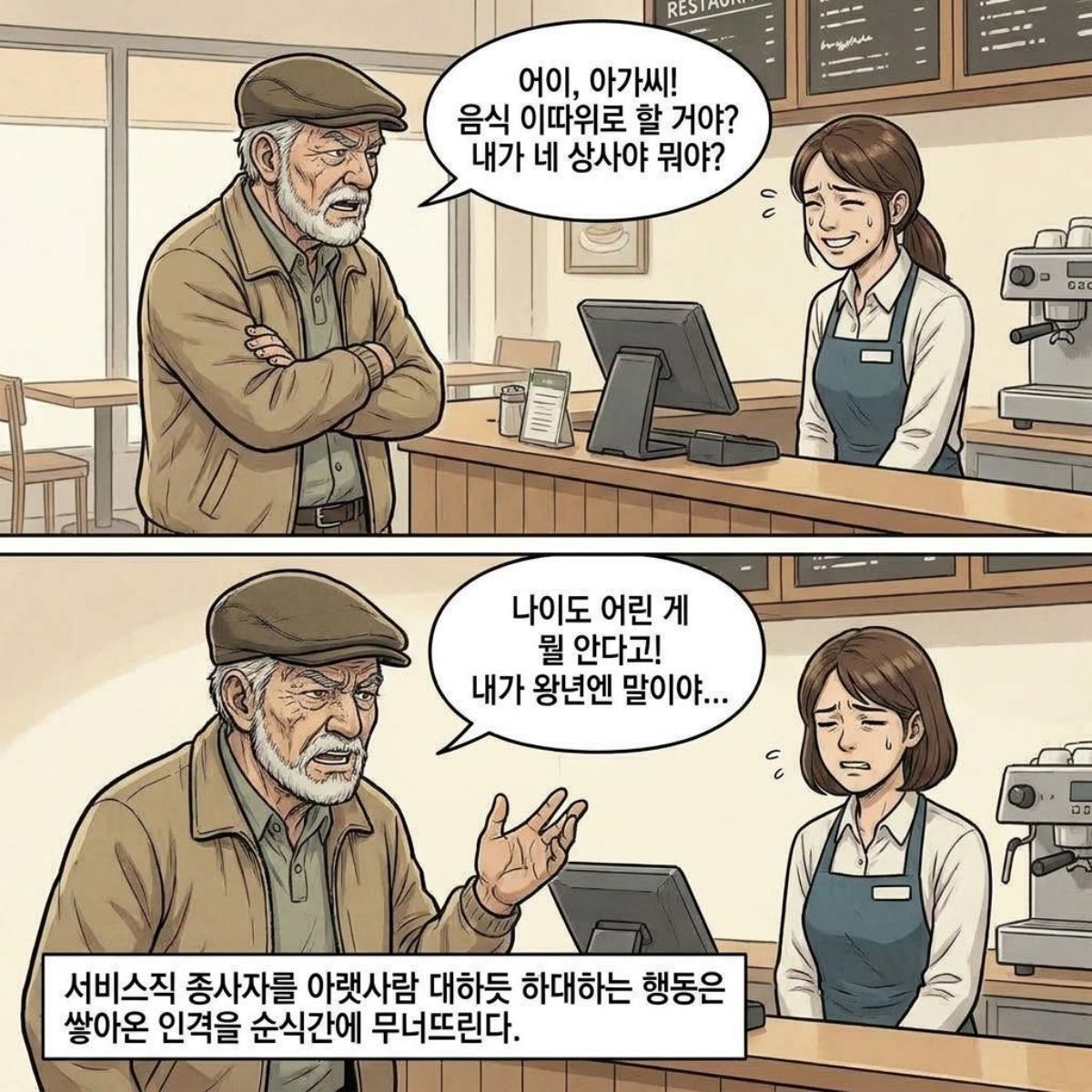
Letting the tendency to stop caring about others’ eyes become shamelessness is dangerous. Demanding seats on public transit, talking loudly on phones in public, or treating service workers as inferiors can undo a lifetime of character in an instant. Social norms are acts of consideration for others, but they also serve as a last line of defense for your own dignity.
The excuse “that’s how people are when they get older” no longer holds. If anything, people with broader social experience should model higher standards by adhering to public order. Maintaining etiquette even where no one is watching is the clearest proof of inner strength.
1. Loss of the will to grow—stopping learning and change

The single condition that completes dignity in midlife is an ongoing, growing self. Many treat retirement as final and abandon the will to learn. But the moment you stop learning, you become an island trapped in past experience. Approaching new technologies, cultures, or unfamiliar fields with curiosity creates a compelling presence.
Psychologists note that self-efficacy arises from learning and achievement. Those who keep expanding their intellectual and emotional lives—by learning an instrument, studying a language, or engaging in community service—are seen as life pioneers rather than victims of aging. The will to grow is the surest asset for sustaining self-esteem and the fundamental force that preserves mental dignity beyond physical decline. “Learning never ends” does not only mean scholarship; it describes the noble effort to keep dignity until the moment we die.















Most Commented