
Translation result
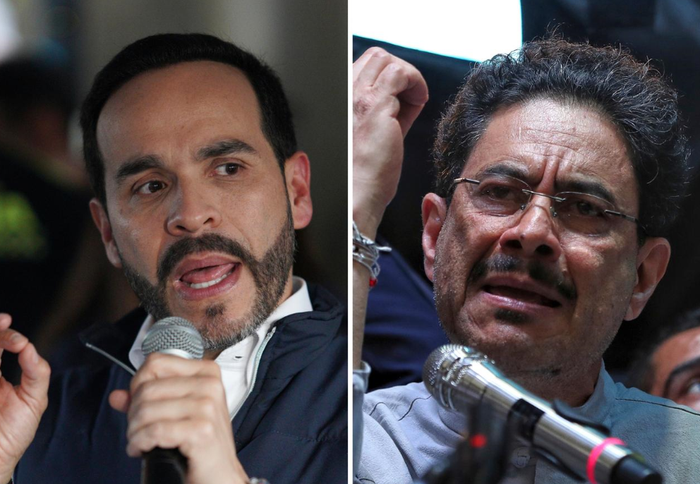
In the first round of Colombia’s presidential election, right-wing candidate Abelardo de la Espriella—widely labeled as pro‑Trump—mounted a late surge to finish first.
According to the AP and other outlets, vote counts from the first round held on the 31st of last month showed Espriella, the candidate of the “Guardians of the Homeland,” with 43.7%, placing him first. Iván Cepeda, the left‑leaning candidate of the ruling party “Historic Pact,” received 40.9%.
Espriella overturned expectations that Cepeda would lead by consolidating conservative support at the last minute. Because no candidate secured a majority, Espriella and Cepeda will face each other in a runoff on the 21st.
A political newcomer and former criminal-defense attorney, Espriella has publicly expressed support for right‑wing leaders such as U.S. President Donald Trump, El Salvador’s Nayib Bukele, and Argentina’s Javier Milei.
He campaigned on a hardline crackdown on criminal organizations, the construction of 10 mega‑prisons in the southern Amazon region, strengthened security cooperation with the United States and Israel, and revitalizing the oil industry. He pledged to work with the Trump administration—which has framed a “war on drugs”—to restore public order. Observers say his tough‑on‑crime platform quickly consolidated his base.
Cepeda, a close ally of President Gustavo Petro, likewise pledged to address security through the administration’s “total peace” approach. Having been involved in past peace negotiations with the FARC guerrillas, he proposes distributing land to the poor, expanding social spending, and continuing policies aimed at disarming drug trafficking groups and armed rebels under the total peace framework.
The AP noted that voters across Latin America are increasingly turning away from progressive leaders who promise reforms to tackle root causes such as limited opportunities for young people and corruption, and are instead gravitating toward candidates who promise tougher security measures. Last month, President Trump unveiled a new counterterrorism strategy that identified Latin American drug cartels as a major security threat.
Across major Latin American countries, a “blue tide” of successive right‑wing victories has emerged as voters react to economic hardship and worsening security under leftist governments. Right‑wing candidates won Costa Rica’s presidential election in February and recent contests in Honduras, Chile, Bolivia, and Ecuador. Observers are watching to see whether Colombia will follow the same trend.
© Dailian Co., Ltd. Unauthorized reproduction and redistribution prohibited
- ‘Produced enough cocaine for 1.22 million doses’ — Colombian technician sentenced to 20 years in first trial
- Transport plane carrying more than 80 soldiers crashes in Colombia
- U.S.-Colombia ties reverse course; officials say they are preparing for a summit














Most Commented